
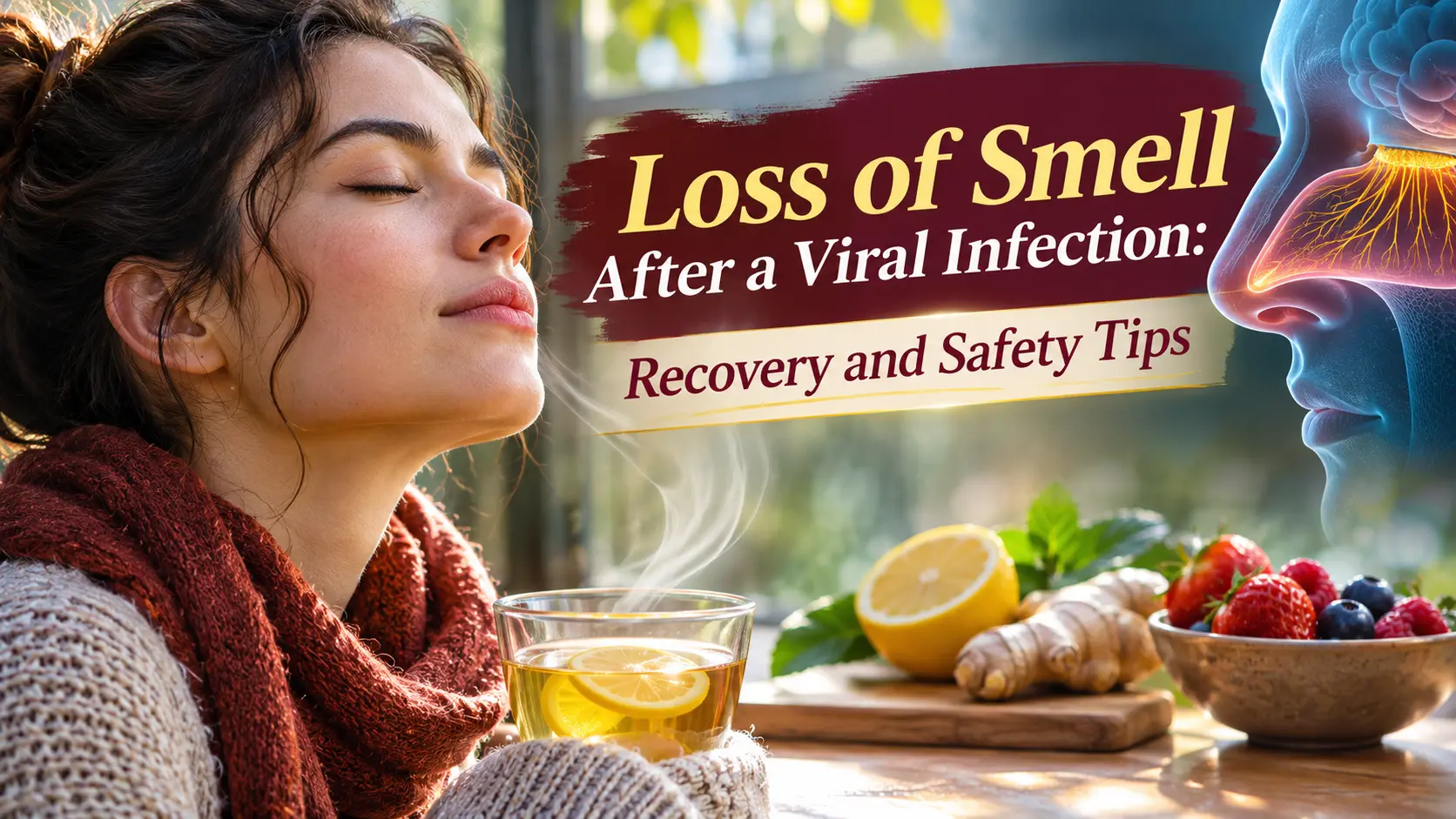
A reduced or altered sense of smell can occur during or after a viral respiratory infection. For many people it improves, but recovery can take time and is not identical for everyone. Smell changes can affect taste, appetite and the ability to notice hazards such as smoke or spoiled food. Persistent symptoms deserve assessment, especially when the cause is unclear or other nasal or neurological symptoms occur.
Why smell may change
Smell depends on airflow reaching the olfactory region and on healthy sensory cells and nerve pathways. Infection and inflammation can disrupt this process. Some people notice anosmia, meaning loss of smell; others experience distorted smells or unpleasant odours that are not present. A clinician considers timing, nasal symptoms, medical history and possible medicines or exposures when deciding whether further investigation is needed.
What may help recovery
If a clinician agrees the pattern fits postviral smell loss, structured smell training may be recommended. It involves regularly smelling a small set of distinct scents with focused attention over time; it is not an instant fix, and improvement varies. Avoid unproven intranasal treatments or putting irritant substances into the nose. Treat coexisting nasal disease only according to appropriate clinical advice.
Safety while smell is reduced
Check smoke and carbon-monoxide alarms, be careful with gas appliances, label food dates and ask another person to check food when its safety is uncertain. Pay attention to taste, appetite and nutrition if eating becomes difficult. If smell loss affects mood or daily life, mention it to a clinician; support may help while recovery is ongoing.
When to seek assessment
Arrange review for smell loss that persists, recurs without a clear reason, occurs mainly on one side or is accompanied by significant blockage, nosebleeds, facial pain or other concerning symptoms. Seek urgent care for sudden smell change with severe headache, neurological symptoms or other emergency signs. The best work-up depends on the history and examination.
Frequently asked questions
Will my sense of smell definitely return? No one can guarantee the timing or degree of recovery. Many people improve, while others have longer-lasting changes.
Can smell training help? It may be recommended for some persistent postviral cases, but benefits vary and professional advice is useful.
Is it safe to cook when I cannot smell? Take extra precautions with smoke alarms, gas safety and food dates, and seek help if unsure about food spoilage.
Explore our nasal endoscopy page for more information about this care option. A clinician can advise based on the individual history and examination findings.
Related reading
- Loss of Smell: Common Causes, Assessment and Safety Tips
- Nasal Polyps: Symptoms, Diagnosis and Treatment Options
- Chronic Sinusitis: Symptoms, Causes and Treatment Options