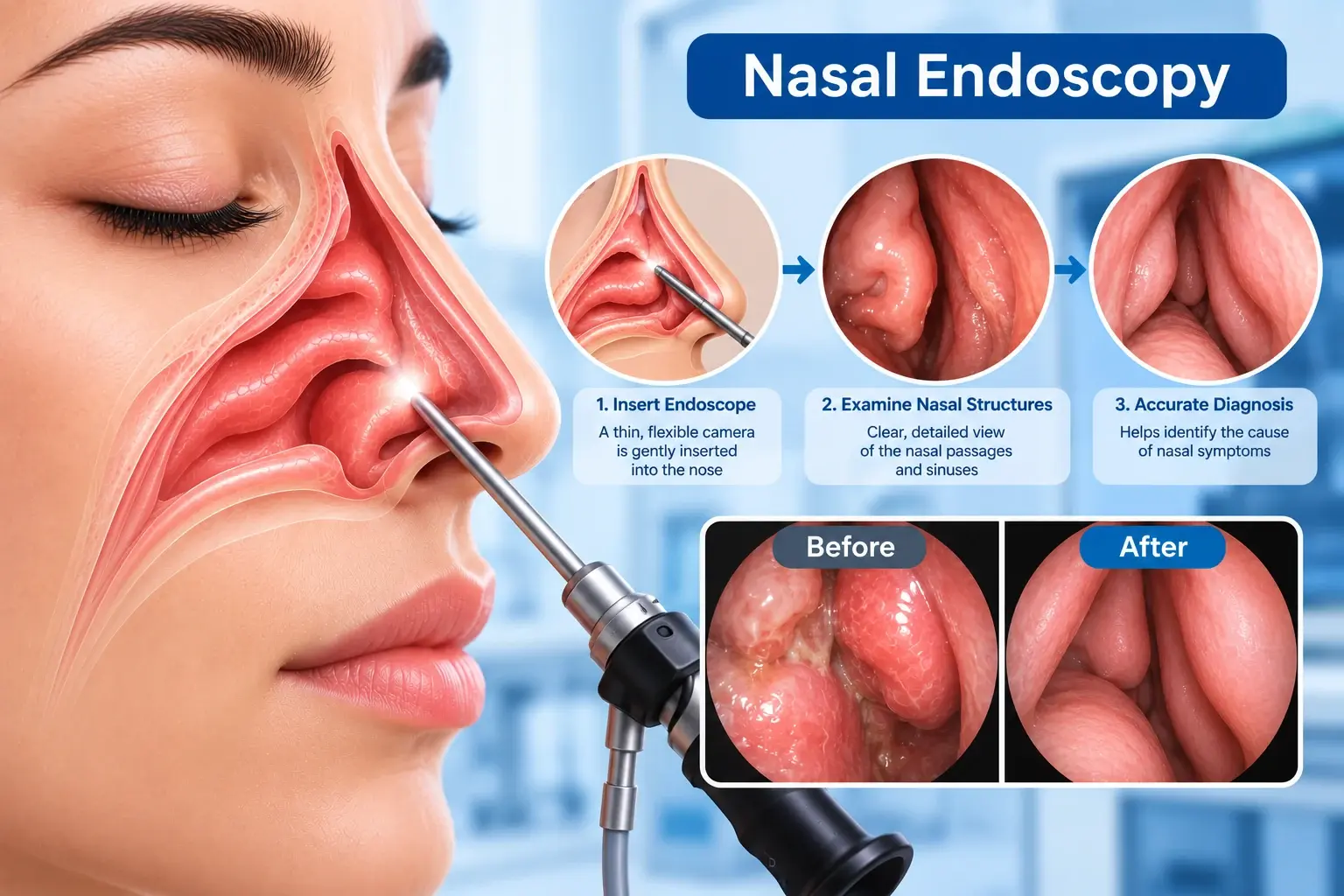
Nasal Endoscopy: What Happens During an ENT Examination?
Learn why clinicians use nasal endoscopy, how to prepare, what it can show, and what discomfort or after-effects to expect.
Read MoreThe examination can help identify findings such as inflammation, nasal polyps, secretions, bleeding points or structural narrowing. It may support decisions about treatment or whether imaging or another test is needed, but findings are interpreted alongside your history and symptoms.
The procedure is usually brief and may cause pressure, watering eyes or sneezing. Whether a decongestant or numbing spray is used depends on the examination and clinical setting; you can ask what to expect before it begins.
Nasal endoscopy is not necessary for every cold or brief episode of congestion. It is used when direct visual assessment may clarify a persistent or specific concern.
This information is general and does not replace an individual medical assessment.
Patient Resources
Patient-friendly articles related to this service and common questions about assessment and care.
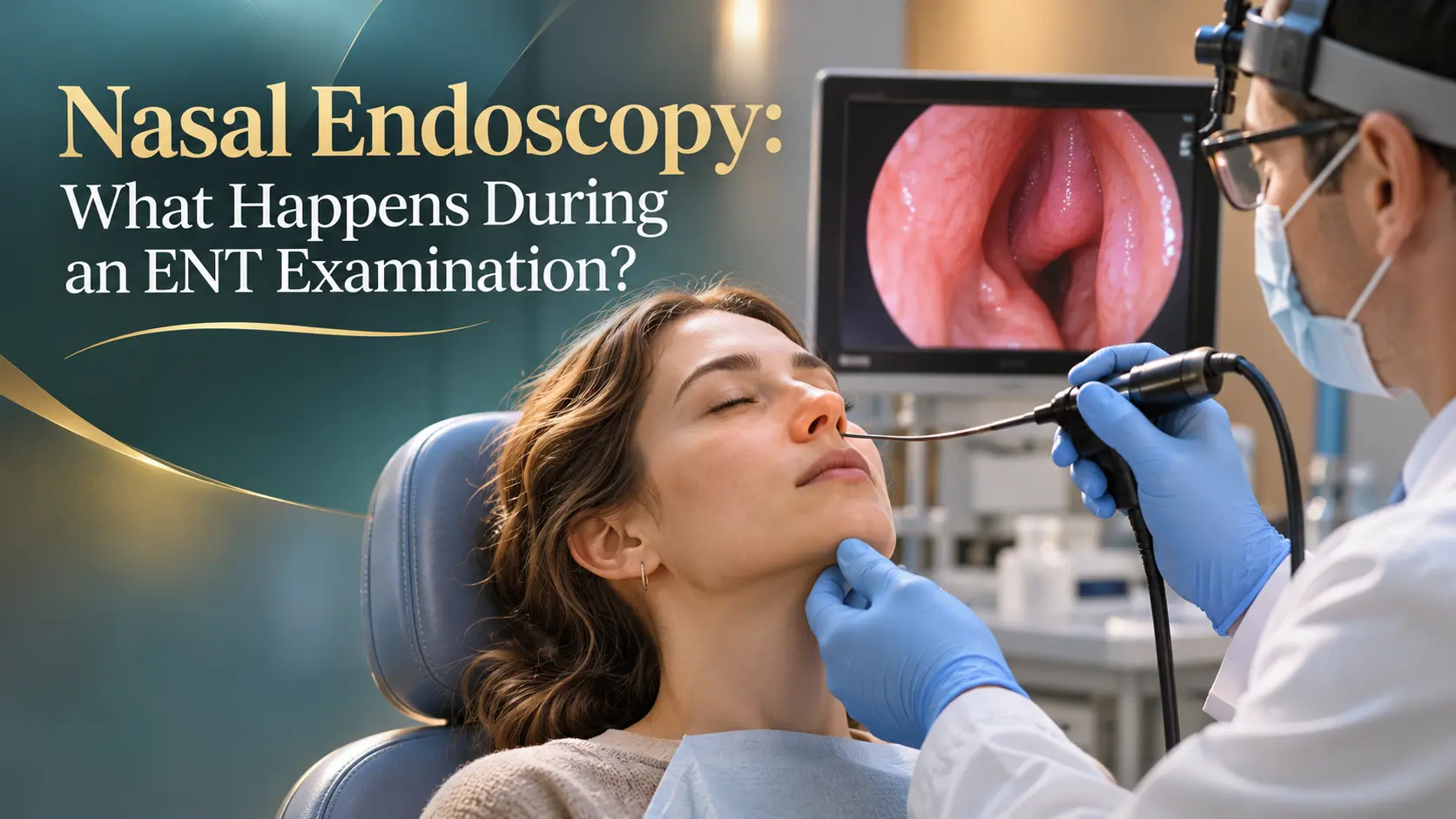
Learn why clinicians use nasal endoscopy, how to prepare, what it can show, and what discomfort or after-effects to expect.
Read More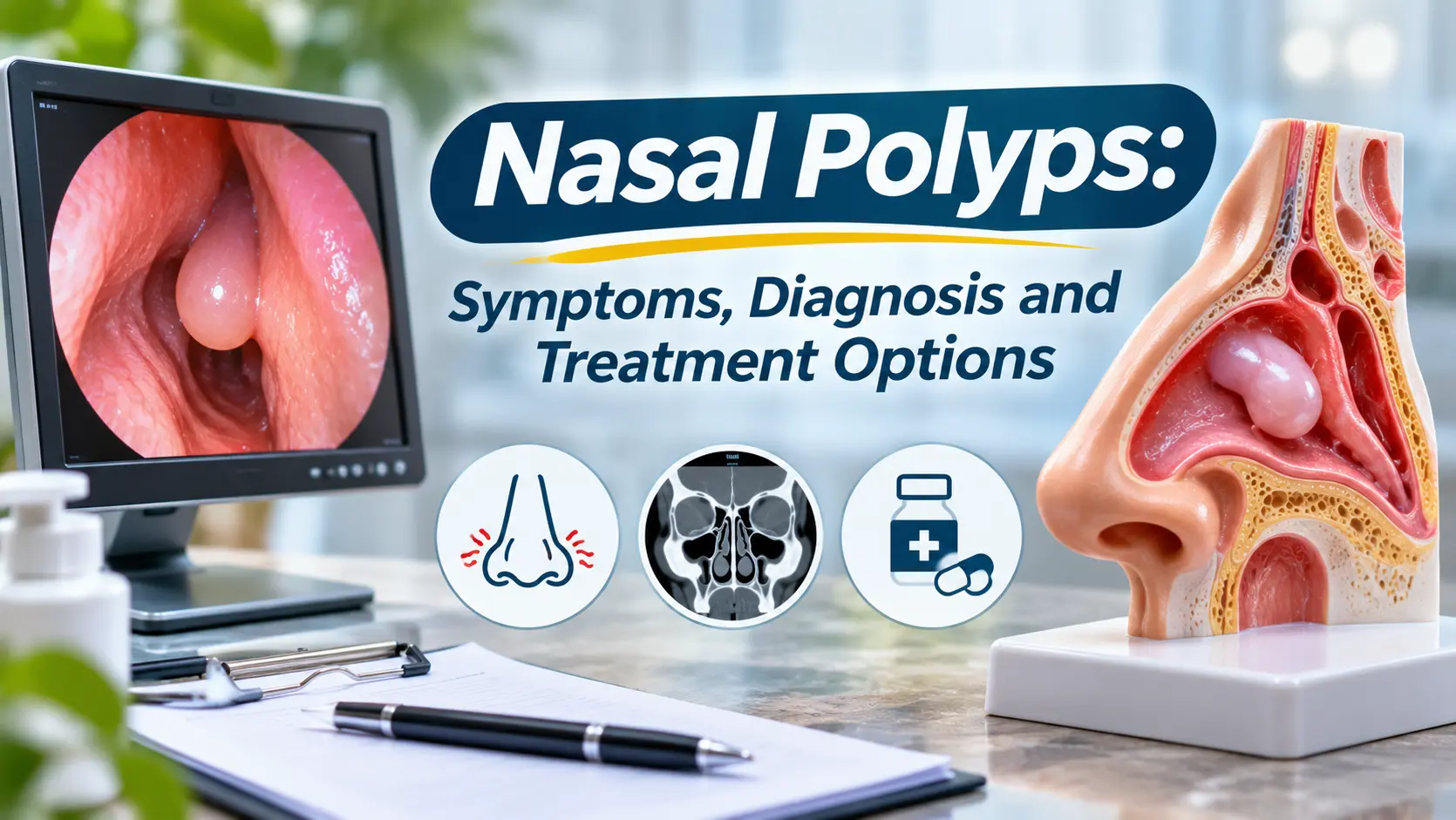
Learn what nasal polyps are, how they affect breathing and smell, how clinicians diagnose them, and what medical or surgical treatments may be considered.
Read More
Explore why one nostril may feel blocked, when an anatomical cause is likely, and which persistent symptoms deserve examination.
Read More