
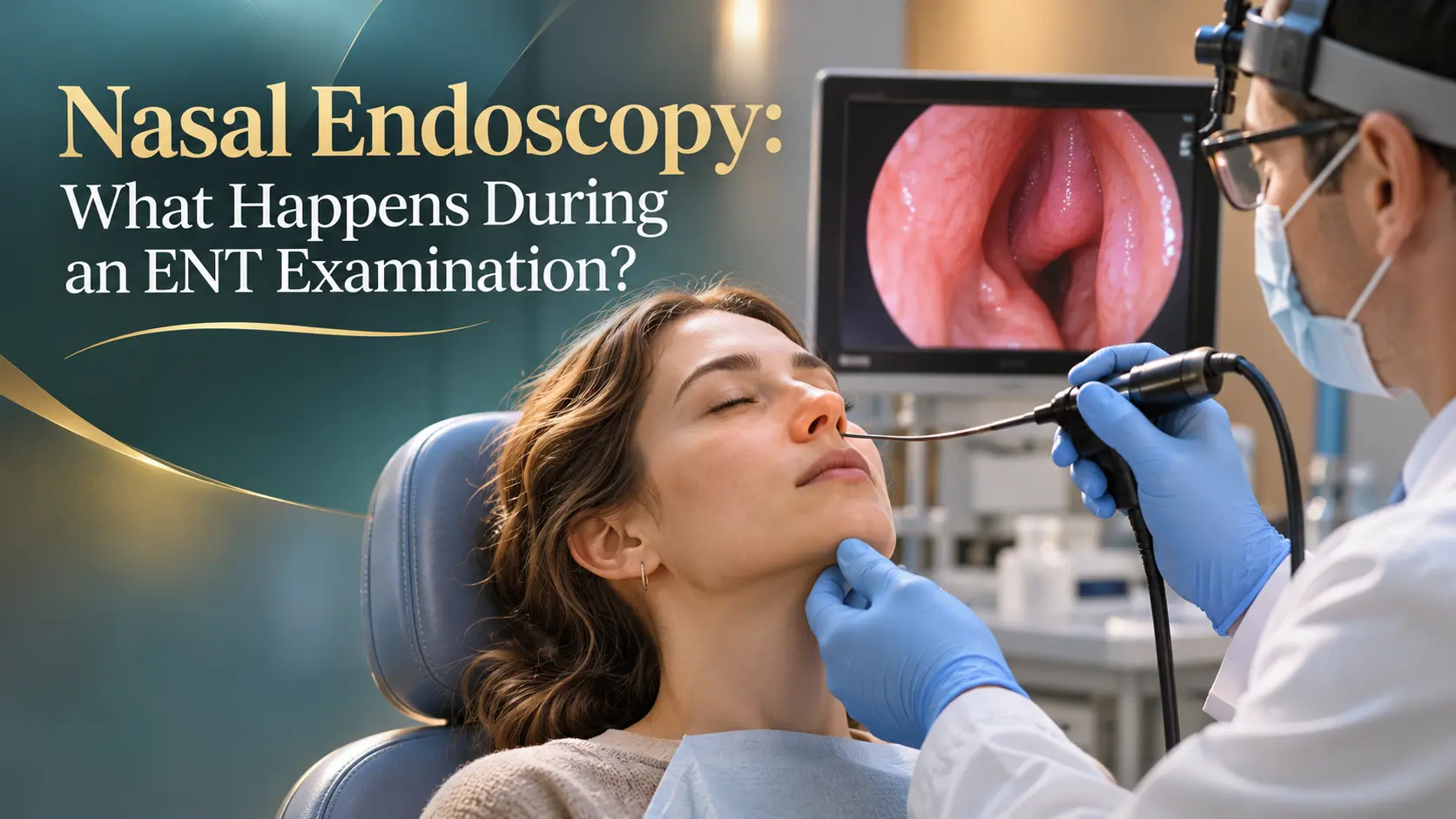
Nasal endoscopy is an examination in which an ENT clinician uses a thin scope with a light and camera to view parts of the nasal passages and, when appropriate, the back of the nose or throat. It may help investigate persistent blockage, recurrent nosebleeds, smell changes, nasal polyps or some voice and throat symptoms. Whether it is needed depends on the history and ordinary examination findings.
How to prepare
Tell the clinician about allergies, bleeding problems, relevant medicines, previous nasal surgery and any concerns about the procedure. Follow the clinic’s instructions; most routine office examinations do not require fasting, but individual circumstances vary. A numbing or decongestant spray may be used, depending on the planned examination and local practice. Ask what will be used if you have had a reaction to similar products before.
What happens during the examination
You usually remain seated. The clinician gently guides the scope into one nostril and may ask you to breathe, swallow or speak. The examination often takes only a few minutes, although preparation and discussion take longer. People commonly describe pressure, watering eyes or a brief unpleasant sensation rather than severe pain. Tell the clinician if you feel faint, very uncomfortable or need a pause.
Risks and after-effects
Temporary nose or throat irritation, sneezing, watering eyes or a small amount of bleeding can occur. Serious complications are uncommon in routine diagnostic examination, but risk varies with the situation and whether any additional procedure is performed. Follow specific aftercare instructions, especially if tissue sampling or treatment was also carried out. Ask when normal eating, drinking or use of nasal medicines can resume if a numbing spray was applied.
Understanding the results
The clinician may discuss visible findings immediately, but some diagnoses require other tests, imaging or follow-up. A scope can show anatomy and inflammation but does not diagnose every cause of symptoms on its own. Ask what was seen, what remains uncertain, what the next step is and when you should expect results if samples or further investigations were arranged.
Frequently asked questions
Does nasal endoscopy hurt? Many people feel pressure or brief discomfort, but experiences vary. Tell the clinician if you are anxious or need a pause.
Can I eat before it? Follow the clinic’s instructions. Many routine examinations do not require fasting, but special procedures may have different requirements.
Does a normal scope rule out every problem? No. Symptoms sometimes need further assessment, hearing tests, imaging or review even if the initial examination is reassuring.
Related reading
- Persistent Nasal Congestion: Common Causes and Assessment
- Nasal Polyps: Symptoms, Diagnosis and Treatment Options
- Persistent Hoarseness: Causes and When to See an ENT Specialist