
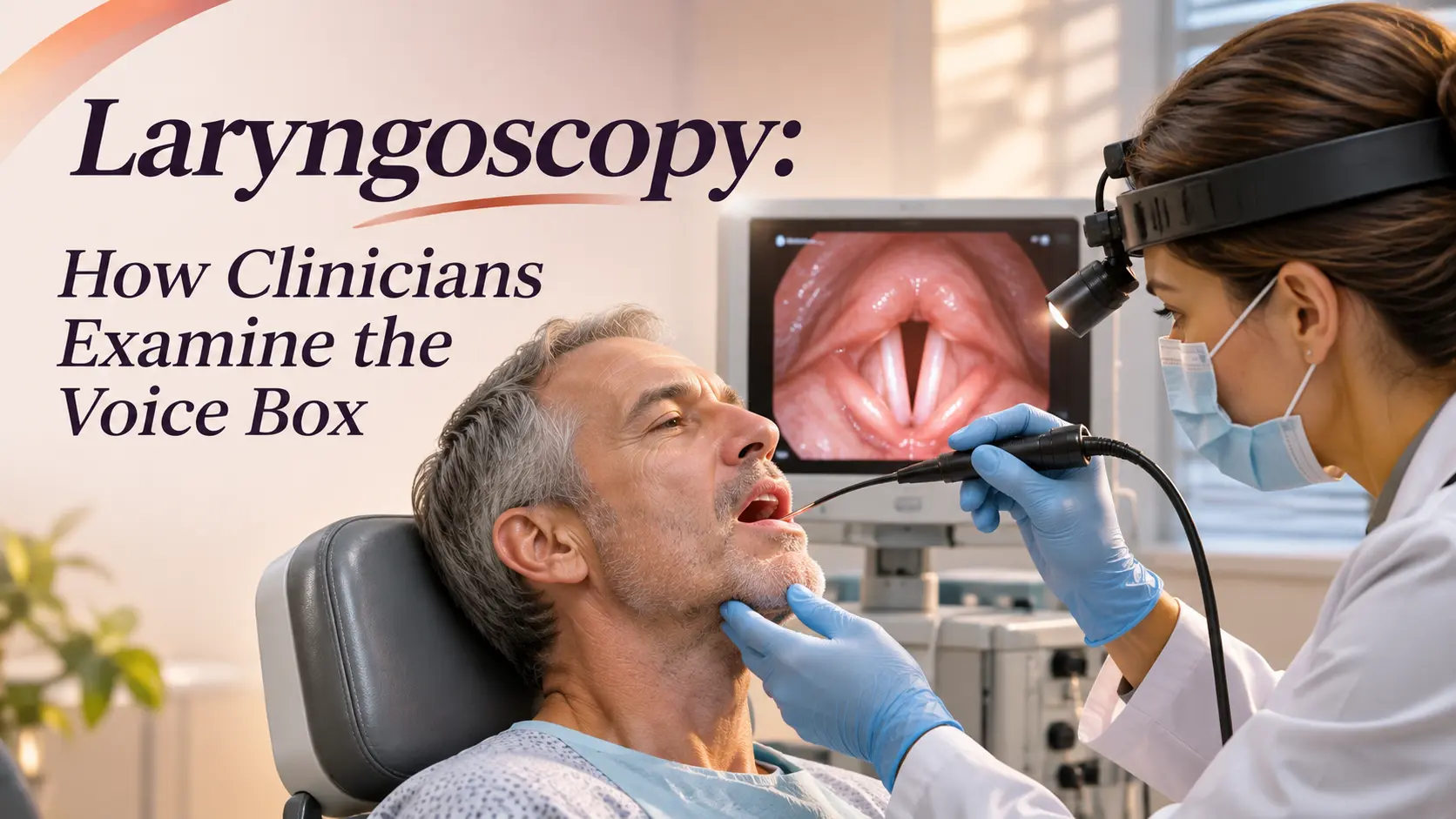
Laryngoscopy is an examination of the larynx, or voice box, that allows a clinician to see structures involved in breathing, voice and swallowing. It may be recommended for persistent hoarseness, a suspected vocal fold problem, some swallowing symptoms or unexplained throat complaints. The type of examination varies; an office flexible scope is different from an examination performed under anaesthesia or one that includes surgery or tissue sampling.
Why it may be recommended
Symptoms alone cannot show how the vocal folds move or whether there is inflammation, a lesion or another visible change. Laryngoscopy helps the clinician assess these structures directly. The reason for the test and urgency depend on the history, risk factors and symptoms. Persistent hoarseness should not be repeatedly treated without examining the larynx when a clinician considers visual assessment necessary.
What happens in an office examination
For flexible laryngoscopy, you generally sit upright while a thin scope is passed gently through the nose. A numbing or decongestant spray may be used according to local practice. You may be asked to speak, breathe or make sounds so the clinician can observe movement. The procedure is usually brief, though it can cause watering eyes, pressure or temporary discomfort. Tell the clinician if you feel faint or need a pause.
After the test and what results mean
You may have temporary nasal or throat irritation. Follow the instructions about eating or drinking if a numbing spray was used, and follow any specific advice if a biopsy or additional procedure occurred. Findings may be discussed immediately, but some situations require imaging, voice assessment, biopsy or follow-up. A normal examination does not automatically explain every symptom, so ask what the plan is if symptoms continue.
Questions to ask
Ask what the clinician is looking for, whether the findings explain your symptoms, whether any further tests are needed and when to return. Mention blood-thinning medicines, bleeding problems, allergies, prior nasal surgery and any relevant medical history. If the examination is for a child or for a person with strong gag reflex or anxiety, ask what preparation and support are available.
Frequently asked questions
Is laryngoscopy painful? Many people experience pressure or brief discomfort rather than severe pain, but experiences vary.
Can I speak during the test? In many office examinations, the clinician asks you to speak or make sounds to assess vocal fold movement.
Does every hoarse voice need laryngoscopy? Not every brief episode does. The need depends on duration, risk factors, examination and warning signs.
Related reading
- Persistent Hoarseness: Causes and When to See an ENT Specialist
- Vocal Fold Paralysis: Voice, Swallowing and Breathing Symptoms
- Acute Laryngitis: Voice Rest, Recovery and Warning Signs