
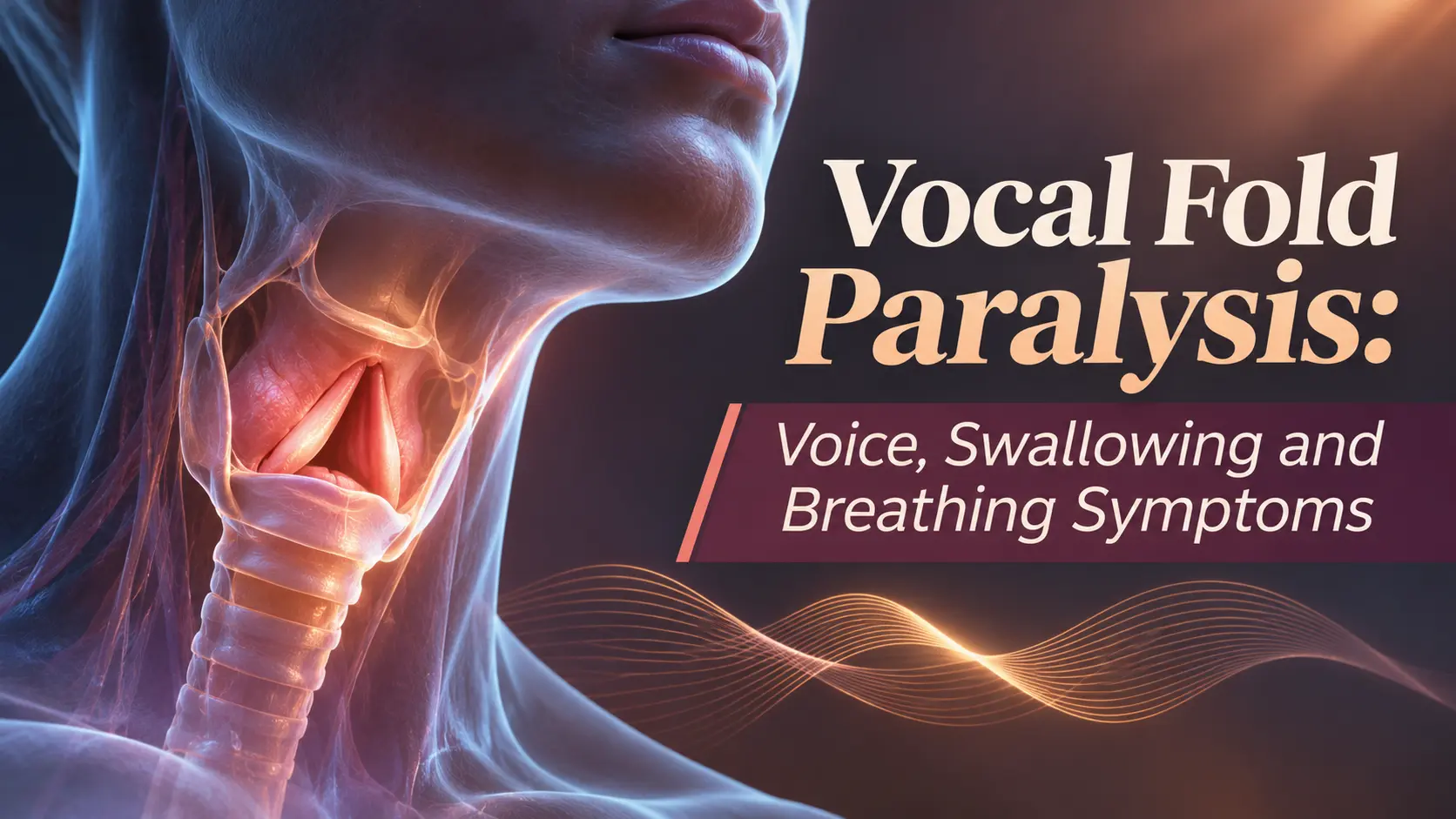
Vocal fold paralysis occurs when one or both vocal folds cannot move normally because of a problem affecting the relevant nerve or its pathway. Depending on the position of the fold and the underlying cause, it may produce a breathy voice, coughing when drinking, swallowing difficulty or breathing symptoms. The range is broad, and the cause should be investigated rather than inferred from voice quality alone.
Symptoms and their significance
A weak, breathy voice or reduced ability to project can occur when the vocal folds do not close adequately. Some people cough with liquids or feel that food goes the wrong way, which can signal a swallowing safety issue. If both vocal folds are affected in a way that narrows the airway, noisy or difficult breathing can occur and may be urgent. Symptoms depend on the pattern of movement and compensation by other muscles.
Looking for the cause
Assessment may include a flexible laryngoscopy to observe vocal fold movement. The clinician will ask about neck or chest surgery, intubation, neurological symptoms, infection and the timing of onset. Imaging or other tests may be required to evaluate the nerve pathway, depending on the history and examination. Do not assume the cause is a previous cold or surgery without a suitable work-up.
Treatment and rehabilitation
Management depends on whether one or both folds are affected, the cause, the effect on airway and swallowing, and whether recovery is expected. Voice therapy may help selected patients; procedures can improve closure or reposition the fold in some situations. Swallowing assessment and dietary or technique adjustments may be needed if aspiration is suspected. Treatment goals should prioritise breathing safety, safe swallowing and communication needs.
When to seek urgent care
Emergency evaluation is needed for new noisy breathing, significant shortness of breath, inability to swallow saliva or rapidly worsening symptoms. New coughing or choking with liquids, recurrent chest infections or unexplained voice change requires timely assessment. A clear care plan should explain who to contact if breathing, swallowing or voice symptoms deteriorate.
Frequently asked questions
Can vocal fold paralysis improve? Recovery depends on the cause and nerve injury. Some cases improve, while others require ongoing treatment or voice rehabilitation.
Can it affect swallowing? Yes. In some cases food or liquid may enter the airway, so coughing with meals should be assessed.
Is a breathy voice an emergency? A breathy voice alone is not always an emergency, but breathing difficulty or noisy breathing requires urgent care.
Related reading
- Persistent Hoarseness: Causes and When to See an ENT Specialist
- Vocal Fold Nodules and Persistent Hoarseness: What to Know
- Swallowing Difficulty (Dysphagia): Causes and When to Seek Help