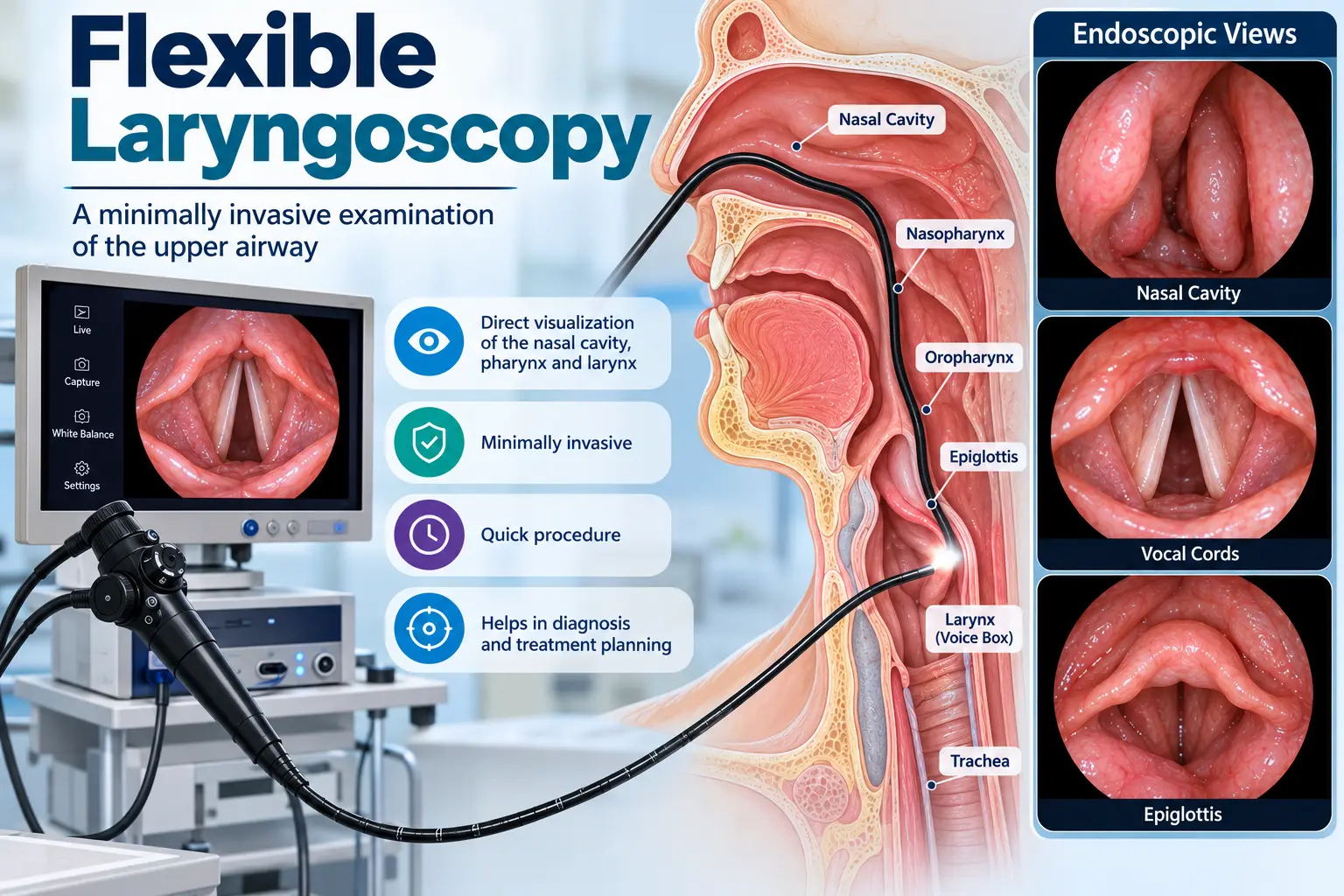
Laryngoscopy: How Clinicians Examine the Voice Box
Find out when laryngoscopy is used, what an office examination feels like, and how the findings guide next steps.
Read MoreThe examination may show vocal-fold movement, inflammation, swelling, lesions or other visible changes. It can help guide further investigation, but findings must be interpreted alongside symptoms and do not replace other tests when these are needed.
The procedure is usually brief. You may feel pressure or an urge to sneeze or swallow, and the clinician explains each step. Whether numbing spray is used and what happens afterwards depends on the clinical setting and your circumstances.
Breathing difficulty, coughing blood, a neck lump with persistent hoarseness or trouble swallowing warrants prompt medical assessment.
This information is general and does not replace an individual medical assessment.
Patient Resources
Patient-friendly articles related to this service and common questions about assessment and care.
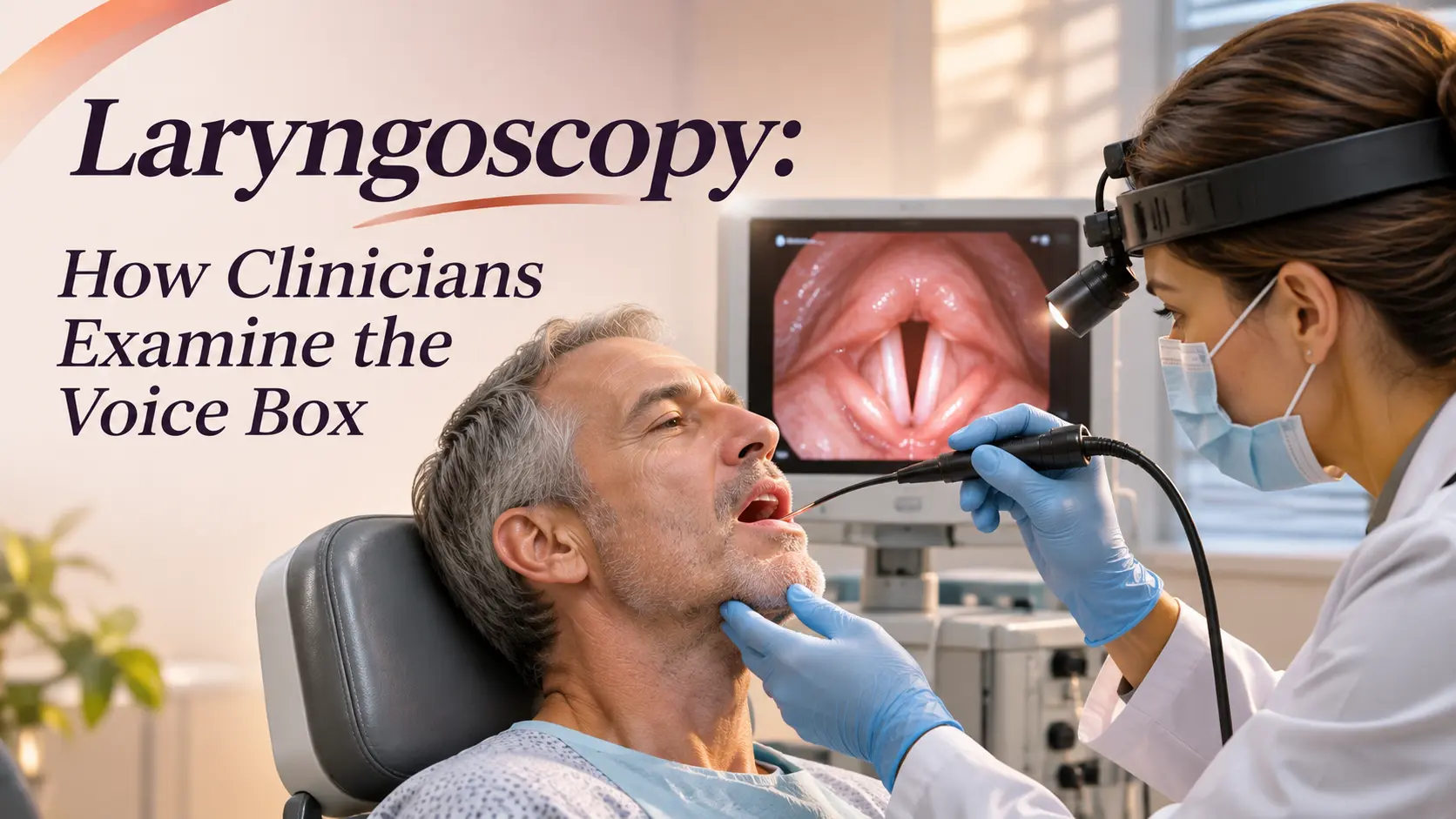
Find out when laryngoscopy is used, what an office examination feels like, and how the findings guide next steps.
Read More
Learn how vocal fold polyps may affect the voice, why laryngeal examination is important, and how treatment is selected.
Read More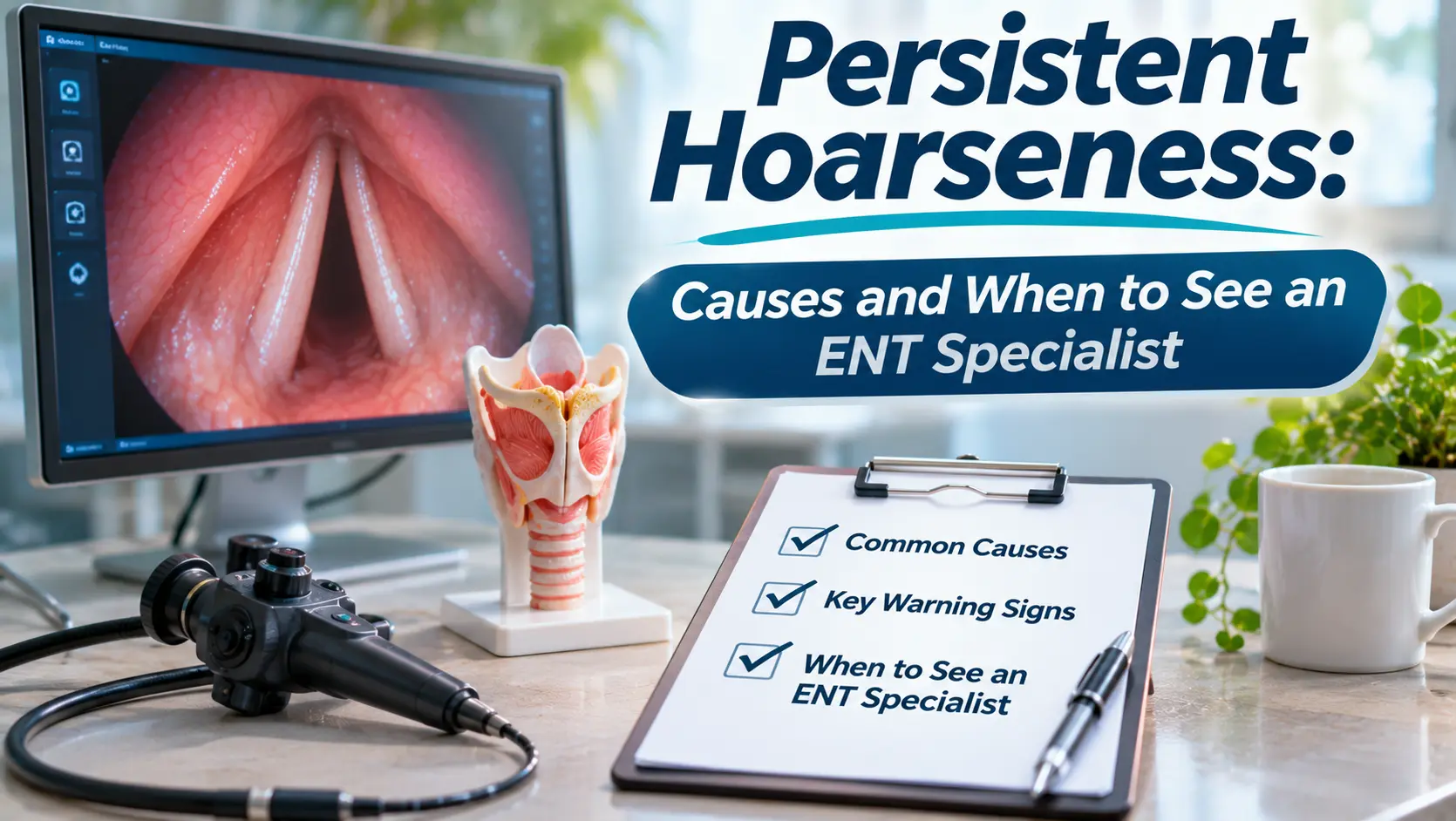
Explore common reasons for a hoarse voice, practical voice-care steps, what an ENT assessment may involve, and warning signs that need earlier review.
Read More