
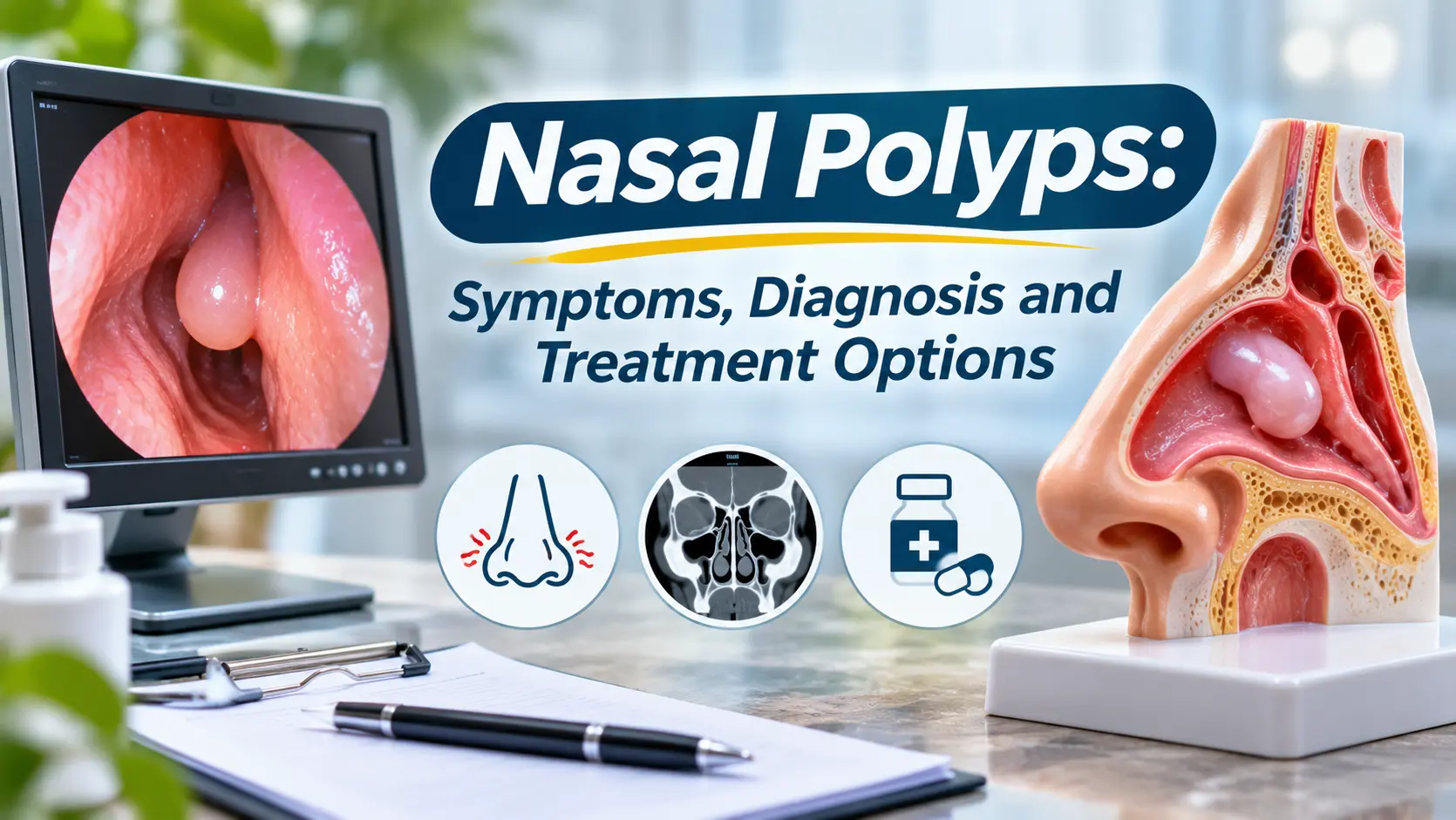
Nasal polyps are soft, usually painless growths that develop from the lining of the nose or sinuses. They are associated with ongoing inflammation and are generally non-cancerous. Small polyps may cause few symptoms, while larger or multiple polyps can narrow the nasal passages and interfere with smell, sleep and breathing through the nose.
What symptoms can nasal polyps cause?
- A blocked or persistently congested nose.
- A runny nose or mucus draining down the back of the throat.
- Reduced or lost sense of smell and sometimes taste.
- Facial pressure, headache or symptoms of chronic sinusitis.
- Snoring or mouth breathing, especially when nasal blockage is substantial.
These symptoms overlap with allergies, infections and structural nasal problems. Symptoms alone cannot confirm that polyps are present. A persistent one-sided blockage or a mass on one side should not be assumed to be an ordinary polyp and needs medical assessment.
Why do nasal polyps develop?
The exact cause is not fully understood. Polyps are linked to long-standing inflammation of the nasal and sinus lining. They occur more often in people with chronic rhinosinusitis and may be associated with asthma or sensitivity to aspirin and related medicines. These associations do not mean every person with asthma or allergies will develop polyps.
How are nasal polyps diagnosed?
An ENT specialist may ask about the duration of congestion, changes in smell, asthma, allergies, previous sinus infections and medicines. Examination may include nasal endoscopy, which allows the clinician to view areas inside the nose that are difficult to see from the outside. CT imaging may be used when the extent of sinus disease needs clarification or surgery is being considered. Testing is chosen according to the clinical picture rather than performed automatically for everyone.
What treatments are available?
The goal is to reduce inflammation, improve symptoms and address associated conditions. Depending on the individual case, options may include:
- Saline nasal rinses to help clear mucus and irritants. Use sterile or distilled water, or water that has been boiled and cooled, and follow device-cleaning instructions.
- Intranasal corticosteroids to reduce inflammation and shrink polyps in some people. Correct technique and regular use as directed matter.
- Other prescription treatments for selected cases. Oral corticosteroids can have significant side effects and should only be used under clinical supervision for a specific reason.
- Endoscopic sinus surgery when symptoms remain significant despite appropriate medical treatment or when the clinical findings support surgery. Surgery can improve access for ongoing topical treatment, but polyps can recur and follow-up may be needed.
- Specialist treatments for severe recurrent disease may be suitable for selected patients after assessment of disease severity and associated conditions.
Will nasal polyps come back after treatment?
They can. Because the underlying tendency to inflammation may persist, continued treatment and follow-up may be needed even after surgery. A clinician can explain the likely benefits, limitations, recurrence risk and long-term plan for the individual's condition.
When should you seek medical advice?
Arrange an assessment if congestion persists, smell is reduced, symptoms worsen or you suspect polyps. Seek urgent care for rapidly worsening symptoms, swelling around the eyes, visual changes, severe headache, confusion or neck stiffness. One-sided blockage, repeated bleeding or a visible unilateral mass should be examined rather than self-treated as polyps.
Common questions
Are nasal polyps cancer? Typical nasal polyps are non-cancerous, but a one-sided mass needs examination because not every nasal growth is a polyp.
Can sprays make polyps disappear? Steroid nasal sprays may shrink them and ease symptoms, but response varies and treatment plans should be reviewed clinically.
Sources and further reading
- NHS: Nasal polyps
- Mayo Clinic: Nasal polyps — symptoms and causes
- Mayo Clinic: Nasal polyps — diagnosis and treatment
Educational information only; treatment choices depend on examination and individual medical history.