
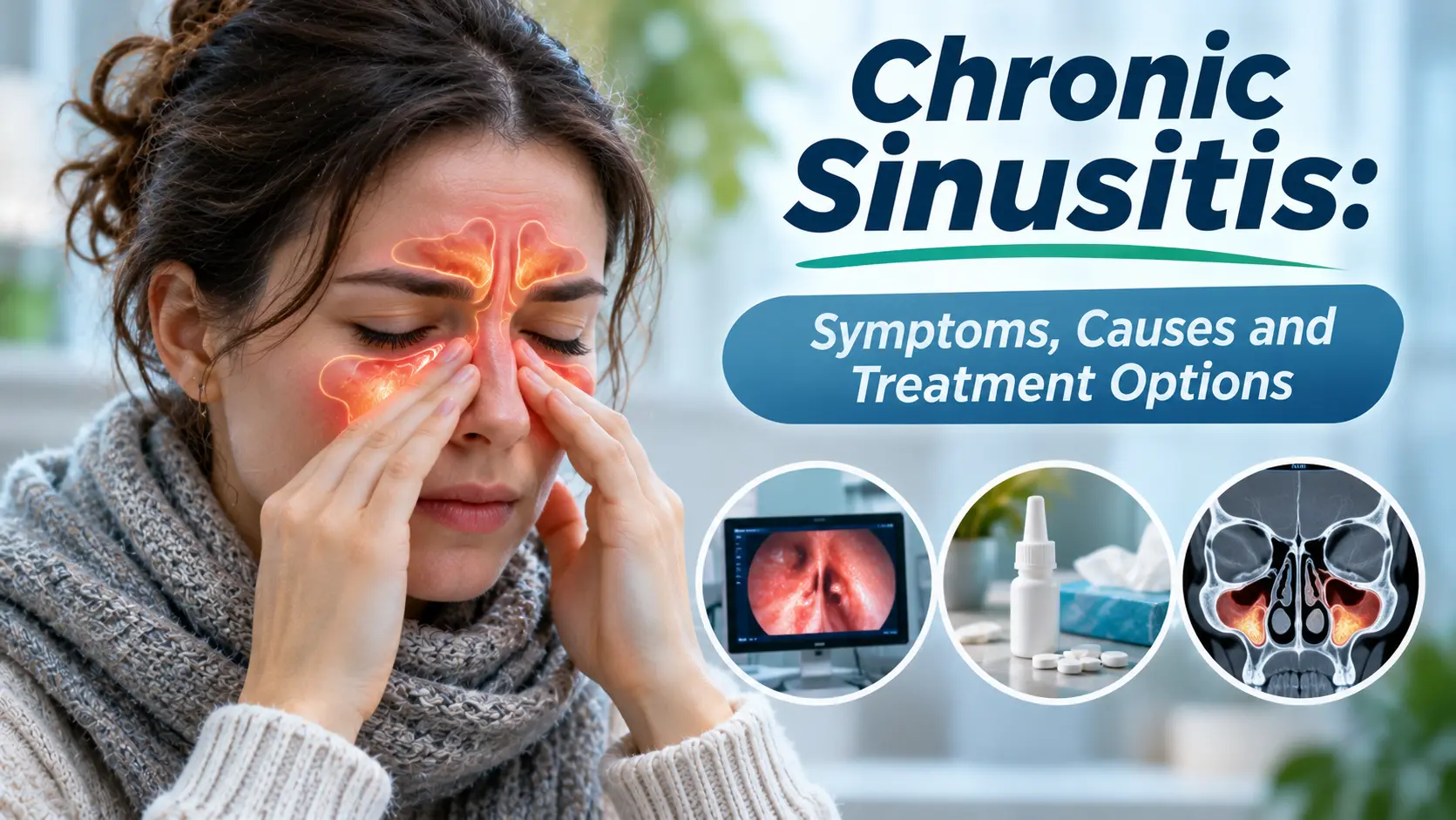
Sinusitis, also called rhinosinusitis, means inflammation of the lining of the nose and sinuses. It can cause a blocked nose, nasal discharge, reduced sense of smell and pressure or discomfort around the face. A single episode often follows a cold, but symptoms that persist for months may need a different assessment from a short-lived infection.
Acute and chronic sinusitis are not the same
Acute sinus symptoms commonly occur during or after a viral respiratory infection and often improve over days to a few weeks. Symptoms that last for 12 weeks or longer may fit chronic rhinosinusitis, but a clinician considers the full pattern and may need to confirm inflammation on examination or imaging. Duration alone is not enough to diagnose the cause.
Common symptoms
- Nasal blockage or congestion.
- Thick nasal discharge or mucus draining down the back of the throat.
- Reduced or lost sense of smell.
- Pressure, fullness or discomfort around the cheeks, eyes or forehead.
- Cough, poor sleep, bad breath or fatigue in some people.
Facial pain and coloured mucus do not, by themselves, prove that an infection is bacterial. Allergic rhinitis, migraine, dental problems and structural nasal blockage can sometimes produce overlapping symptoms.
What can contribute to chronic sinusitis?
Chronic rhinosinusitis is often an inflammatory condition rather than a continuous bacterial infection. Allergies, nasal polyps, asthma, smoke or other irritants, and structural factors may contribute in some people. More than one factor can be present. The aim of assessment is to identify what is maintaining symptoms, not simply to prescribe the same treatment for everyone.
What treatments may help?
Management depends on severity, associated conditions and examination findings. Options may include saline nasal rinses, intranasal corticosteroid sprays, treatment for coexisting allergies and a plan to avoid irritants. A clinician or pharmacist can explain correct technique and whether a particular treatment is suitable.
If nasal irrigation is used, choose sterile or distilled water, or water that has been boiled and cooled, and clean the device as directed. Do not use untreated tap water for nasal rinsing.
Antibiotics are not routinely helpful for every episode of sinus symptoms because many acute infections are viral and chronic sinusitis is often primarily inflammatory. Antibiotics may be considered in selected cases after clinical assessment. Endoscopic sinus surgery may be discussed for some people with confirmed chronic disease whose symptoms remain troublesome despite appropriate medical treatment; surgery is not a universal first step.
When should you see an ENT specialist?
Arrange assessment if symptoms persist for 12 weeks, keep returning, significantly affect sleep or daily life, or do not respond to an appropriate treatment plan. A specialist may examine the nose, perform nasal endoscopy and consider CT imaging when it would help confirm the diagnosis or plan treatment.
Seek urgent medical attention for swelling or redness around an eye, changes in vision, severe or rapidly worsening headache, confusion, stiff neck, or feeling seriously unwell. Persistent one-sided nasal symptoms or repeated unexplained bleeding also deserve assessment.
How can you prepare for an appointment?
Write down how long symptoms have lasted, whether smell has changed, what treatments you have tried and how you used them, any allergy or asthma history, and whether symptoms are mainly one-sided. Bring a list of medicines and questions about expected benefits, side effects and when further tests or surgery might be considered.
Common questions
Does yellow or green mucus mean I need antibiotics? Not necessarily. Colour alone cannot reliably identify a bacterial infection.
Can chronic sinusitis reduce smell? Yes. Inflammation or polyps can affect smell; persistent loss deserves assessment.
Sources and further reading
Educational information only; diagnosis and treatment should be individualised after clinical assessment.
Related research involving Dr. Mohannad Almomani
Dr. Mohannad Almomani is listed as a co-author of this peer-reviewed narrative review on the nasopharyngeal microbiome and ENT inflammation. It offers broader research context for the relationship between the upper-airway microbiome and inflammatory conditions; it does not establish a diagnosis or treatment recommendation for an individual patient.