Chronic Sinusitis: Symptoms, Causes and Treatment Options
Understand how chronic sinusitis differs from a short-lived cold, which symptoms matter, what treatments may help, and when specialist assessment is useful.
Read MoreChronic rhinosinusitis is considered when nasal and sinus symptoms persist over time, commonly for 12 weeks or longer. Symptoms can include nasal blockage, nasal discharge, reduced sense of smell and facial pressure or discomfort. The pattern, combination and duration of symptoms help guide assessment, but symptoms alone do not always establish the diagnosis.
Other conditions, including allergy, migraine and dental problems, can cause symptoms that feel similar. A careful review helps distinguish these possibilities and avoids assuming that every episode of facial pressure is caused by sinus inflammation.
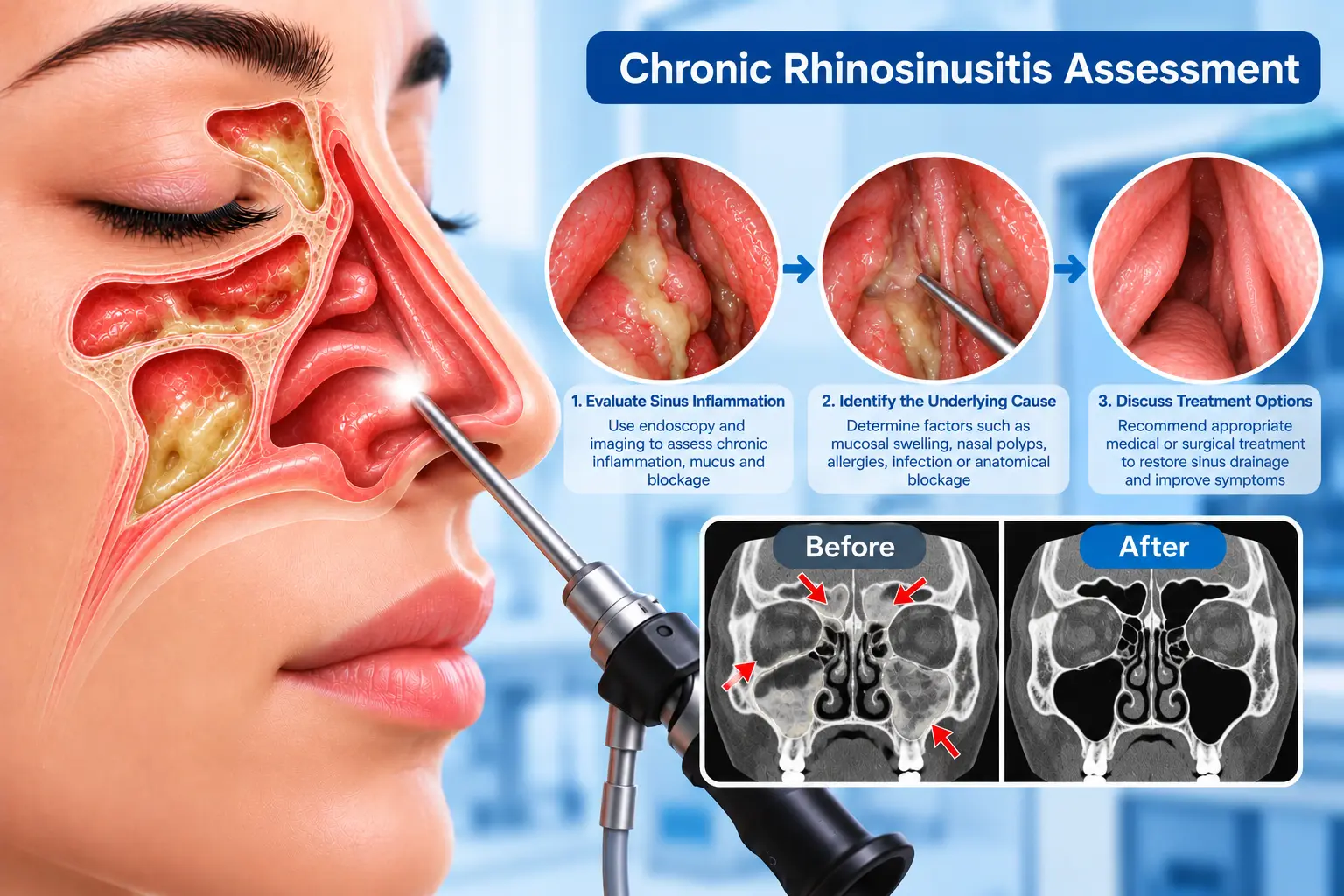
The consultation reviews symptom duration, previous episodes, smell changes, sleep and daily impact, as well as treatments already used. Examination may include nasal endoscopy to look for inflammation, discharge or nasal polyps. A CT scan may be considered when clinical findings indicate that imaging would help clarify the diagnosis or guide further treatment; it is not automatically required for every patient with sinus symptoms.
Associated conditions, such as asthma or allergies, and any history of previous sinus surgery are also important. When the findings are uncertain, the next step may be further assessment rather than moving directly to a treatment or operation.
Management may include appropriate nasal care, medicines and attention to contributing conditions. The choice depends on the diagnosis, symptom burden, examination findings, previous treatment and individual circumstances. There is no single treatment plan that is suitable for every person with persistent sinus symptoms.
For selected patients with confirmed disease that remains troublesome despite appropriate treatment, an ENT specialist may discuss endoscopic sinus surgery. If nasal polyps are present, the assessment may also lead to a discussion of nasal polyp treatment and surgery. The purpose, expected benefits, limitations and need for ongoing care should be explained before a decision.
Facial pressure alone does not prove chronic sinusitis. Assessment combines the symptom history with appropriate examination and, when indicated, imaging.
This information is general and does not replace an individual medical assessment. Investigations and treatment are selected according to clinical findings.
Clinical reference: AAO-HNS Adult Sinusitis Clinical Practice Guideline.
Patient Resources
Patient-friendly articles related to this service and common questions about assessment and care.
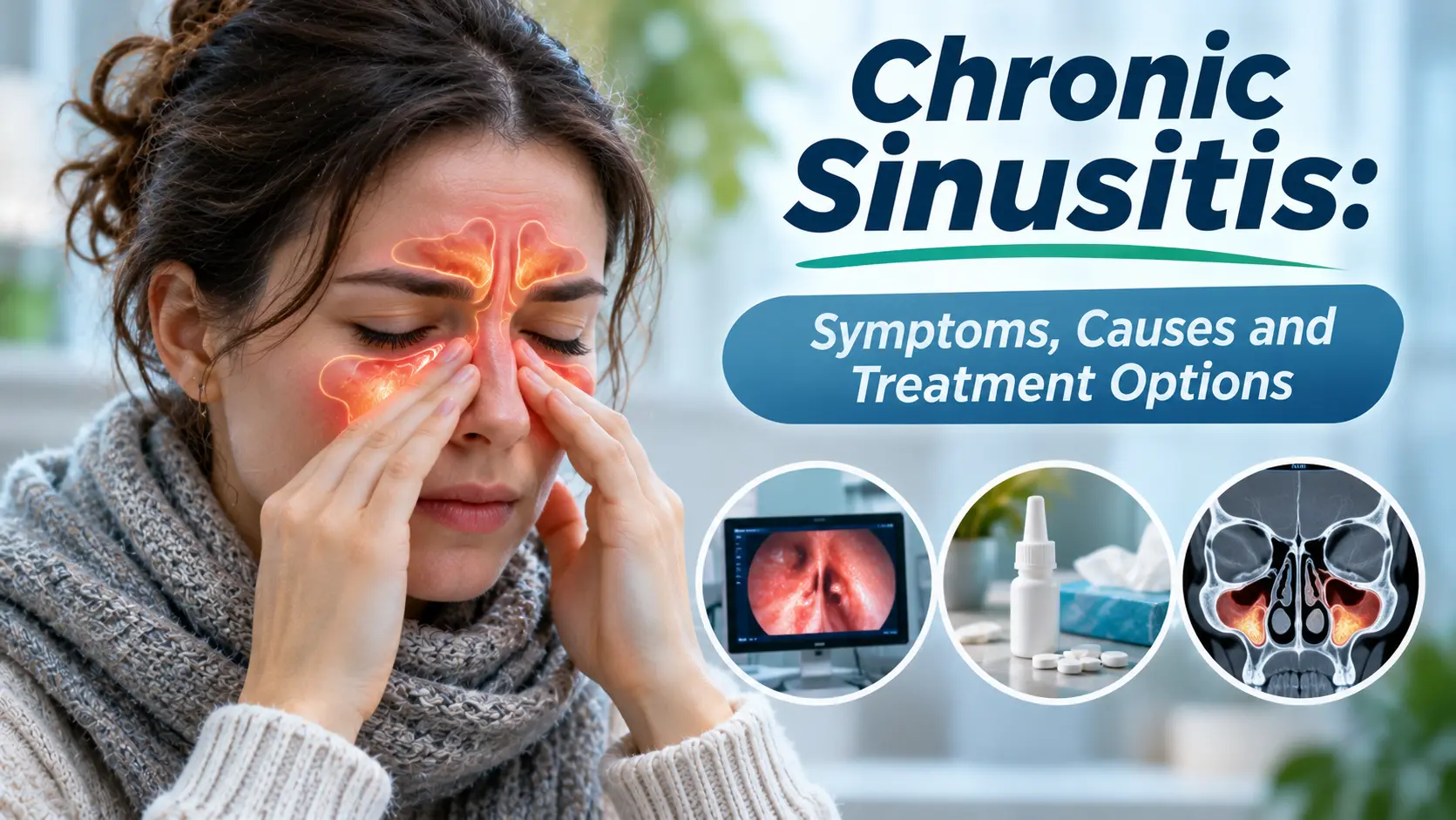
Understand how chronic sinusitis differs from a short-lived cold, which symptoms matter, what treatments may help, and when specialist assessment is useful.
Read More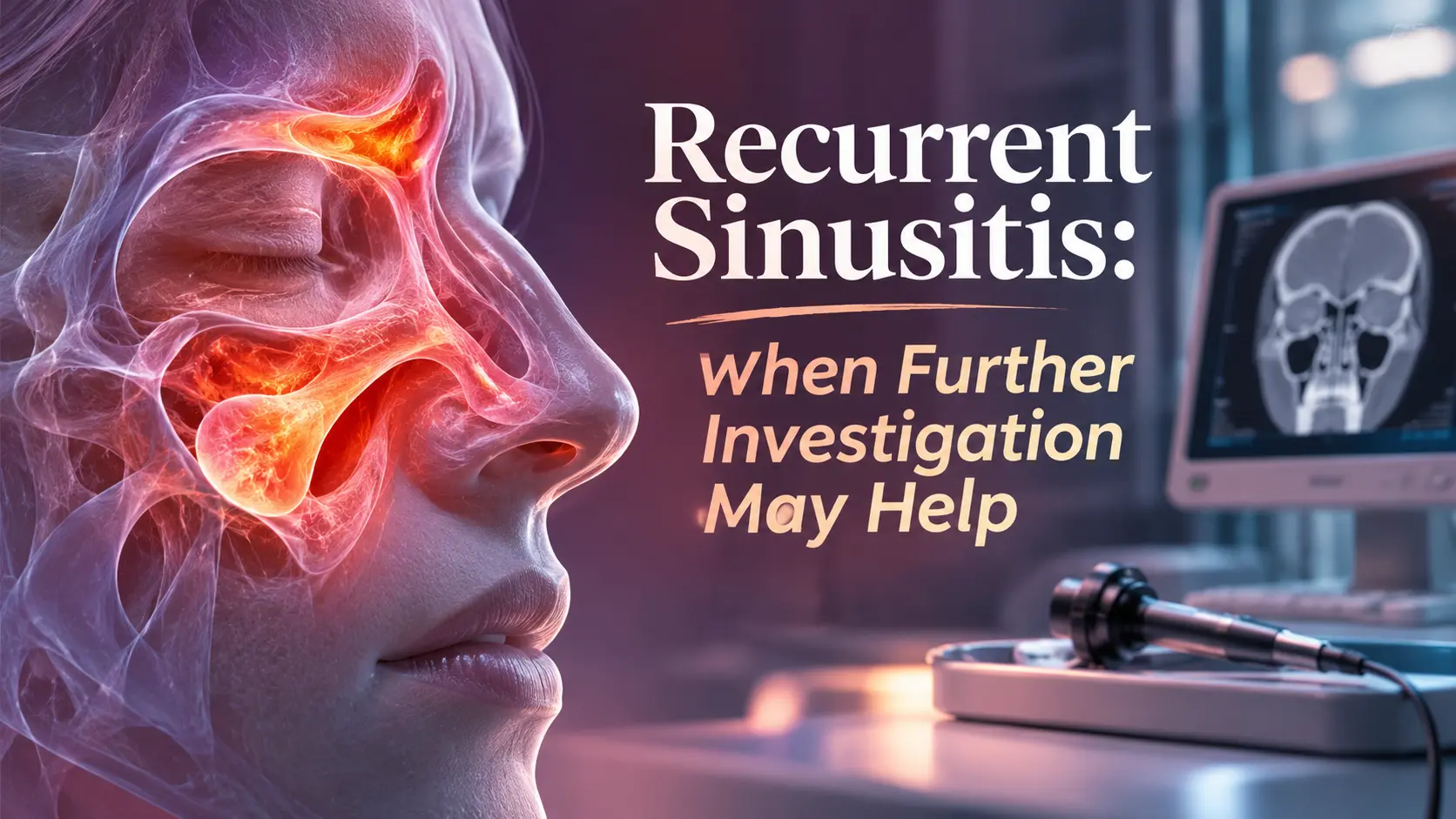
Find out what recurrent sinus symptoms can mean, how clinicians assess possible causes, and when imaging or specialist review may be considered.
Read More
Learn how upper- and lower-airway inflammation may be connected and why coordinated care can improve symptom control.
Read More