
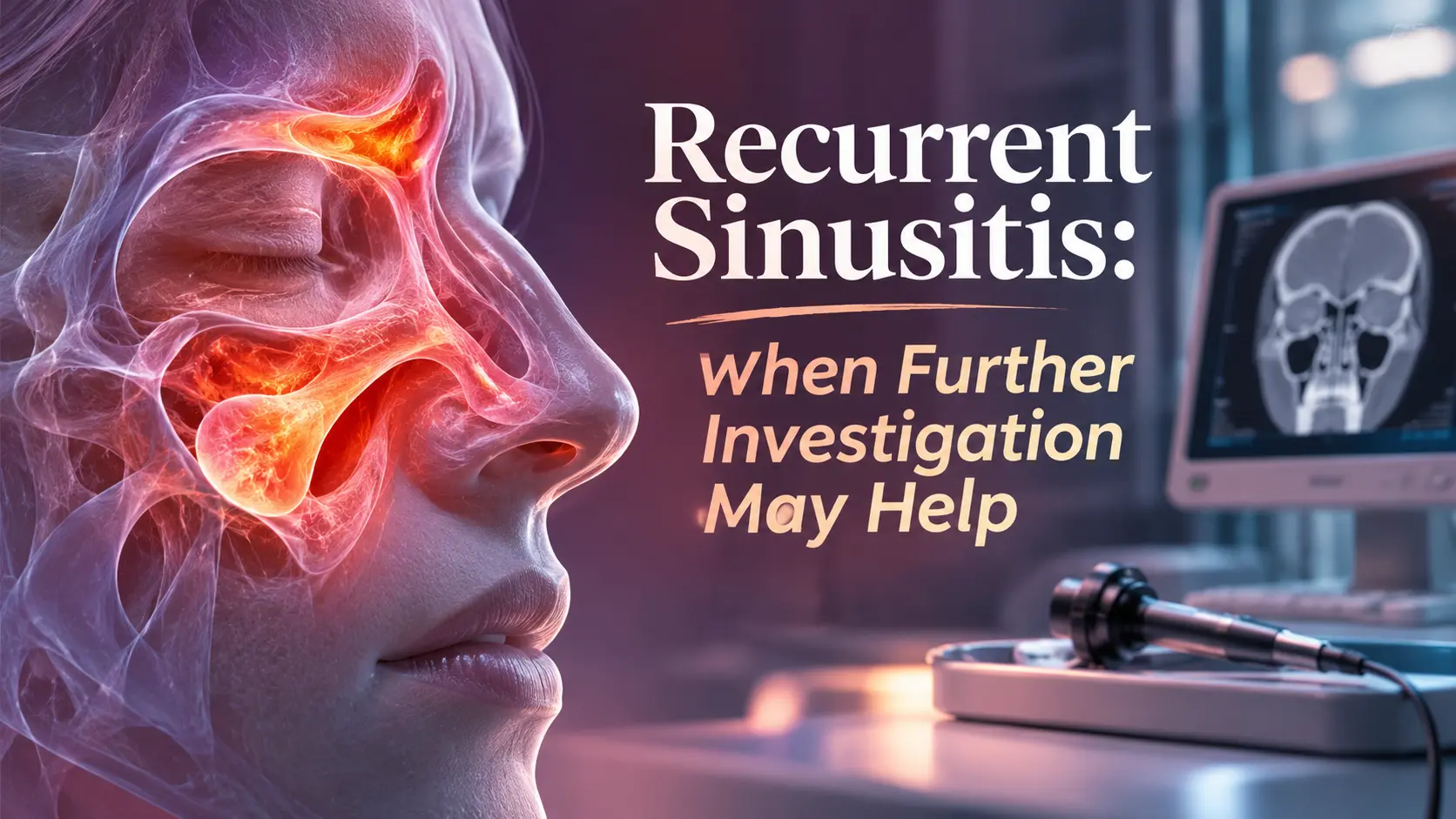
Repeated episodes of facial pressure, nasal blockage, discharge, or reduced smell can be frustrating. Not every episode is bacterial sinusitis: migraine, allergic rhinitis, dental disease, and other causes can mimic sinus symptoms. A careful history helps determine whether episodes are separate acute illnesses or part of persistent inflammation.
What counts as a recurring pattern?
The timing between episodes, how completely symptoms resolve, whether smell is reduced, and whether there is fever or a strong viral trigger all matter. Documenting symptom-free intervals and associated migraine or allergy symptoms may help clinicians identify a pattern that treatment can address.
How assessment is planned
A clinician may examine the nose and review allergies, asthma, smoking or irritant exposure, dental symptoms, previous treatment, and any immune-related concerns. Nasal endoscopy or a CT scan may be considered when symptoms are persistent, the diagnosis is uncertain, complications are suspected, or surgery is being evaluated. Scanning is not required for every uncomplicated episode.
Reducing future episodes
Management depends on the underlying cause and may include correct use of nasal anti-inflammatory treatment, saline irrigation with safe water, allergy management, or addressing dental or other contributors. Antibiotics are not automatically needed for each flare. Persistent, one-sided, bloody, or unusual symptoms require clinical review.
Frequently asked questions
Does recurrent sinusitis always need surgery? No. Many people are managed with medical treatment and attention to triggers; surgery is considered only for selected cases.
Can a migraine feel like sinusitis? Yes. Facial pain and pressure can occur with migraine, particularly when nasal symptoms are also present.
When should I seek urgent help? Eye swelling, double vision, vision loss, confusion, severe headache, or neurological symptoms need urgent assessment.
Related reading
- Chronic Sinusitis: Symptoms, Causes and Treatment Options
- Facial Pain Is Not Always Sinusitis: Other Causes to Consider
Sources and further reading
Related research involving Dr. Mohannad Almomani
Dr. Mohannad Almomani is listed as a co-author of this peer-reviewed narrative review on the nasopharyngeal microbiome and ENT inflammation. It offers broader research context for the relationship between the upper-airway microbiome and inflammatory conditions; it does not establish a diagnosis or treatment recommendation for an individual patient.