Nasal Blockage at Night: Causes and Practical Steps
Explore why nasal congestion may worsen when lying down, which home measures may help, and when persistent obstruction needs assessment.
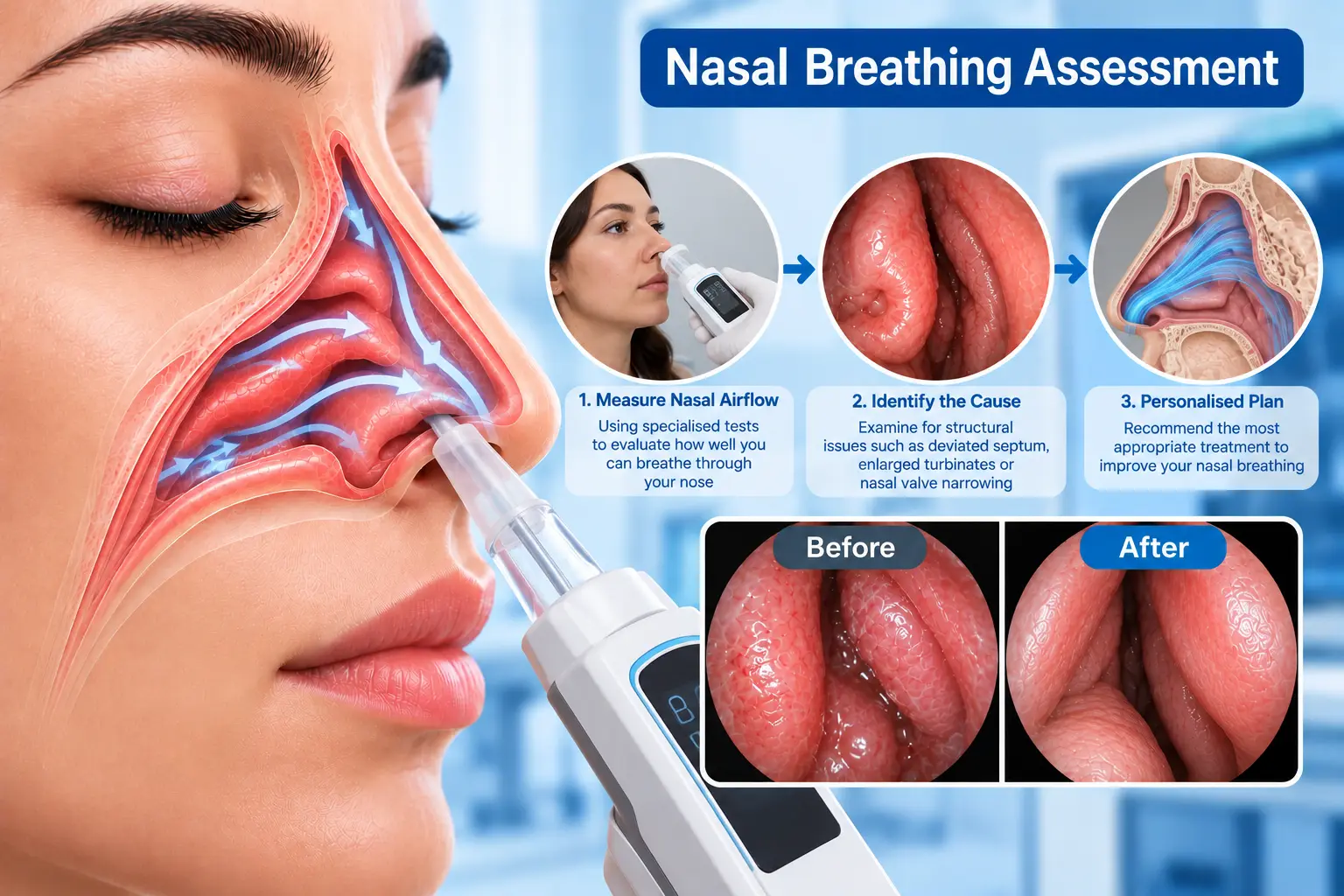
Read MorePersistent nasal blockage can have several causes, and more than one may be present at the same time. The aim of a nasal breathing assessment is to identify which part of the nose or nasal lining is contributing to the problem before treatment is selected. Symptoms should not automatically be attributed to a deviated septum or assumed to require surgery.
The assessment may be useful when congestion is persistent, returns frequently, affects sleep or exercise, or does not improve as expected with treatment. The clinician will ask whether one or both sides are affected, whether the blockage alternates, and whether it changes with posture, activity, allergies or time of day.
Examination may assess the nasal septum, turbinates and nasal valve, as well as the lining of the nose. A deviated septum can narrow one side; enlarged turbinates or inflammation can reduce space inside the nose; and narrowing or weakness of the nasal valve can affect airflow, particularly during breathing in. Allergic rhinitis and nasal polyps may also contribute to obstruction.
Nasal endoscopy may be considered when a closer view of the internal nasal passages is needed. The findings help distinguish structural obstruction from inflammation or other causes, and guide whether further investigation is useful.
Where inflammation is the main factor, medical management may be appropriate. When a structural problem is responsible for significant obstruction, the discussion may include options such as septoplasty, turbinate treatment or assessment for functional rhinoplasty. The best option depends on examination and the contribution of each structure; not every patient needs a procedure.
Ongoing one-sided blockage, recurrent nosebleeds or progressively worsening obstruction should be assessed, particularly when accompanied by other new symptoms.
This information is general and does not replace an individual medical assessment. Treatment recommendations depend on the cause identified during examination.
Patient Resources
Patient-friendly articles related to this service and common questions about assessment and care.

Explore why nasal congestion may worsen when lying down, which home measures may help, and when persistent obstruction needs assessment.
Read More
Explore why one nostril may feel blocked, when an anatomical cause is likely, and which persistent symptoms deserve examination.
Read More
Explore common reasons for a blocked nose, how clinicians distinguish inflammation from structural obstruction, and when persistent symptoms need assessment.
Read More