Nasal Valve Collapse: Why Breathing Through the Nose Feels Difficult
Learn how the narrowest part of the nasal airway supports breathing, common signs of valve narrowing, and how assessment guides treatment.
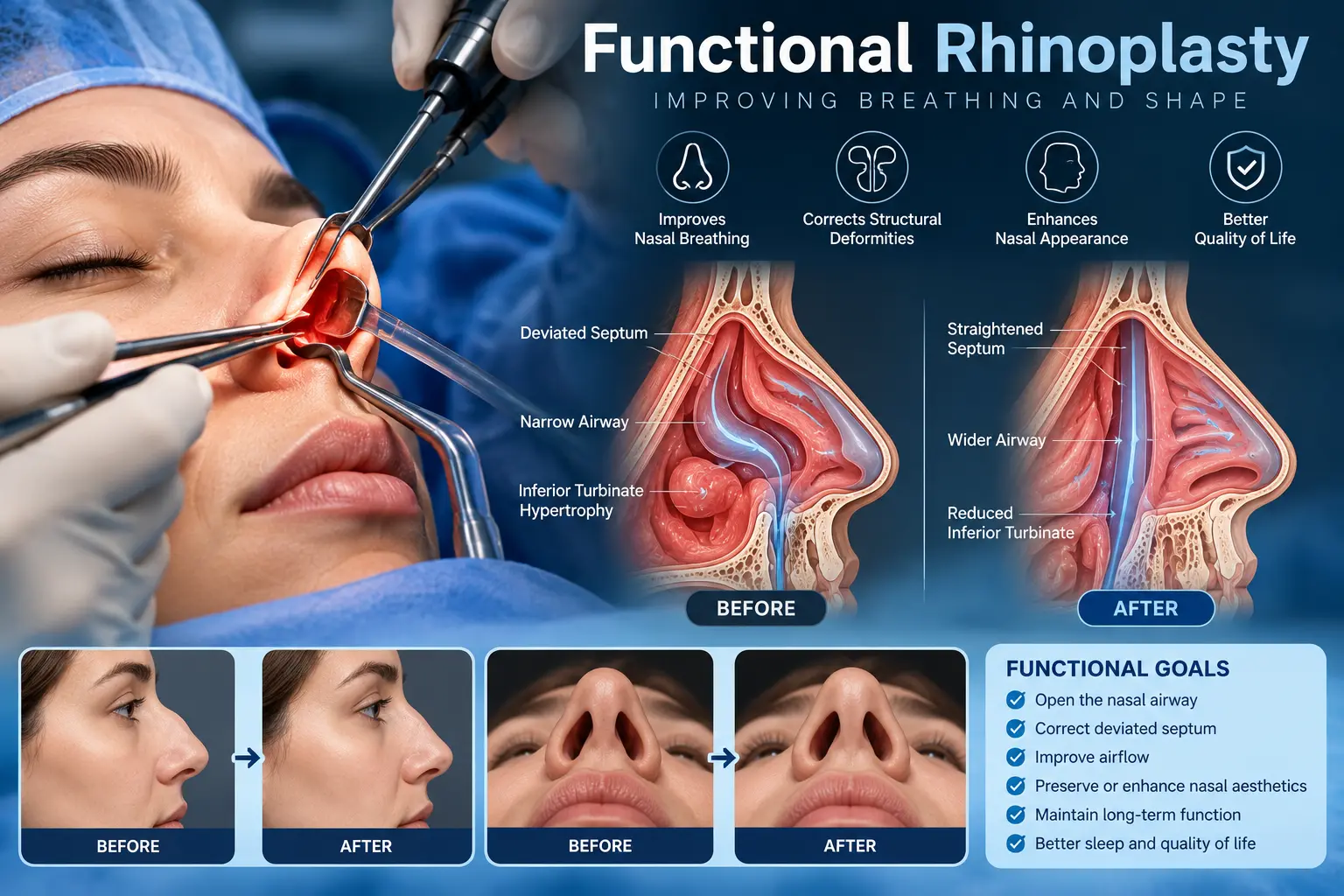
Read MoreFunctional rhinoplasty is considered when the structure of the nose contributes to difficulty breathing. The aim is to assess and, in selected cases, improve structural support or airflow. It is different from surgery planned mainly to change appearance, although functional and cosmetic goals can overlap in some patients.
Nasal obstruction can have more than one cause. The septum may be deviated, the nasal valve may narrow during breathing, the turbinates may be enlarged, or inflammation from allergies and other conditions may contribute. The correct treatment depends on identifying which factors are responsible for symptoms.
The consultation explores whether blockage affects one side or both, whether it changes with posture or exercise, and whether there are associated symptoms such as sneezing, discharge, smell reduction or previous nasal trauma. Examination may assess the septum, nasal valve, external nasal framework, turbinates and nasal lining. Nasal endoscopy may be useful when an internal view is needed to clarify the findings.
Where obstruction is mainly inflammatory, medical management may be more appropriate than structural surgery. Where a structural issue is significant, discussion may include the specific area to be addressed and whether septoplasty, turbinate treatment or functional rhinoplasty is relevant. These procedures are not interchangeable.
A blocked nose does not automatically mean that rhinoplasty is needed. The assessment should explain the likely contribution of each anatomical or inflammatory factor and why a proposed treatment is suitable. Read more about the diagnostic process on the nasal breathing assessment page.
If appearance is the main concern, discuss the goals and limitations of cosmetic rhinoplasty. If breathing is the main concern, the plan should focus on the cause of obstruction.
This information is general and does not replace an individual medical assessment. Expected benefits and risks depend on the anatomy, diagnosis and procedure being considered.
Patient Resources
Patient-friendly articles related to this service and common questions about assessment and care.
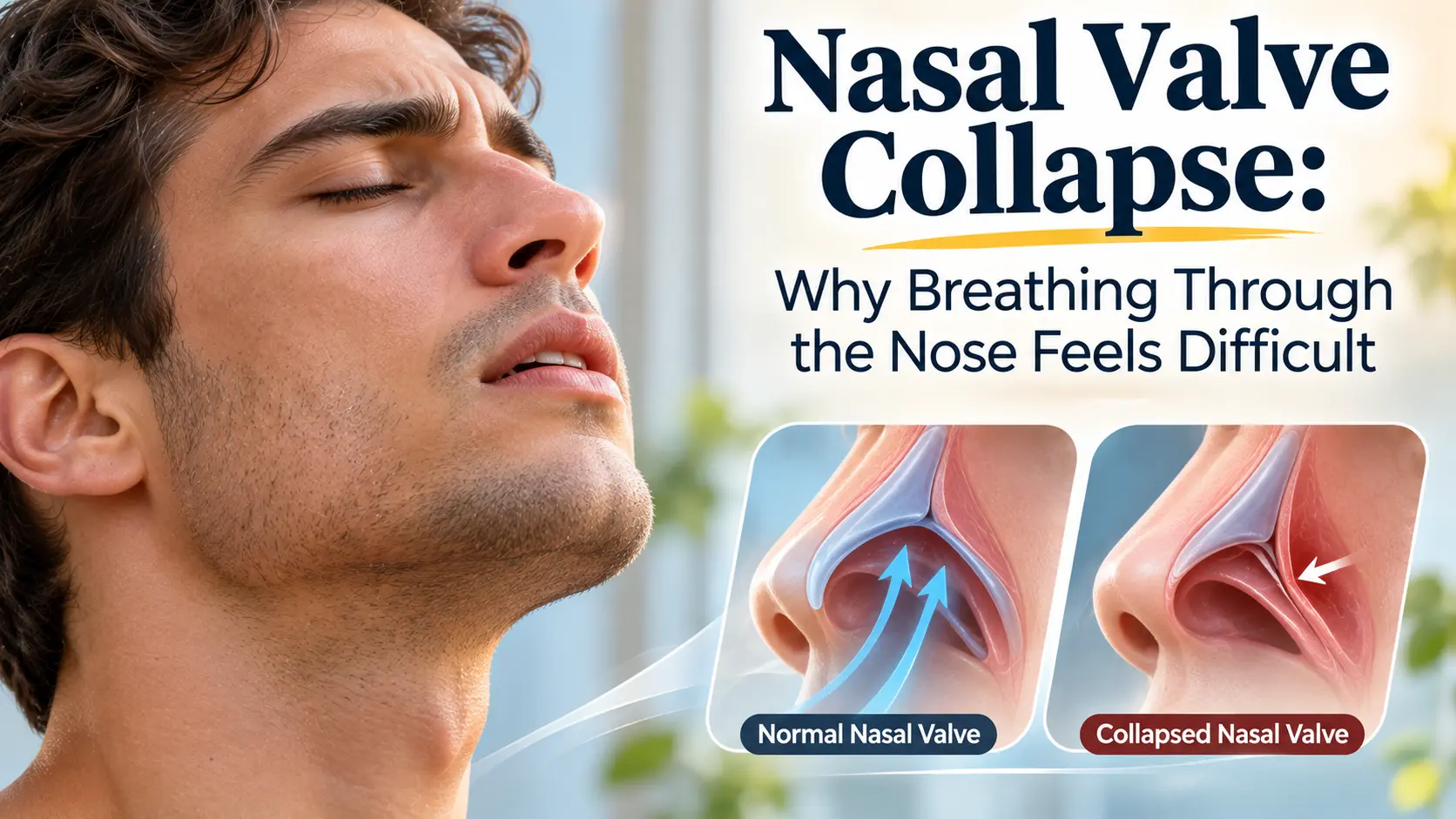
Learn how the narrowest part of the nasal airway supports breathing, common signs of valve narrowing, and how assessment guides treatment.
Read More
Explore why breathing through the nose may feel difficult during exercise and how structural or inflammatory causes are assessed.
Read More