Rhinoplasty Recovery: What Is Typical and Which Symptoms Need Review?
A practical guide to recovery after rhinoplasty, including swelling, activity, follow-up and symptoms that should not be ignored.
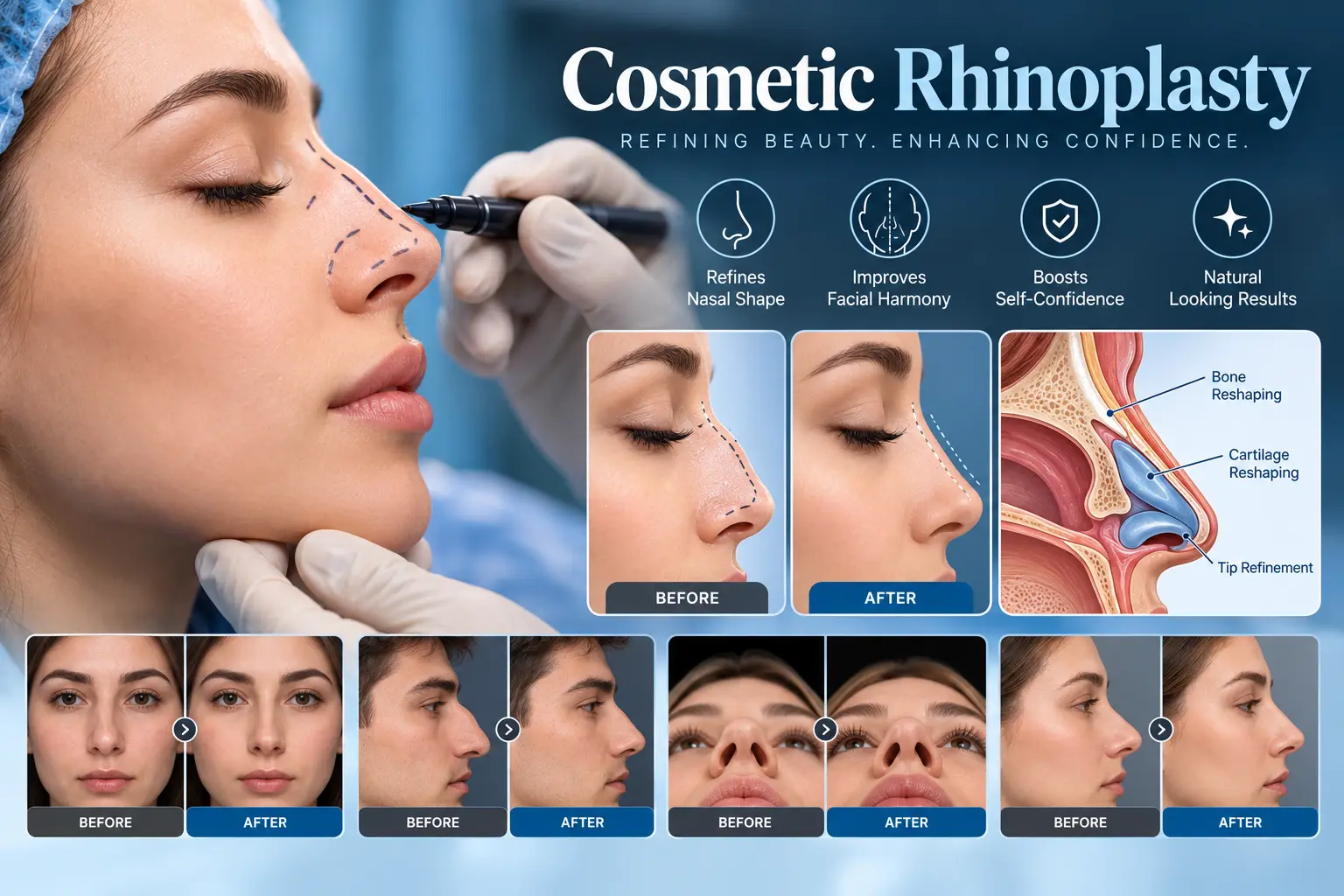
Read MoreCosmetic rhinoplasty is considered by people who wish to explore changes to the appearance or proportions of the nose. Concerns may relate to the bridge, tip, width, profile or the way the nose relates to the rest of the face. Whether surgery is appropriate cannot be decided from a photograph or a single feature alone.
A consultation considers nasal anatomy, skin characteristics, cartilage and bone structure, facial proportions, general health and previous procedures. Breathing is also important: an appearance-related plan should take account of nasal function and any existing obstruction. The possible approach depends on individual findings, not on a standard shape or template.
The appointment should clarify what you hope to change and what matters most to you. The surgeon reviews your medical and surgical history, any previous nasal injury, breathing symptoms, medicines that may affect surgery, and your expectations about the result. The discussion should include realistic limits, alternative options and whether further assessment is needed before a decision can be made.
Cosmetic goals and breathing-related problems are related but not identical. When the main concern is airflow or structural obstruction, a functional rhinoplasty assessment may be more relevant, although some patients have both functional and appearance concerns.
Swelling and bruising can occur after rhinoplasty, and the early appearance is not the final result. Recovery timelines and the pace of healing vary. As with other operations, risks and complications need to be discussed in relation to the planned procedure and your health. A responsible decision includes understanding what surgery may improve, what it cannot guarantee and whether the likely benefits match your priorities.
Rhinoplasty cannot guarantee an identical result to a reference photograph. Planning considers proportion, nasal function, safety and individual healing together.
This information is general and does not replace an individual medical assessment or a personalised discussion of surgical risks.
Further reading: NHS guidance on nose reshaping (rhinoplasty).
Patient Resources
Patient-friendly articles related to this service and common questions about assessment and care.

A practical guide to recovery after rhinoplasty, including swelling, activity, follow-up and symptoms that should not be ignored.
Read More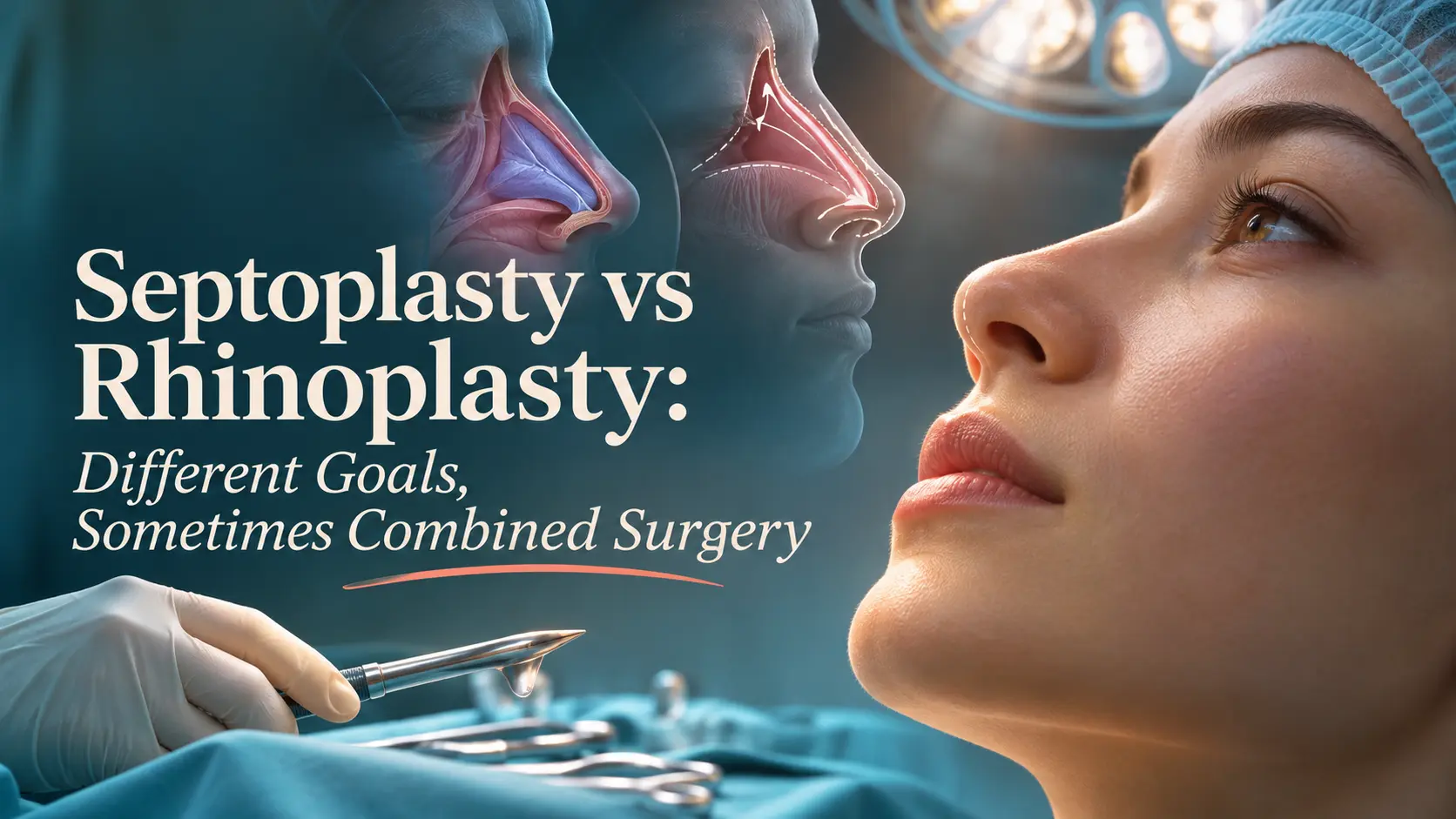
Understand the difference between septoplasty and rhinoplasty, what each procedure aims to change, and how to discuss expectations.
Read More