
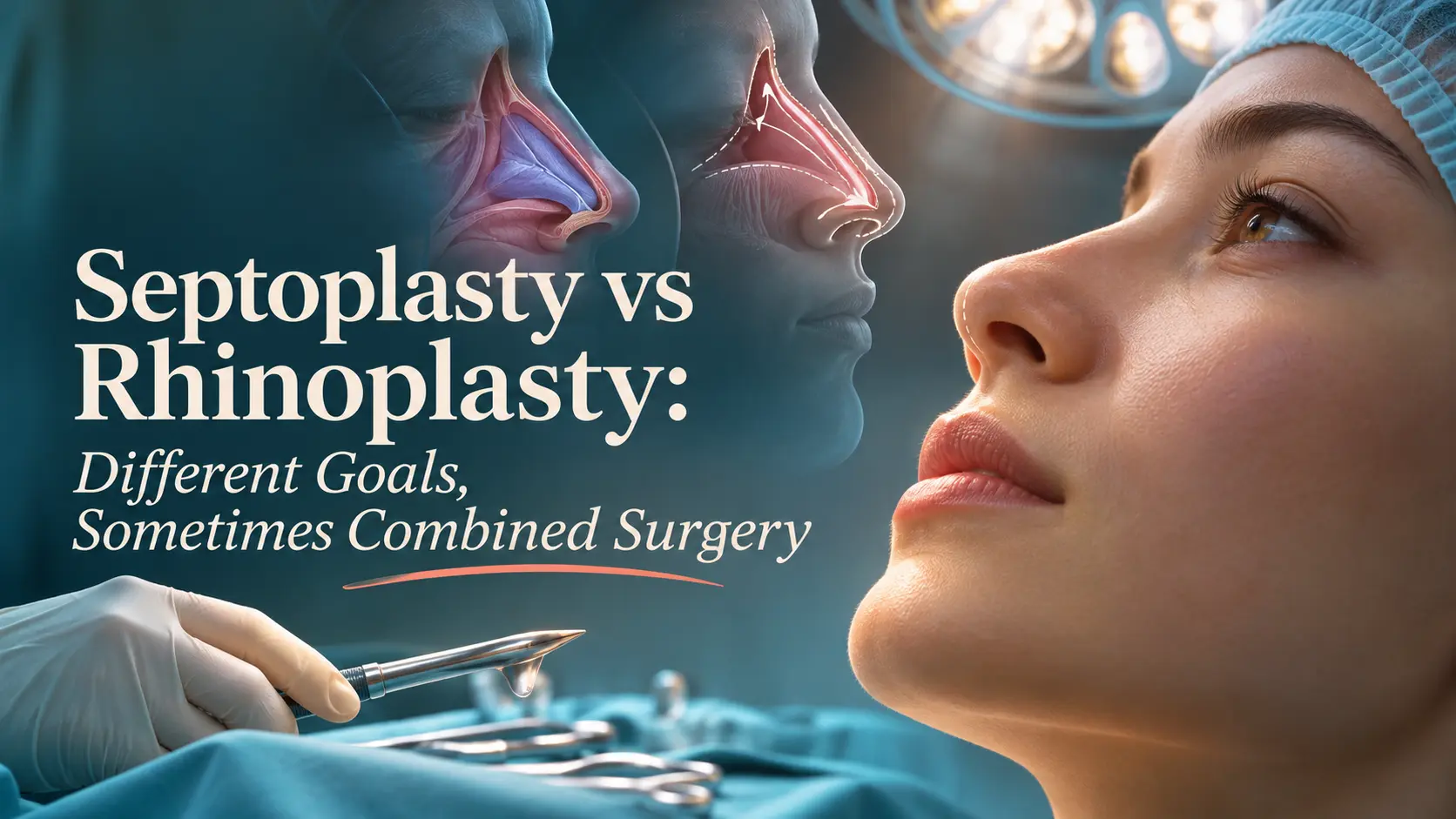
Septoplasty and rhinoplasty are both operations involving the nose, but they generally have different goals. Septoplasty aims to improve the position of the internal nasal septum when deviation contributes to obstruction. Rhinoplasty changes the external shape or framework of the nose and may be cosmetic, functional or both. Procedures can sometimes be combined, but the appropriate plan depends on anatomy, symptoms, goals and clinical assessment.
What septoplasty is intended to do
The nasal septum separates the two nasal passages. If it is significantly deviated, airflow may be restricted. Septoplasty repositions or reshapes parts of the septum to improve the internal passage; it does not automatically correct allergies, enlarged turbinates or all causes of blockage. The expected benefit should be tied to examination findings and the symptoms that the operation is likely to address.
What rhinoplasty is intended to do
Rhinoplasty changes the external nasal structure to address appearance, function or both. The details may involve bone, cartilage and support structures. Results vary with anatomy, skin characteristics, healing and the specific technique. Any discussion should include realistic goals, limitations, recovery, possible need for revision and how breathing function will be protected or assessed.
Can the procedures be combined?
In selected cases, a surgeon may perform septoplasty with functional or cosmetic rhinoplasty. Combining procedures can be appropriate but may add complexity. A careful assessment should cover breathing, external structure, previous injury or surgery, relevant medicines and the person’s expectations. Ask how success will be measured for both function and appearance and what happens if the result differs from the plan.
Questions to ask before deciding
Ask which findings explain the symptoms, what non-surgical options remain, what outcome is realistic, how risks are reduced and who will provide follow-up. Discuss bleeding, infection, altered sensation, persistent obstruction, cosmetic changes and the possibility of further treatment. A decision should follow a balanced conversation rather than being based on before-and-after images alone.
Frequently asked questions
Will septoplasty change the outside of my nose? Its primary goal is internal function, but changes to external shape can sometimes occur; the surgeon should explain the specific plan and risks.
Does rhinoplasty always improve breathing? No. The outcome depends on the structures treated and the individual anatomy.
Can the procedures be done together? Sometimes. The suitability and risks of combined surgery need an individual surgical assessment.
Explore our nasal surgery consultation page for more information about this care option. A clinician can advise based on the individual history and examination findings.
Related reading
- Deviated Septum: Symptoms, Diagnosis and Treatment Options
- Septoplasty: Goals, Preparation and Recovery
- Nasal Valve Collapse: Why Breathing Through the Nose Feels Difficult
Sources and further reading
Related research involving Dr. Mohannad Almomani
A 2026 co-authored paper by Dr. Mohannad Almomani and colleagues describes a surgical technique for selected septal deviations. It offers research context and does not determine which operation is appropriate for an individual patient.
- A Combination of Scoring and Modified Mattress Suture Technique for the Management of Caudal or Dorsal Septal Deviations: In Vitro and In Vivo Results (2026, Surgical Techniques Development)