
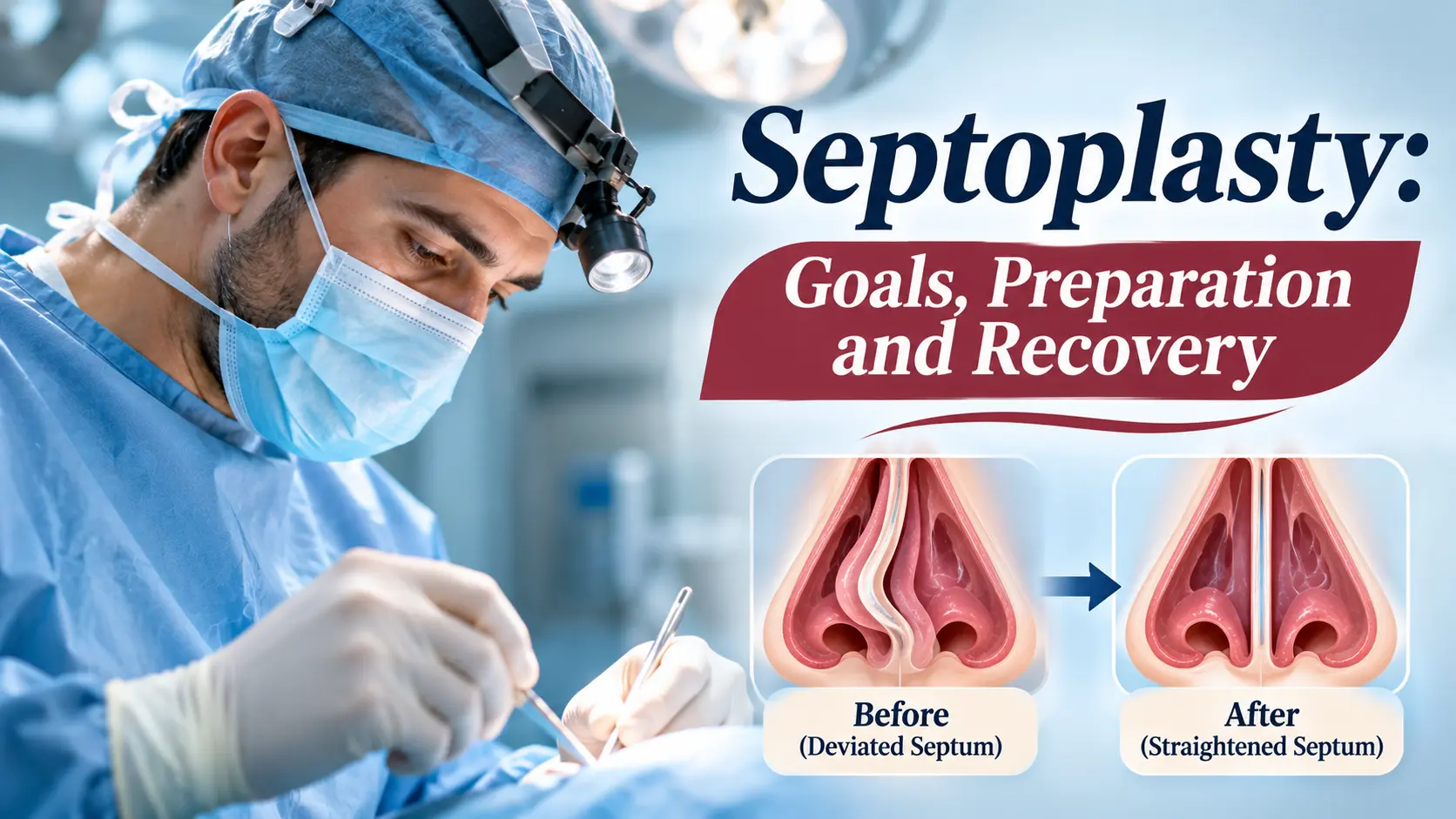
Septoplasty is an operation to straighten or reposition parts of the nasal septum, the wall separating the two nasal passages. It is usually considered when a deviation contributes to troublesome nasal obstruction and symptoms have not improved enough with appropriate treatment for coexisting inflammation. A deviated septum alone does not mean surgery is necessary.
Before deciding on surgery
The surgeon should explain which symptoms are likely to improve, which may persist, and whether allergies, enlarged turbinates, nasal valve narrowing, or sinus disease also need attention. Review medical conditions, previous operations, medicines, supplements, smoking, and any history of bleeding or anaesthesia problems. Do not stop anticoagulants or other prescribed medicines without a plan from the treating team.
Ask whether the procedure is septoplasty alone or combined with another operation, what the goals are, and what alternatives remain. It is reasonable to ask how success will be measured, what risks apply to your anatomy, and what the surgeon recommends if symptoms persist.
What recovery may involve
After surgery, nasal blockage, swelling, mild bleeding or bloody discharge, pressure, and tiredness can occur for a period of time. Recovery instructions vary by technique and by whether other procedures were performed. Follow the specific guidance on saline, activity, nose-blowing, medication, and follow-up visits rather than relying on a general timetable.
The nose may feel blocked while swelling settles, so an early sensation of congestion does not necessarily mean the procedure has failed. Attend planned reviews; the team may need to inspect healing and manage crusting. Avoid contact sports or heavy exertion until the surgeon says they are safe.
Risks and symptoms that need help
Possible complications include bleeding, infection, persistent obstruction, septal perforation, altered smell, or changes to the appearance of the nose; risks vary and should be discussed individually. No operation can guarantee perfect airflow or eliminate every cause of nasal symptoms.
Contact the surgical team for persistent or increasing bleeding, fever, worsening pain, or symptoms that concern you. Seek urgent care for heavy bleeding that will not stop, vision changes, severe headache, confusion, or continuous clear watery nasal drainage after surgery.
Common questions
Will septoplasty change how my nose looks? Septoplasty is intended to improve the internal septum and breathing, not necessarily the external appearance. Combined procedures may change appearance and should be discussed clearly.
When can I return to exercise? Timing depends on the procedure and healing. Follow the surgeon’s restrictions, especially for heavy lifting or activities where the nose may be hit.
Explore our nasal surgery consultation page for more information about this care option. A clinician can advise based on the individual history and examination findings.
Related reading
Sources and further reading
Related research involving Dr. Mohannad Almomani
A co-authored 2026 publication discusses a technique for selected caudal or dorsal septal deviations; individual treatment decisions still depend on examination findings and patient-specific considerations.
- A Combination of Scoring and Modified Mattress Suture Technique for the Management of Caudal or Dorsal Septal Deviations: In Vitro and In Vivo Results (2026, Surgical Techniques Development)