
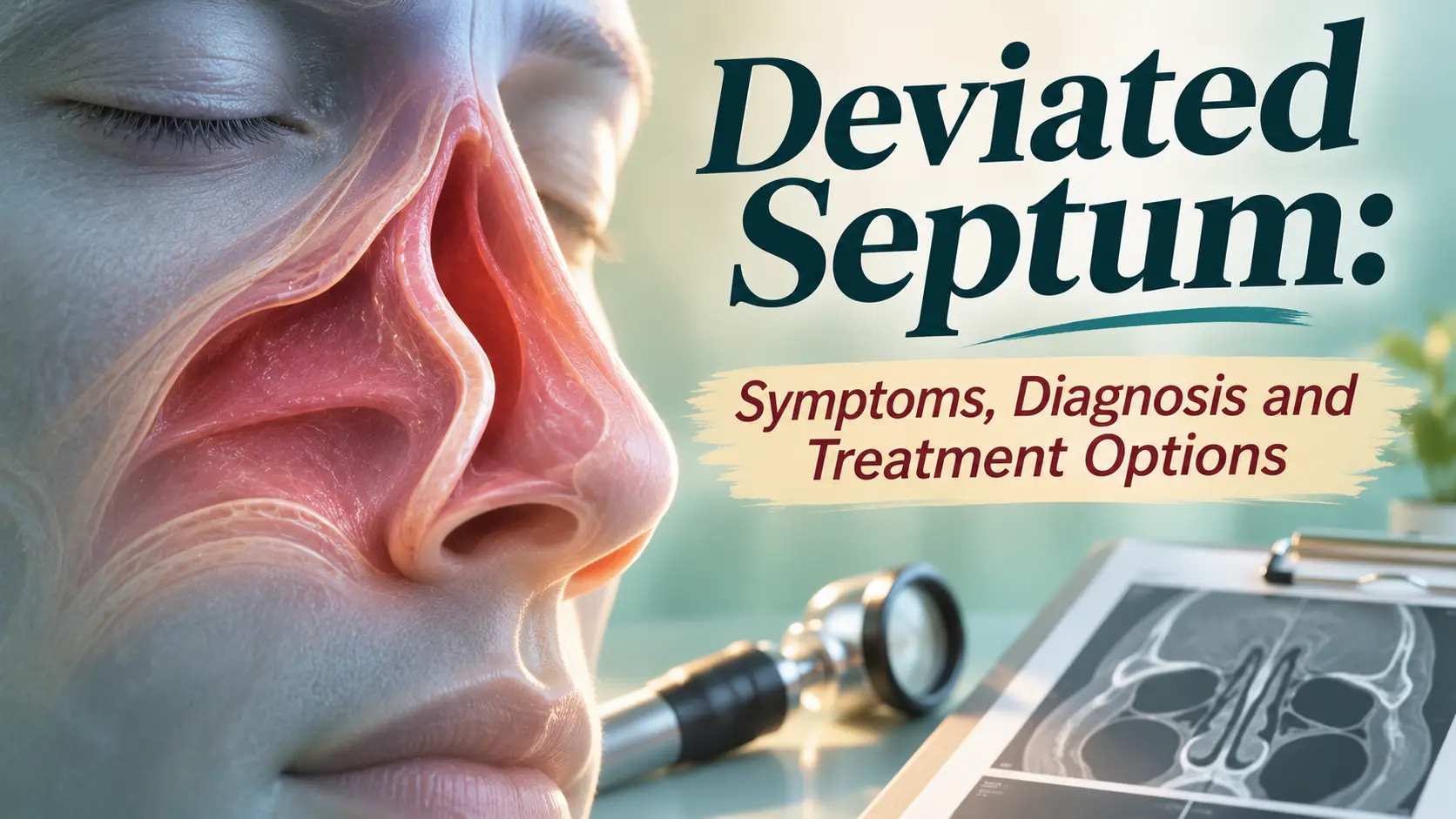
The nasal septum is the wall of cartilage and bone that separates the two sides of the nose. A septum that sits off-centre is common and may cause no symptoms. Treatment is considered when the shape contributes to ongoing obstruction, recurrent problems, or breathing difficulty that affects sleep and everyday life.
Symptoms do not tell the whole story
A deviated septum may cause blockage that is worse on one side, mouth-breathing, noisy sleep, or recurrent nosebleeds. Some people also report repeated sinus symptoms, but a deviated septum is not the only possible explanation for congestion. Allergic inflammation, turbinate enlargement, polyps, and nasal valve problems can coexist.
The examination looks at the septum and other causes of obstruction. An ENT clinician may use a lighted instrument or nasal endoscopy; imaging is not needed for every person and is usually requested when there is another clinical reason, such as suspected sinus disease or complex anatomy.
Medical treatment and surgery
Medicines do not straighten cartilage or bone, but treatment for coexisting allergies or inflammation may reduce symptoms. Saline, prescribed nasal sprays, and trigger management may be useful when inflammation contributes. A clinician should explain how to use a spray correctly and how long to try it before reassessing the result.
Septoplasty is an operation intended to improve airflow by repositioning or reshaping the septum. It does not guarantee relief for every cause of nasal blockage and is not automatically required because a septum looks crooked. Discuss expected benefits, limitations, bleeding, infection, perforation, and recovery with the surgeon before deciding.
Questions to ask at assessment
Ask whether the obstruction appears mainly structural, inflammatory, or mixed; what non-surgical options are reasonable; and how success will be measured. If cosmetic changes are also desired, clarify whether a separate or combined procedure is being proposed and what each part is intended to achieve.
Seek prompt medical care after nasal trauma if breathing is blocked, bleeding will not stop, or a soft purple swelling appears inside the nose. Do not try to push the septum into place yourself.
Common questions
Does everyone with a deviated septum need surgery? No. Many people have a deviation without meaningful symptoms. Treatment depends on the impact on breathing and the full examination.
Can sprays fix a deviated septum? Sprays cannot straighten the septum, but they may help if swelling or allergic inflammation also contributes to blockage.
Explore our ENT second-opinion consultation page for more information about this care option. A clinician can advise based on the individual history and examination findings.
Related reading
- Persistent Nasal Congestion: Common Causes and Assessment
- Nasal Valve Collapse: Why Breathing Through the Nose Feels Difficult
Sources and further reading
Related research involving Dr. Mohannad Almomani
Research co-authored by Dr. Mohannad Almomani in 2026 reports a technique for selected septal deviations. The publication is not a guarantee of outcome or a substitute for an individual surgical assessment.
- A Combination of Scoring and Modified Mattress Suture Technique for the Management of Caudal or Dorsal Septal Deviations: In Vitro and In Vivo Results (2026, Surgical Techniques Development)