
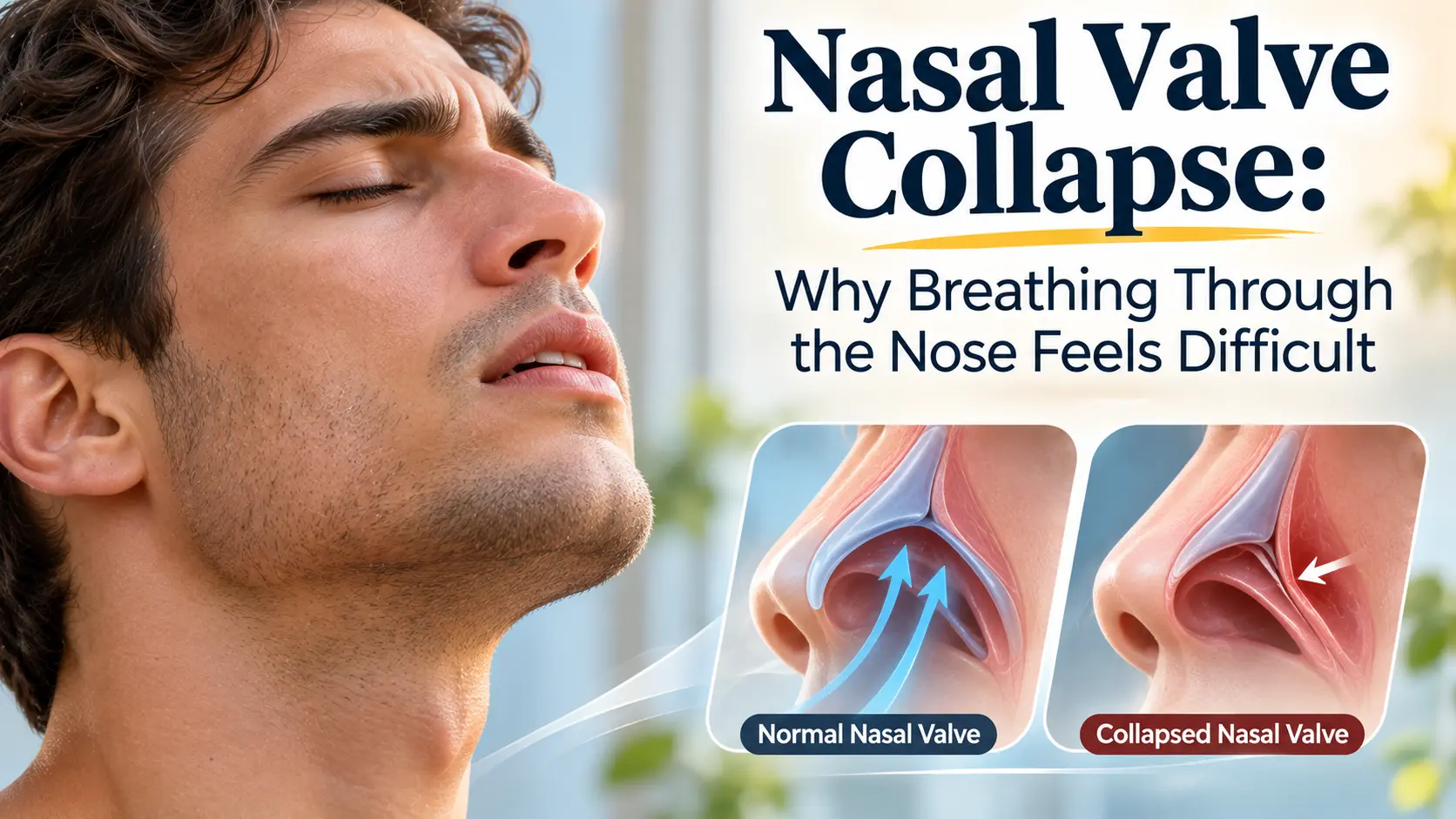
The nasal valve is a narrow region of the nasal airway that contributes importantly to airflow. If the sidewall becomes weak or the passage is narrowed, breathing through the nose may feel restricted, particularly during exercise or a deep breath in. Nasal valve problems can occur alone or alongside a deviated septum, turbinate enlargement, or inflammation.
Symptoms and contributing factors
People may describe a blocked nose despite little mucus, difficulty drawing air through one or both nostrils, or improvement when gently supporting the side of the nose. Prior nasal trauma or surgery, natural anatomy, and age-related tissue changes may contribute. These symptoms are not enough to diagnose valve collapse, and self-tests or strips cannot replace an examination.
An ENT clinician evaluates the nasal sidewalls and other structures during breathing and may use specific examination techniques. It is important to identify coexisting allergies or turbinate swelling because treating those factors can help even when the valve itself also contributes.
Treatment options depend on the cause
For some people, external nasal strips or an internal support device may provide temporary symptom relief, especially during sleep or exercise. They are not a cure and may not be suitable for everyone. Treating inflammation can help when swelling is part of the problem, but sprays cannot correct structural weakness.
When symptoms are significant and examination confirms a structural valve problem, a specialist may discuss procedures that support or widen the affected area. The right approach depends on anatomy, previous surgery, skin and cartilage characteristics, and the patient’s goals. Ask about expected breathing improvement, cosmetic implications, risks, and alternatives before deciding.
When assessment is worthwhile
Arrange an assessment when nasal breathing remains difficult despite appropriate treatment, affects sleep or exercise, or began after an injury or operation. Persistent one-sided blockage or recurrent bleeding should also be checked for other causes rather than automatically attributed to the valve.
If breathing suddenly becomes difficult after facial trauma, or a nose injury produces severe swelling or bleeding, seek prompt medical care.
Common questions
Can a nasal strip prove I have valve collapse? No. It may temporarily improve airflow for several reasons but cannot confirm the diagnosis.
Will an allergy spray fix structural collapse? It may help associated inflammation, but it does not repair weakened cartilage or other structural narrowing.
Explore our functional rhinoplasty page for more information about this care option. A clinician can advise based on the individual history and examination findings.