Nasal Valve Collapse: Why Breathing Through the Nose Feels Difficult
Learn how the narrowest part of the nasal airway supports breathing, common signs of valve narrowing, and how assessment guides treatment.
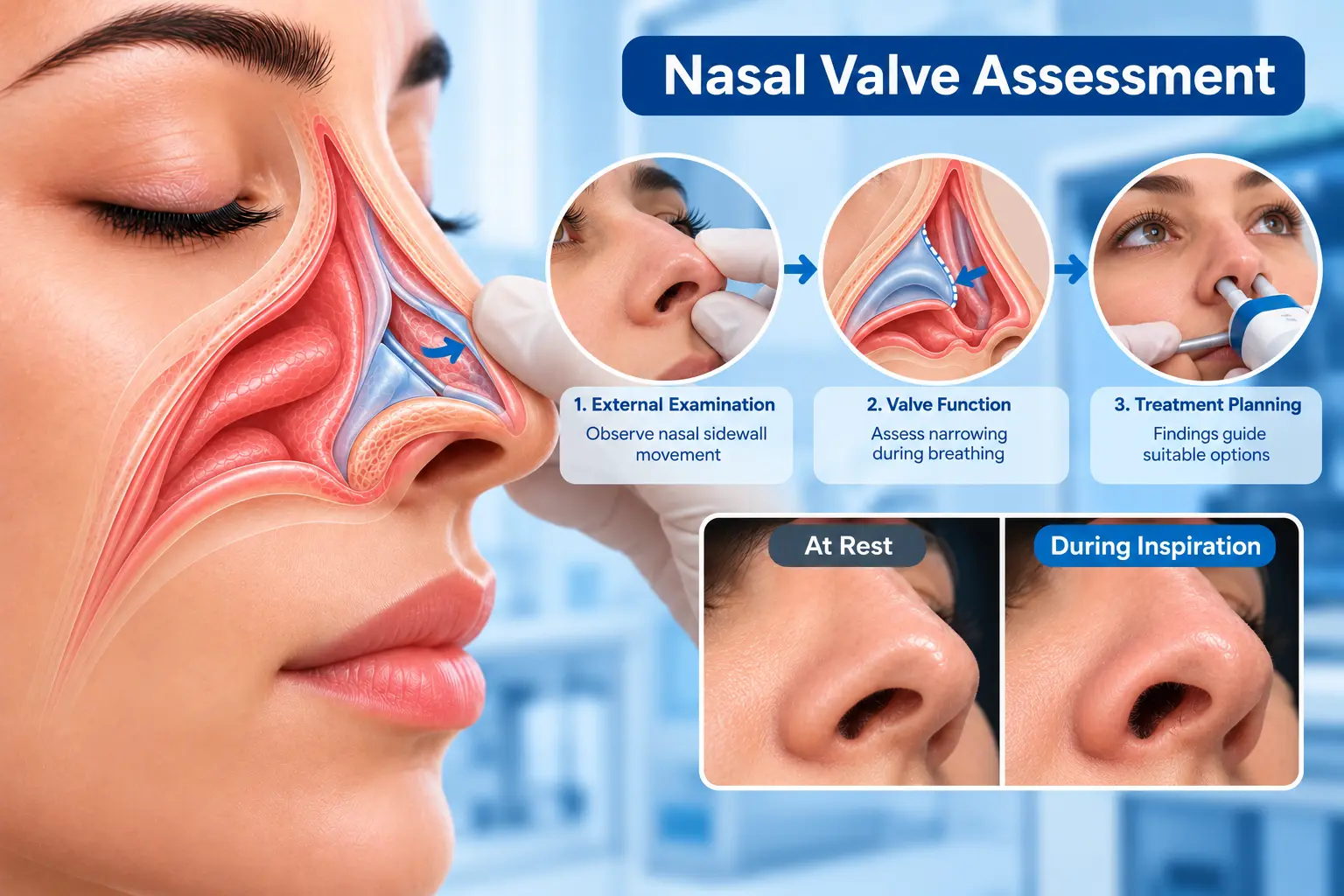
Read MoreThe clinician reviews breathing symptoms at rest and during activity, previous injury or surgery, and whether external support changes airflow. Examination considers the internal and external nasal valve along with the septum, turbinates and signs of inflammation.
Treatment depends on the anatomy and severity. Some patients benefit from non-surgical measures, while selected structural problems may lead to discussion of functional nasal surgery. The expected benefit and risks should be explained before a decision.
A feeling of blockage alone does not confirm nasal valve collapse. Examination is needed to distinguish valve problems from septal deviation, turbinate enlargement and inflammation.
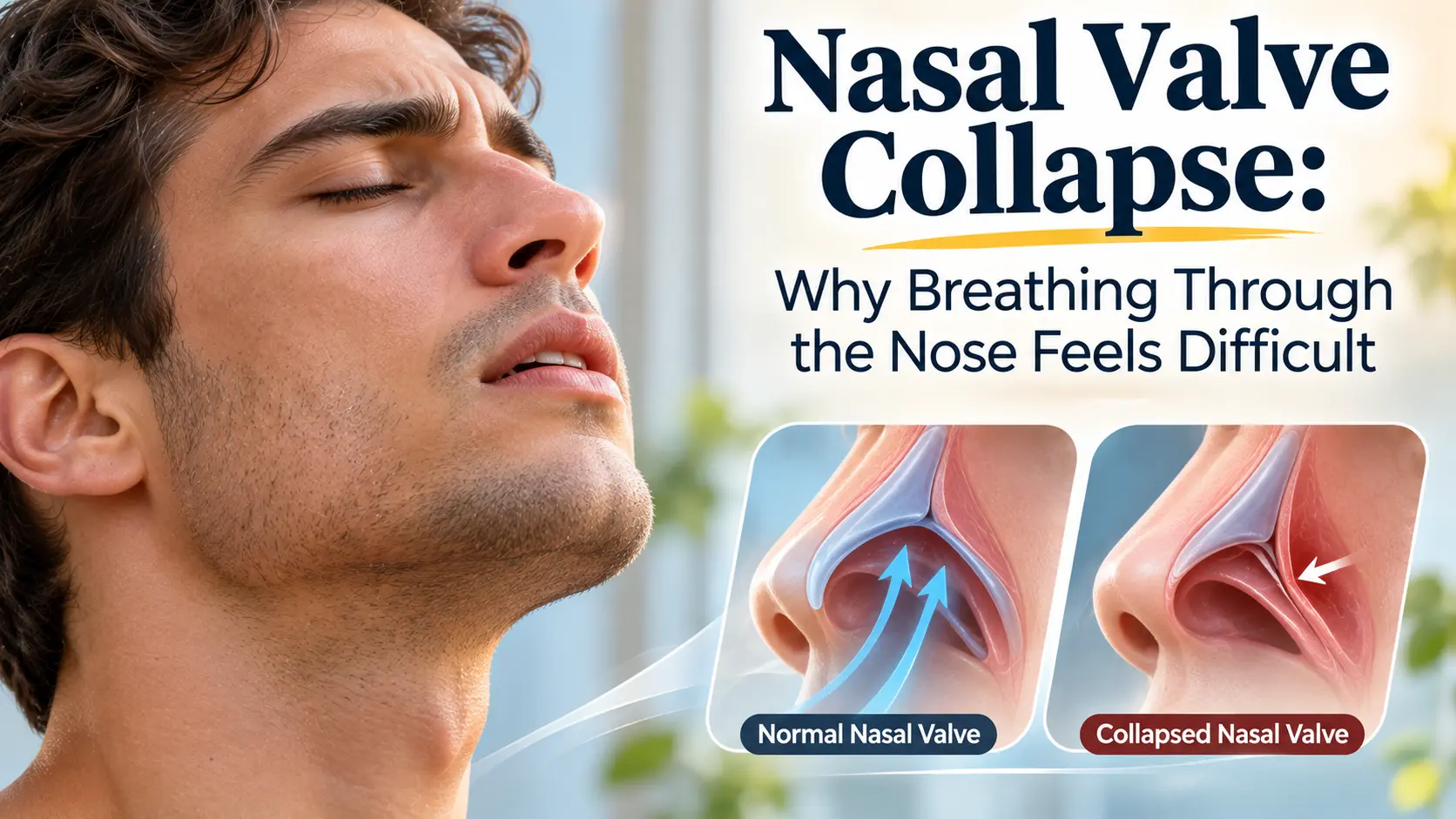
The nasal valve is a narrow part of the nasal airway that contributes to airflow resistance. It includes internal and external support structures. If the side wall or supporting cartilage narrows during breathing in, airflow may feel restricted, particularly with exercise or a deep breath. Some people notice that the nostril wall moves inward as they inhale.
Nasal valve dysfunction is not the only cause of a blocked nose. A deviated septum, enlarged turbinates, rhinitis, polyps or more than one structural issue can produce similar symptoms. The goal of assessment is to identify which factor—or combination of factors—is responsible.
The assessment begins with your history: whether blockage is one-sided or both-sided, constant or intermittent, worse on exercise, and whether it changes when you gently support the side wall of the nose. The clinician examines the external nose and nasal entrance and may use an examination of the nasal cavity to look for other causes. A focused physical examination is central to diagnosing valve dysfunction.
Nasal endoscopy can be useful when another source of obstruction needs to be investigated, but it is not required in every case. A CT scan may help evaluate selected sinus or structural conditions; it does not replace the clinical examination of dynamic nasal valve collapse. Tests are chosen according to the question that needs answering.
Some patients may benefit from mechanical support such as an external nasal dilator strip or an internal nasal support device. If inflammation or allergy contributes to symptoms, that component may need its own management. Medicines cannot correct every structural problem, and treatment for rhinitis should not be assumed to correct a weakened or collapsing nasal side wall when rhinitis is absent.
For selected patients with persistent obstruction and a confirmed structural problem, functional nasal surgery may be discussed. The plan depends on the site of narrowing, septal support, turbinate size, skin and cartilage characteristics, previous surgery and the balance between airflow and appearance. The expected benefit, limitations, risks and alternatives should be explained before deciding.
A broader nasal breathing assessment can help evaluate other causes of obstruction. If structural correction is being considered, see functional rhinoplasty for information about surgical planning.
The clinic is based in Limassol, Cyprus. Patients from Nicosia, Larnaca, Paphos, Famagusta and other areas can enquire about an appointment at the Limassol clinic.
This information is general and does not replace an individual medical assessment.
Patient Resources
Patient-friendly articles related to this service and common questions about assessment and care.
Learn how the narrowest part of the nasal airway supports breathing, common signs of valve narrowing, and how assessment guides treatment.
Read More