Endoscopic Sinus Surgery: When It Is Considered and What Recovery Involves
Learn the aims of endoscopic sinus surgery, why it is offered after appropriate medical care, and what preparation and recovery usually involve.
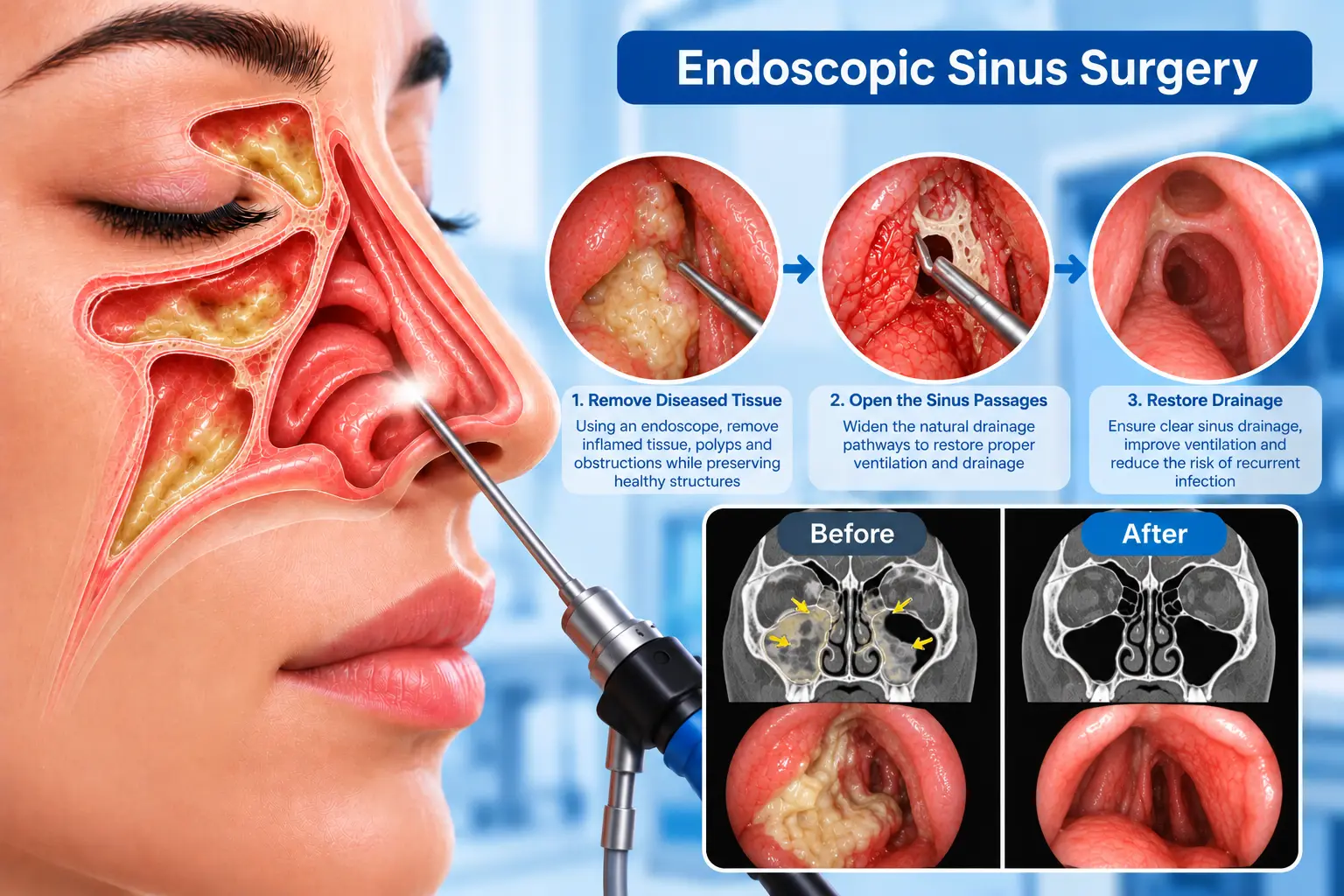
Read MoreEndoscopic sinus surgery uses a small camera and specialised instruments passed through the nostrils to reach selected sinus passages. The aim is to improve access to affected areas and, where appropriate, ventilation and drainage. It is used for selected sinus conditions; it is not a routine treatment for every episode of sinus pain or nasal congestion.
The operation does not remove every underlying cause of chronic inflammation. Some patients continue to need nasal treatments, management of associated conditions and follow-up after surgery. The possibility of persistent or recurring symptoms should be part of the decision-making process.
Before surgery is considered, the ENT specialist reviews the symptom history, effect on quality of life, previous treatment and relevant health conditions. Nasal endoscopy may help assess inflammation, polyps and nasal anatomy. A sinus CT is commonly used for surgical planning when a patient is being considered for an operation, with the scan interpreted alongside symptoms and examination findings.
The decision depends on the specific disease pattern and the response to appropriate non-surgical care. A scan by itself does not determine that surgery is needed. The consultation should explain the reason for the proposed operation and whether other options remain appropriate.
As with any operation, endoscopic sinus surgery has potential risks. Relevant risks depend on the extent of disease, anatomy and planned procedure, and should be discussed individually with the surgeon. Recovery instructions and follow-up are important because the operated area may need review and ongoing treatment while it heals.
Surgery may improve access for treatment and help selected patients with persistent disease, but it cannot guarantee that inflammation will never return. A realistic plan includes expected benefits, possible limitations, alternatives and maintenance care that may still be needed.
The decision should follow a clear diagnosis and an informed discussion of non-surgical options, expected benefit, risks and follow-up.
This information is general and does not replace an individual medical assessment or a personalised discussion of surgical risks.
Clinical reference: AAO-HNS Clinical Practice Guideline: Surgical Management of Chronic Rhinosinusitis.
Patient Resources
Patient-friendly articles related to this service and common questions about assessment and care.
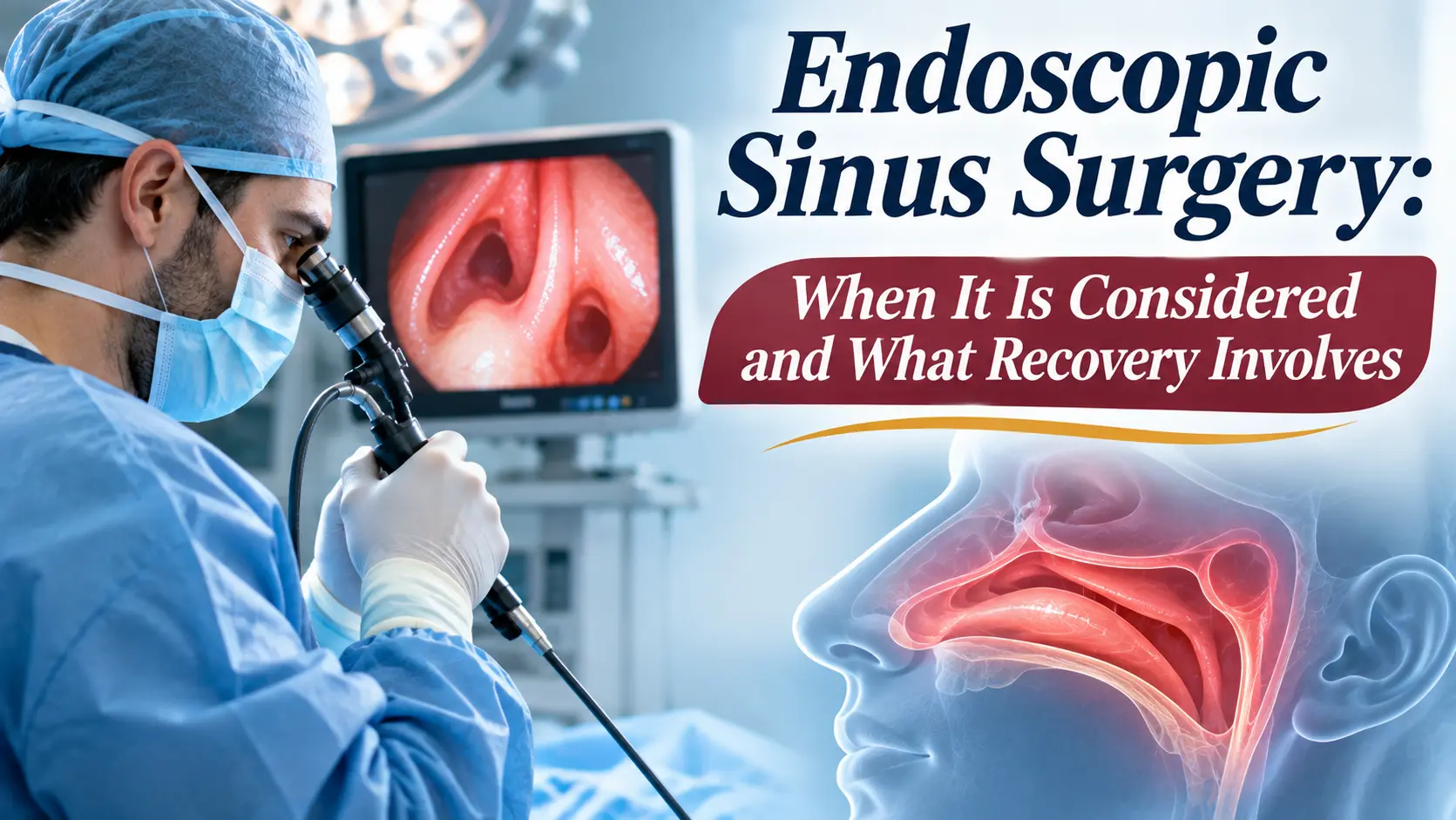
Learn the aims of endoscopic sinus surgery, why it is offered after appropriate medical care, and what preparation and recovery usually involve.
Read More
Learn what recovery after endoscopic sinus surgery may involve, how to follow postoperative instructions, and which symptoms need prompt review.
Read More
Understand how chronic sinusitis differs from a short-lived cold, which symptoms matter, what treatments may help, and when specialist assessment is useful.
Read More