
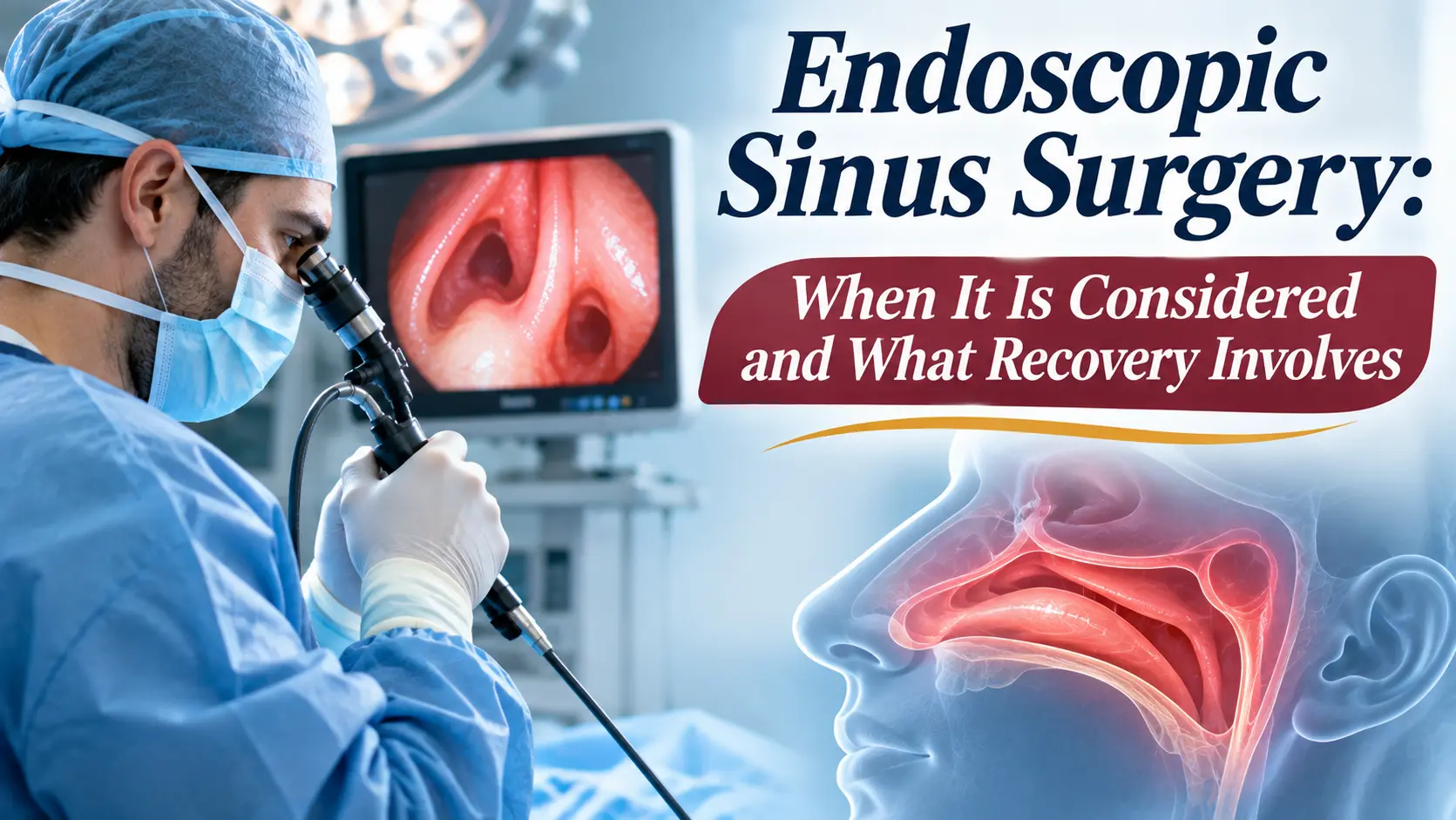
Endoscopic sinus surgery uses a small camera and instruments passed through the nostrils to open selected sinus pathways or treat tissue causing obstruction. It is commonly considered for carefully assessed chronic sinus disease, nasal polyps, or other selected problems when appropriate medical treatment has not provided enough benefit. It is not the first treatment for every episode of sinus symptoms.
How clinicians decide whether surgery may help
The decision takes account of how long symptoms have lasted, their effect on sleep and daily life, nasal endoscopy findings, imaging when indicated, previous treatments, and the likely diagnosis. The aim is usually to improve drainage and access for ongoing topical treatment, reduce disease burden, or address a specific obstruction—not to promise that sinus symptoms will never return.
Before surgery, ask what the operation is intended to change, what alternatives remain, how allergies or asthma may affect ongoing care, and what follow-up will be needed. Chronic inflammatory disease can continue after surgery, so postoperative care often remains important.
Preparation and recovery
The team will give instructions about fasting, anaesthesia, medicines that affect bleeding, smoking, and arrangements for getting home. Never stop blood thinners or other prescribed medicines on your own; the surgical team should coordinate any changes with the clinician who prescribed them.
After surgery, congestion, crusting, fatigue, pressure, and some blood-stained discharge can occur. The care plan may include saline rinses, medicines, and follow-up cleaning or examination. Avoid nose-blowing, strenuous exercise, or heavy lifting for the interval advised by the surgeon. Recovery varies with the extent of surgery and individual healing.
Risks and warning signs
Potential risks include bleeding, infection, persistent symptoms, changes in smell, and uncommon injury to nearby structures such as the eye or the thin bone separating the sinus from the skull base. Your individual risk depends on anatomy, prior surgery, disease extent, and other medical factors. Ask the surgeon to explain risks relevant to your case.
Contact the surgical team for persistent fever, increasing pain, or bleeding that concerns you. Seek urgent assessment for vision changes, swelling around the eye, a severe or worsening headache, neck stiffness, confusion, or continuous clear watery drainage after surgery. Follow the written postoperative instructions over general internet advice.
Common questions
Does surgery cure chronic sinusitis permanently? Not always. Surgery can improve drainage and symptoms for selected patients, but ongoing inflammation may still require medical management.
Will I need follow-up after surgery? Usually yes. Follow-up helps the team assess healing, manage crusting, and adjust ongoing treatment.
Explore our sinus surgery consultation page for more information about this care option. A clinician can advise based on the individual history and examination findings.
Related reading
- Chronic Sinusitis: Symptoms, Causes and Treatment Options
- Nasal Polyps: Symptoms, Diagnosis and Treatment Options