Endoscopic Sinus Surgery: When It Is Considered and What Recovery Involves
Learn the aims of endoscopic sinus surgery, why it is offered after appropriate medical care, and what preparation and recovery usually involve.
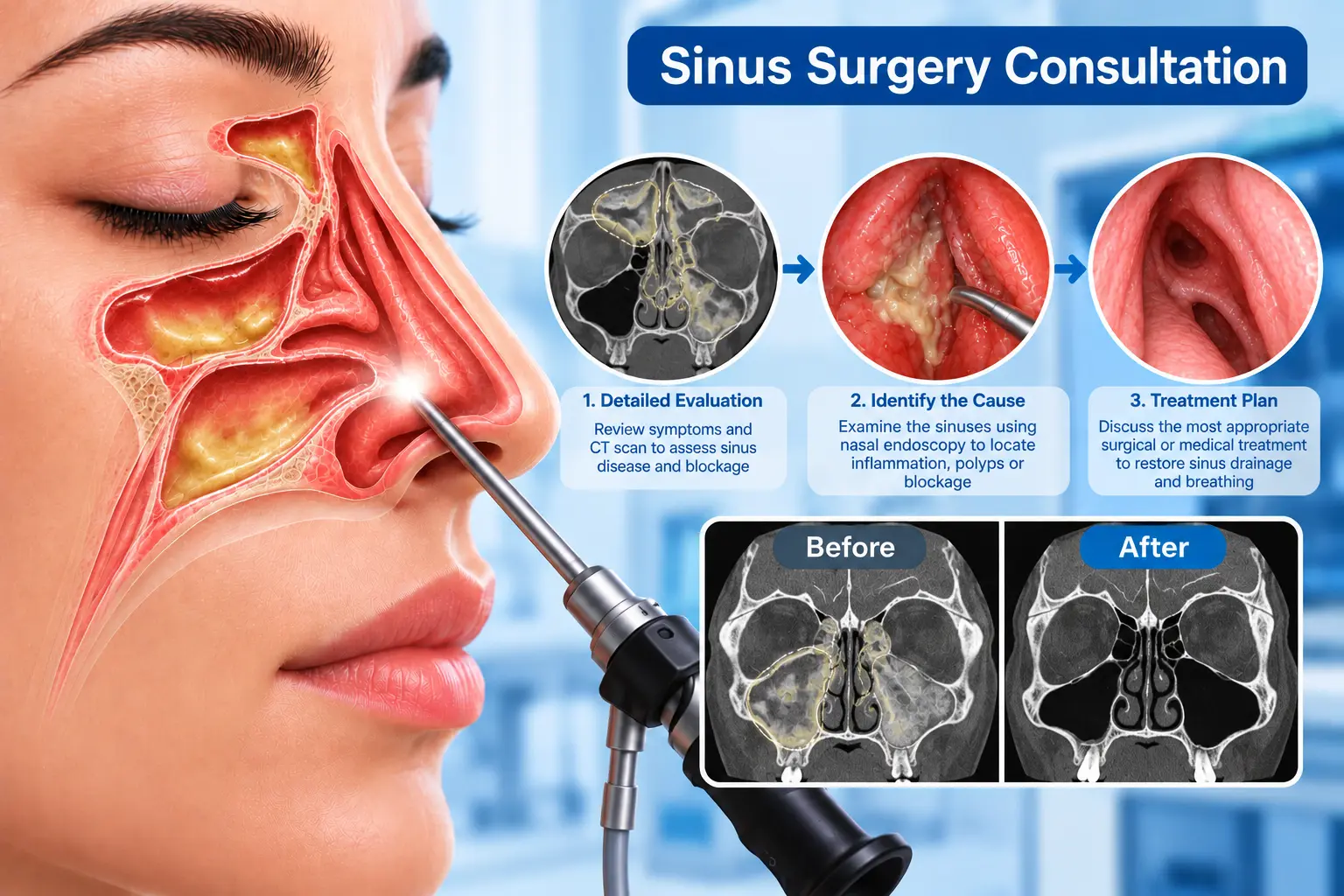
Read MoreThe clinician reviews symptom duration, smell changes, nasal endoscopy and relevant imaging, as well as the response to suitable medical treatment. The type and extent of disease help determine whether an operation is likely to improve drainage or access for ongoing care.
Surgery may improve symptoms for selected patients, but inflammation can persist and maintenance treatment may still be required. Risks, recovery, expected benefit and alternatives should be discussed alongside the option of further non-surgical management.
A clear diagnosis is important because migraine, dental problems and other conditions can mimic sinus symptoms. Surgical decisions should be based on clinical findings, not symptoms alone.
This information is general and does not replace an individual medical assessment.
Patient Resources
Patient-friendly articles related to this service and common questions about assessment and care.
Learn the aims of endoscopic sinus surgery, why it is offered after appropriate medical care, and what preparation and recovery usually involve.
Read More
Understand how chronic sinusitis differs from a short-lived cold, which symptoms matter, what treatments may help, and when specialist assessment is useful.
Read More
Learn what recovery after endoscopic sinus surgery may involve, how to follow postoperative instructions, and which symptoms need prompt review.
Read More