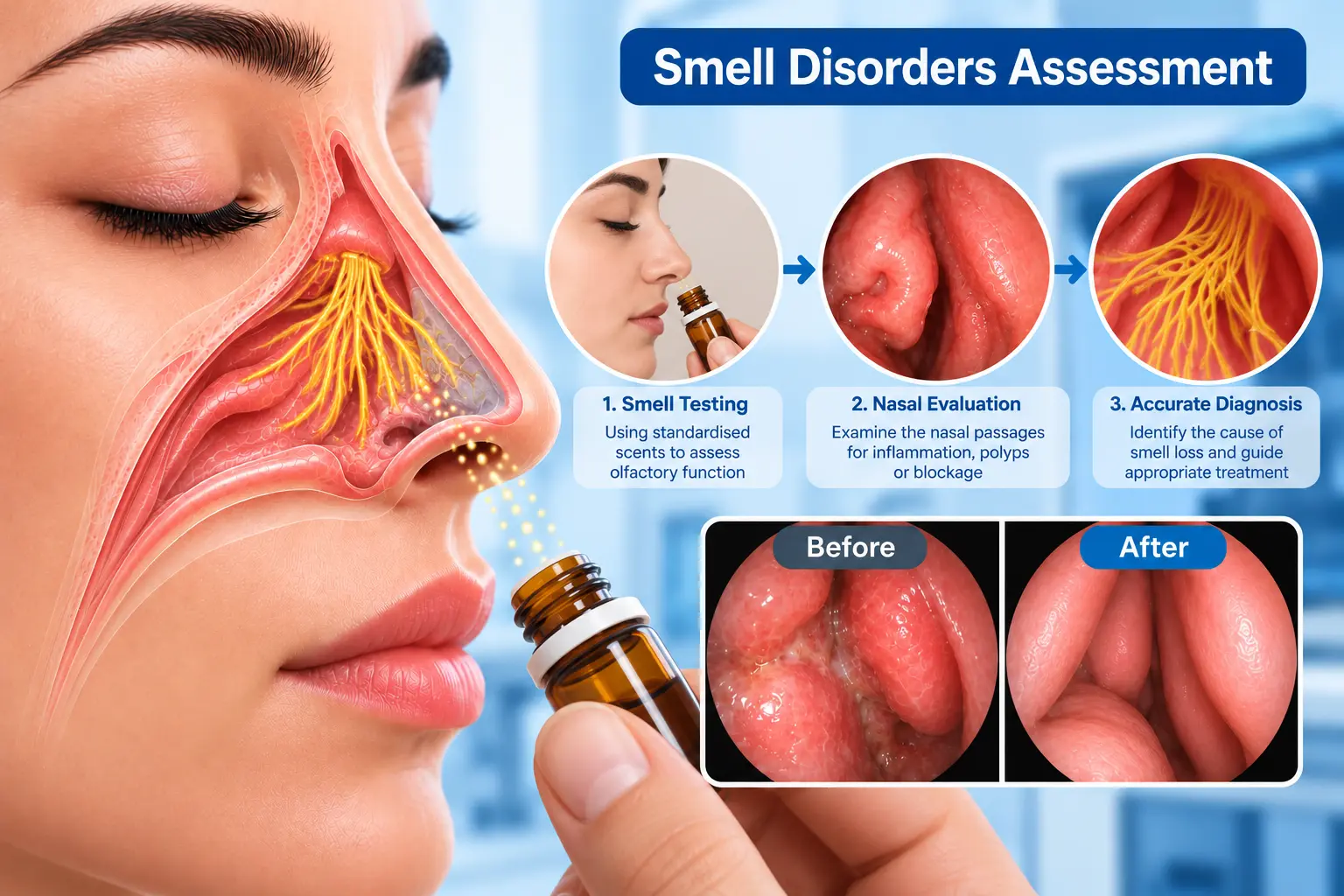
Smell Testing: How Clinicians Assess the Sense of Smell
Understand Smell Testing: How Clinicians Assess the Sense of Smell—how it is assessed, which care options may be discussed, and which symptoms need prompt.
Read MoreThe assessment reviews when the change began, whether it followed an infection or injury, and whether nasal blockage or other neurological symptoms are present. Examination may include nasal endoscopy and, in some cases, formal smell testing or additional investigations.
Treatment depends on the cause and duration. Some people improve over time, while others need management of nasal disease or guidance about smell training. A specific treatment cannot be promised without knowing the likely cause.
When smell is reduced, take extra care with smoke alarms, gas, spoiled food and other hazards that may normally be detected by smell.
This information is general and does not replace an individual medical assessment.
Patient Resources
Patient-friendly articles related to this service and common questions about assessment and care.
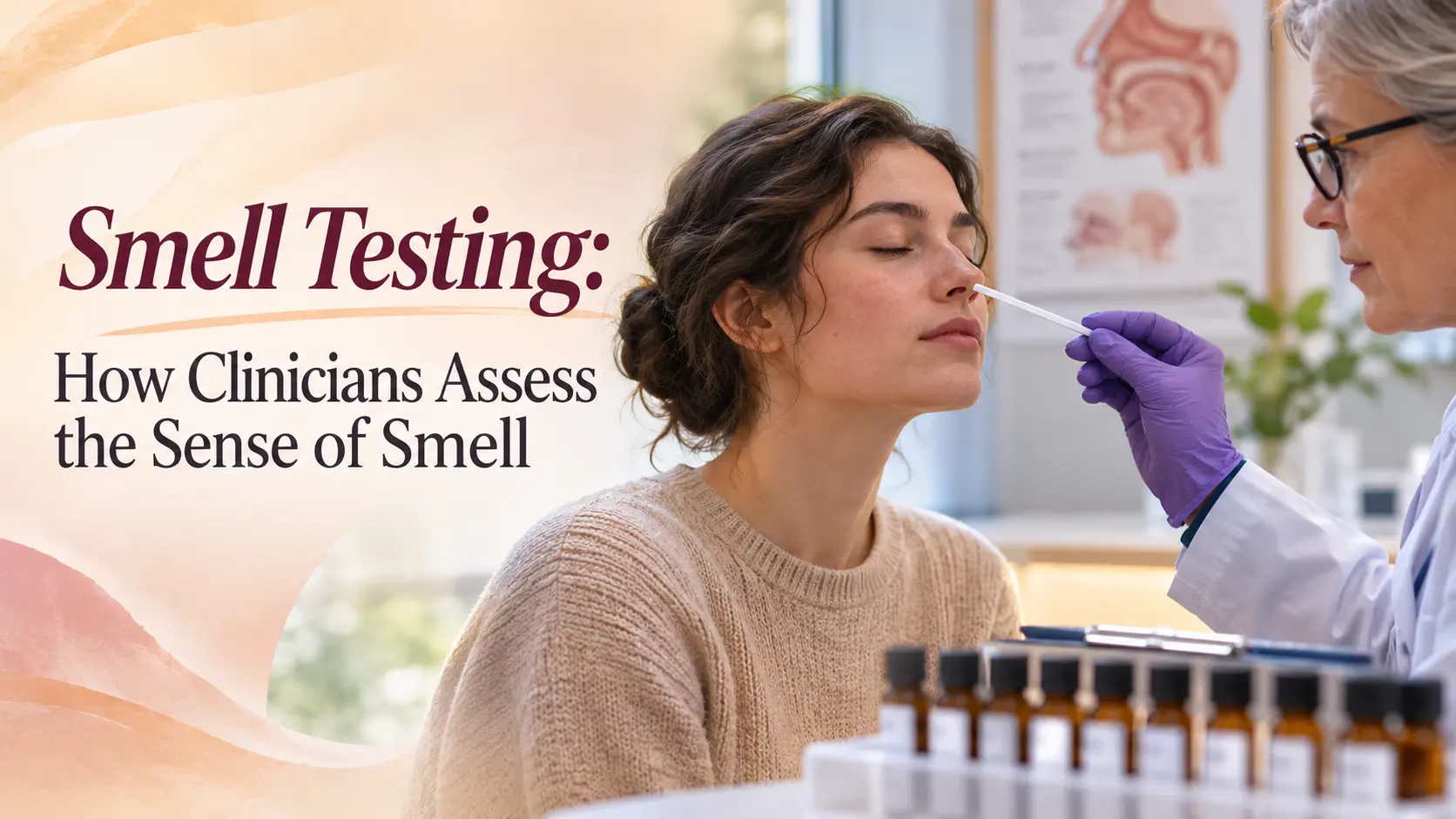
Understand Smell Testing: How Clinicians Assess the Sense of Smell—how it is assessed, which care options may be discussed, and which symptoms need prompt.
Read More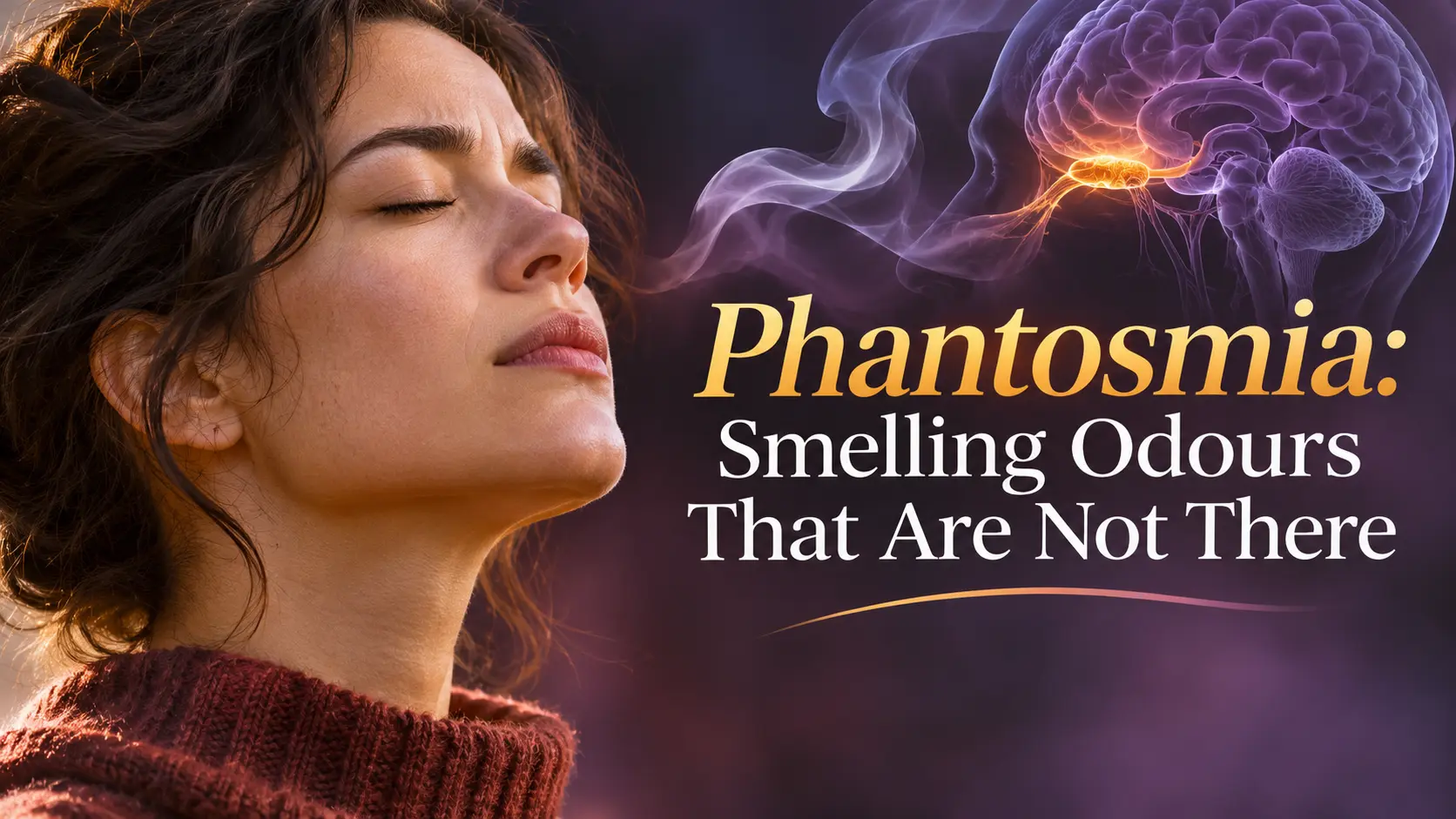
Understand Phantosmia: Smelling Odours That Are Not There—how it is assessed, which care options may be discussed, and which symptoms need prompt medical attention.
Read More
Understand Smell Training After Smell Loss: A Practical Overview—how it is assessed, which care options may be discussed, and which symptoms need prompt medical.
Read More