
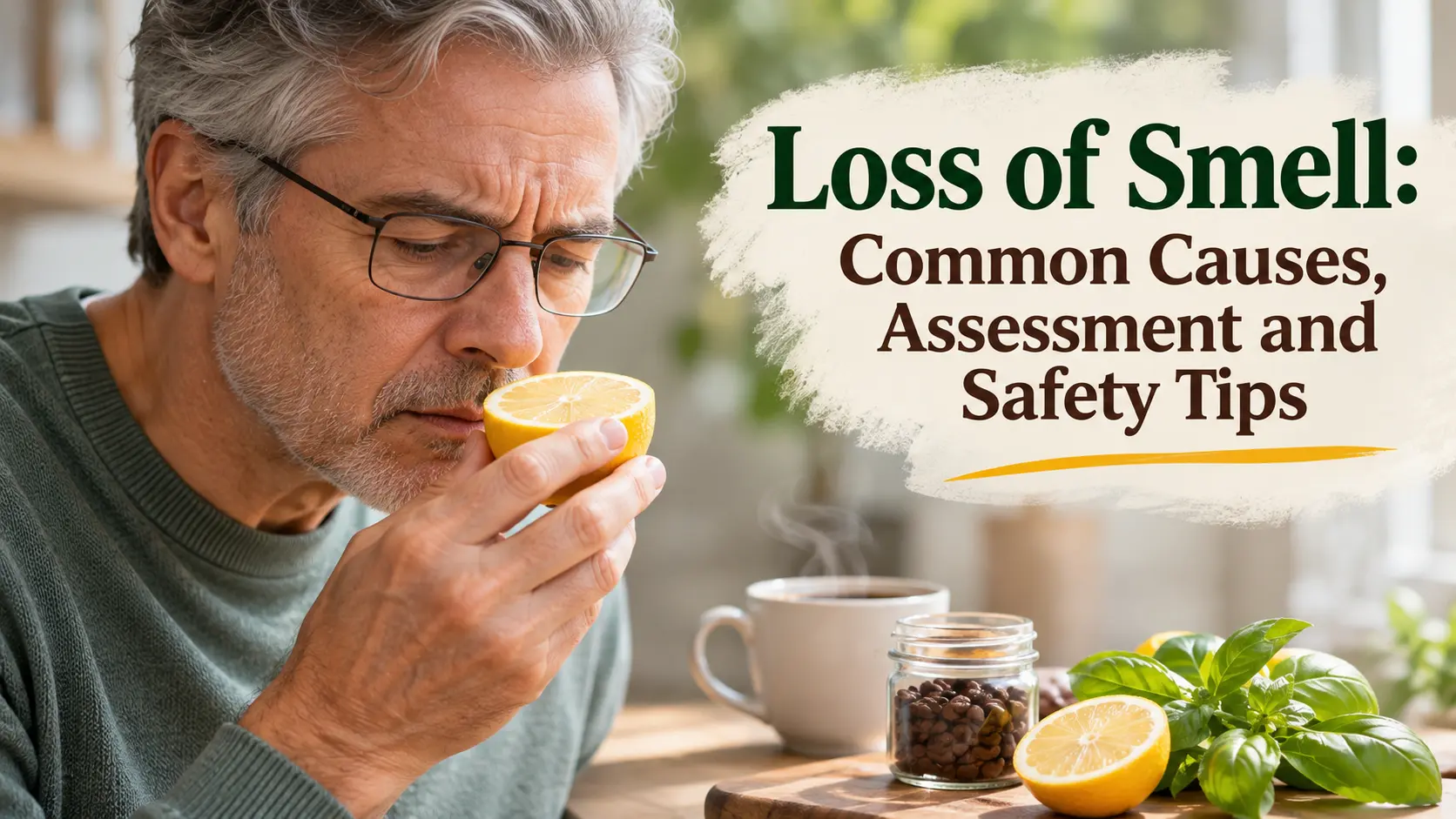
A reduced or changed sense of smell can make food seem bland and can remove an important warning system for smoke, gas leaks, or spoiled food. Loss of smell may follow a viral infection, occur with nasal inflammation or polyps, or be associated with head injury, medicines, smoking, or other conditions. The cause and duration guide assessment.
Why smell and taste seem connected
Much of what people call flavour depends on smell as well as taste. When airflow to the smell-sensing area is blocked by congestion, foods can seem less flavourful even if basic tastes such as sweet and salty remain. Some people notice distorted smells, where familiar odours become unpleasant, rather than a simple reduction.
The clinician may ask about recent infection, nasal blockage, allergies, injuries, medication changes, chemical exposure, and whether the change is one-sided or complete. Examination may look for inflammation or nasal polyps; smell testing or further evaluation may be recommended when the cause is unclear or symptoms persist.
What can you do while it improves?
Treatment depends on the cause. Managing nasal inflammation may help some people, and smell training may be recommended in selected cases. Do not start oral steroids or stop prescribed medicines without medical advice. Recovery varies; some people improve over weeks or months, while others have persistent changes.
Because smell is a safety sense, check smoke alarms, consider gas detection where appropriate, label and date food, and ask another person to check foods when you are unsure. Do not use taste alone to decide whether food is safe.
When to seek medical advice
Arrange an assessment if smell does not return after a few weeks, keeps changing, or is associated with ongoing nasal blockage. A smell change after a head injury, especially with severe headache, confusion, clear fluid from the nose, or neurological symptoms, needs urgent evaluation.
Sudden smell loss alongside other acute symptoms may warrant assessment for the underlying illness. Tell your clinician how the problem affects eating, weight, mood, and daily safety so the plan addresses more than the test result.
Common questions
Does loss of smell mean I have lost my sense of taste? Not necessarily. Smell contributes substantially to flavour; basic taste may remain even when food seems bland.
Can smell training help? It may help some people with certain smell disorders, but suitability and expectations depend on the cause and should be discussed with a clinician.
Explore our nasal endoscopy page for more information about this care option. A clinician can advise based on the individual history and examination findings.