
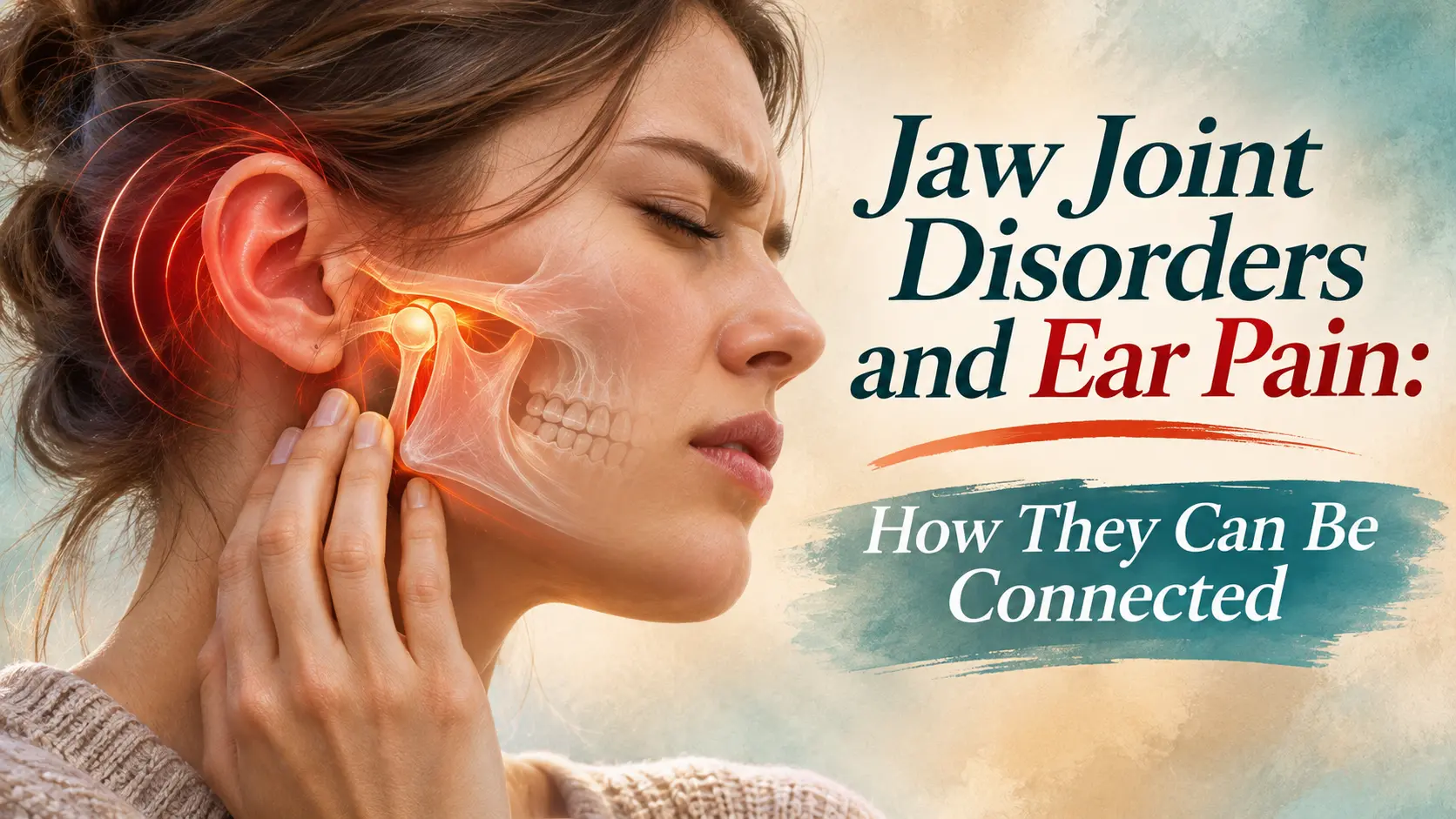
The temporomandibular joint connects the lower jaw to the skull just in front of the ear. Problems involving the joint or surrounding muscles can cause jaw pain, clicking, limited opening or pain that feels as though it comes from the ear. Ear fullness can occur in some people, but the symptom has other causes too. A normal ear examination may lead the clinician to assess the jaw and teeth as well.
Symptoms and common aggravators
People may notice pain when chewing, yawning or clenching the teeth; jaw stiffness; clicking; or tenderness in front of the ear. Stress and bruxism, or grinding and clenching, may contribute for some people. Clicking without pain is common and does not always require treatment. A clinician considers how symptoms began, function, dental history and signs that suggest a different cause.
Gentle self-care that may help
For short-term symptoms, some people are advised to choose softer foods, avoid gum and excessive jaw opening, use comfortable warm or cool packs and notice clenching habits. Do not force the jaw through painful stretches or attempt to reposition it yourself. If symptoms persist, a dentist or clinician can advise on exercises, pain management or other options suited to the diagnosis.
Why ear symptoms should not be assumed to be TMJ
Ear infection, hearing problems, dental disease and throat conditions can also cause pain in the same area. Persistent one-sided ear pain in an adult, particularly with a normal ear examination, hoarseness, difficulty swallowing or a neck lump, needs broader assessment. Sudden hearing loss, severe dizziness, facial weakness or swelling around the ear requires prompt medical care.
When to seek assessment
Arrange review if jaw pain recurs, limits eating or opening the mouth, or coexists with persistent ear symptoms. Seek urgent care if the jaw becomes locked open or closed, there is major trauma, swelling with fever or difficulty breathing or swallowing. The best treatment depends on the source and should avoid unnecessary irreversible dental or surgical interventions.
Frequently asked questions
Does jaw clicking mean I have a disorder? Not necessarily. Clicking without pain or functional limitation is common, and assessment depends on the full symptom pattern.
Can TMJ problems cause ear pain? Yes. The joint and nearby muscles can refer pain toward the ear, but other causes must be considered.
Should I avoid all jaw movement? No. Avoid activities that aggravate pain, but follow professional advice rather than immobilising the jaw unnecessarily.
Explore our hearing assessment page for more information about this care option. A clinician can advise based on the individual history and examination findings.
Related reading
- Ear Pain With a Normal Ear Examination: Referred Pain Explained
- Ear Fullness and Pressure: Common Causes and When to Seek Help
- Hearing Tests: What to Expect and What Results Mean