
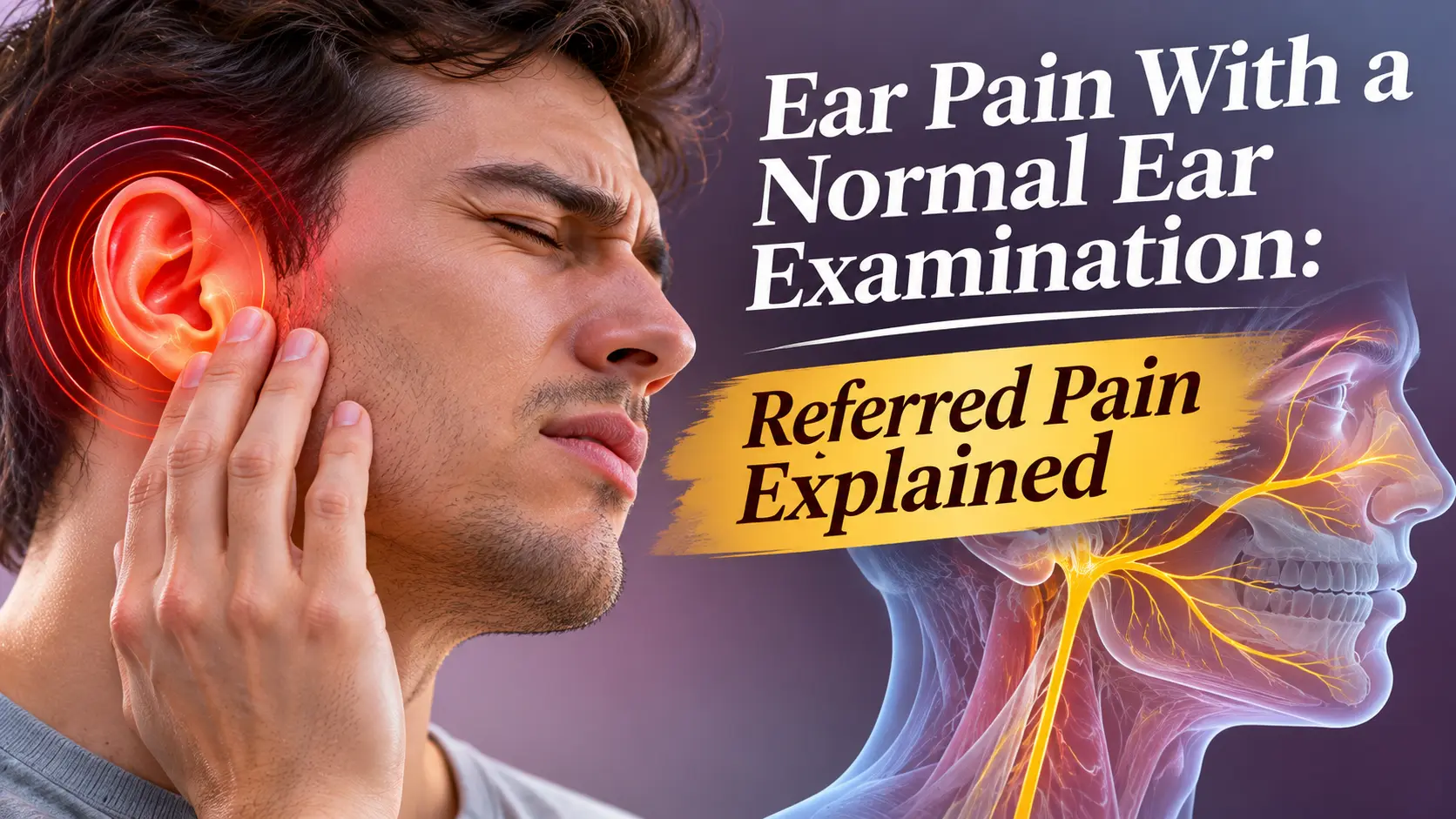
Ear pain does not always begin in the ear itself. The ear shares nerve pathways with the teeth, jaw joint, throat and neck, so problems in those areas can be felt as earache even when the ear canal and eardrum look normal. This is called referred pain. Persistent pain with a normal ear examination deserves a broader assessment rather than repeated treatment for an ear infection that has not been found.
Common sources of referred ear pain
Dental infection or tooth grinding may cause pain near the ear. Temporomandibular joint disorders can cause pain with chewing, jaw clicking or tenderness. Throat inflammation, tonsil conditions and some neck problems can also refer pain to the ear. The pattern helps guide assessment but does not diagnose the source. Ear pain in adults with risk factors or concerning throat symptoms needs particular attention.
What a clinician will ask
Useful details include whether pain changes with chewing, swallowing or jaw movement; whether there is tooth pain, sore throat, hoarseness, neck swelling or weight loss; and whether hearing, balance or discharge has changed. Examination may include the ear, mouth, teeth, jaw movement, throat and neck. Additional tests or ENT referral depend on what is found and how long symptoms have persisted.
Treatment depends on the source
An ear drop or antibiotic will not help every type of ear pain. If the cause is dental, jaw-related, throat-related or muscular, the appropriate professional and treatment differ. Avoid using leftover antibiotics or placing unprescribed drops in an ear with no confirmed ear-canal problem. If symptoms persist, ask what diagnosis is being treated and what should happen if the pain does not improve.
When to seek prompt review
Arrange assessment for persistent, unexplained or one-sided ear pain, particularly with a normal ear exam. A neck lump, persistent hoarseness, difficulty swallowing, blood, unexplained weight loss or smoking history should be mentioned. Severe pain with fever, swelling behind the ear, sudden hearing loss, facial weakness or significant dizziness may need urgent care.
Frequently asked questions
Can tooth problems cause earache? Yes. Dental and jaw conditions can refer pain to the ear through shared nerve pathways.
If the ear looks normal, is the pain imaginary? No. Referred pain is real; the source may be outside the ear.
When is persistent ear pain concerning? Persistent unexplained pain, especially with throat symptoms or a neck lump, needs further assessment.
Explore our hearing assessment page for more information about this care option. A clinician can advise based on the individual history and examination findings.
Related reading
- Ear Infections: Symptoms, Treatment and When to Seek Care
- Jaw Joint Disorders and Ear Pain: How They Can Be Connected
- Head and Neck Cancer: Symptoms That Should Not Be Ignored