
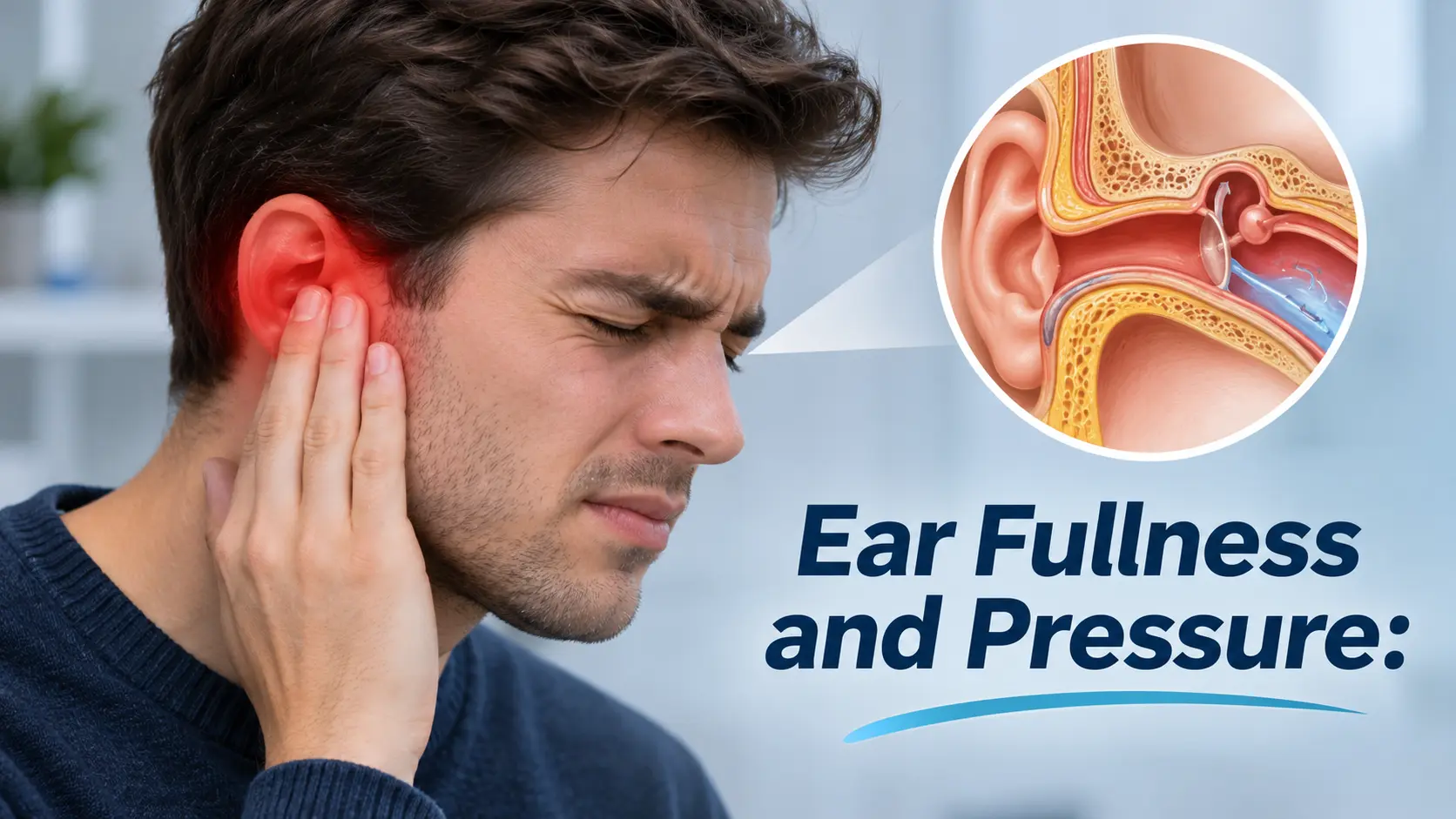
A blocked, full or pressurised ear can feel as though sound is muffled or the ear needs to ‘pop’. It may happen during a flight, after a cold, or without an obvious trigger. The sensation is a symptom rather than a diagnosis: several different conditions can produce it, and they do not all need the same treatment.
What can cause ear fullness?
Eustachian tube dysfunction. The Eustachian tubes connect the middle ears with the back of the nose and help equalise pressure and drain fluid. A cold, nasal allergy or change in altitude can interfere with their normal opening, leading to pressure, popping or muffled hearing.
Earwax build-up. Wax can block the ear canal and cause fullness or reduced hearing. Pushing cotton buds or other objects into the canal can move wax deeper or injure the ear.
Fluid or infection in the middle ear. Fluid behind the eardrum may affect hearing and cause pressure, sometimes after a respiratory infection. Pain, fever or discharge may suggest an infection, although symptoms alone cannot confirm the cause.
Other causes. Jaw-joint problems, changes in hearing, and less common inner-ear conditions can also create ear pressure or related sensations. A clinician needs to consider the pattern of symptoms rather than assume that every blocked ear contains wax.
What details help distinguish the causes?
Notice whether one or both ears are affected, when the sensation began, whether it followed a flight or cold, and whether you also have pain, ringing, dizziness, discharge or a change in hearing. These details can help guide an assessment, but they cannot reliably rule out a hearing problem by themselves.
What can you do safely?
- During altitude changes, swallowing, yawning or chewing may help pressure equalise. Avoid forceful attempts to ‘pop’ an ear, especially if this causes pain.
- Do not insert cotton buds, hairpins or other objects into the ear, and avoid ear candles.
- Do not start ear drops without checking that they are appropriate, particularly if you have had ear surgery, have ventilation tubes, or might have a perforated eardrum.
- If nasal congestion or allergies seem to be involved, ask a pharmacist or clinician which treatment is suitable for your situation rather than using medicines indiscriminately.
How is ear fullness assessed?
An ENT assessment may include a history of the symptoms and an examination of the ear canal and eardrum. Depending on the findings, hearing tests or tympanometry (a test of middle-ear pressure and eardrum movement) may be appropriate. Further examination of the nose or throat may be considered when symptoms suggest a related problem.
When should you seek medical help?
Arrange an assessment if fullness persists, recurs, affects daily life or comes with pain, discharge, dizziness or hearing changes. Seek urgent medical assessment if hearing drops suddenly over hours or a few days—even if it feels like the ear is merely blocked. Sudden inner-ear hearing loss can be accompanied by fullness, ringing or dizziness and should not be dismissed as wax.
Seek prompt care for severe pain, swelling or redness behind the ear, significant illness, facial weakness, or symptoms following a head injury.
Common questions
Does a blocked ear always mean wax? No. Pressure changes, fluid, inflammation and hearing conditions can feel similar.
Can I wait for sudden muffled hearing to clear? Do not wait if the hearing change was sudden. Urgent assessment is important because some treatments are time-sensitive.
Is this article a diagnosis? No. The right treatment depends on examination and, when needed, hearing tests.