
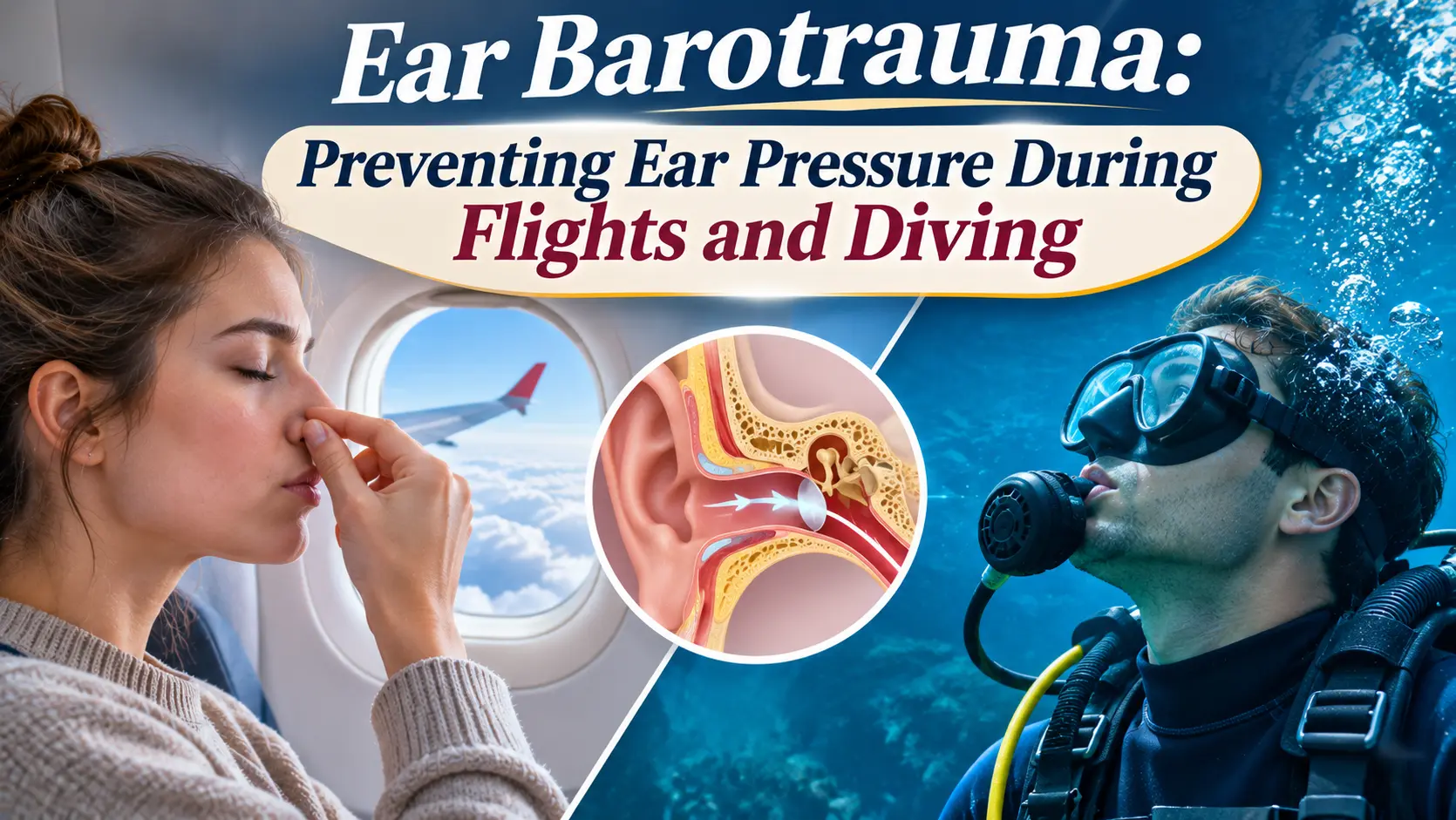
Ear barotrauma is pressure-related injury that can occur when the pressure outside the ear changes faster than the middle ear can equalise. It is common during aircraft descent and can also occur while diving. Symptoms range from temporary fullness to severe pain or hearing changes. The right advice depends on the activity, symptoms and whether an ear condition is already present.
Why pressure changes affect the ear
The Eustachian tube connects the middle ear to the back of the nose and helps equalise pressure across the eardrum. During descent, outside pressure rises; if the tube does not open adequately, the eardrum may be pulled inward, causing pressure or pain. A cold, nasal allergy or recent ear infection can make equalisation more difficult. Diving creates additional pressure changes, often over shorter distances, so divers need to descend slowly and stop if equalisation fails.
Ways to reduce discomfort during air travel
If you are well enough to travel, swallowing, yawning, sipping water or chewing gum during descent may help the Eustachian tube open. Some people use a gentle pressure-equalising manoeuvre, but it should never be forceful, especially if it causes pain. Infants may feed or suck during descent and ascent when appropriate. Ask a clinician or pharmacist before using decongestants, particularly for children, pregnancy, high blood pressure or other medical conditions.
Safety guidance for diving
Do not continue descending when you cannot equalise pressure. Ascend slightly, try a gentle equalisation technique, and end the dive if the problem persists. Never force equalisation against sharp pain. Diving while congested can increase the risk of injury, and severe vertigo underwater can be dangerous. Divers with persistent symptoms or a suspected eardrum injury should not return to diving until medically assessed and cleared.
When to seek medical assessment
Seek prompt assessment for severe or persistent pain, hearing loss, ringing that begins after a pressure event, fluid or blood from the ear, or dizziness. Sudden hearing loss, marked vertigo, or significant bleeding warrants urgent medical evaluation. Examination can identify eardrum injury or fluid. Avoid putting drops or objects into the ear unless a clinician advises them, because some products are unsafe when the eardrum is perforated.
Frequently asked questions
Can I fly with a cold? A cold or allergy may make pressure equalisation harder. If travel is necessary, discuss your symptoms and any relevant medical conditions with a clinician, and seek advice before using medicines.
Should I force my ear to pop? No. Use gentle methods only and stop if pain occurs. Forceful pressure can worsen an injury.
When can I dive again? Do not dive while symptoms persist or equalisation is difficult. Return only after recovery and, when an injury is suspected, medical clearance.
Explore our hearing assessment and otology consultation pages for more information about related care options. A clinician can advise whether either is appropriate based on the individual history and examination findings.
Related reading
- Ear Fullness and Pressure: Common Causes and When to Seek Help
- Perforated Eardrum: Causes, Care and Recovery