
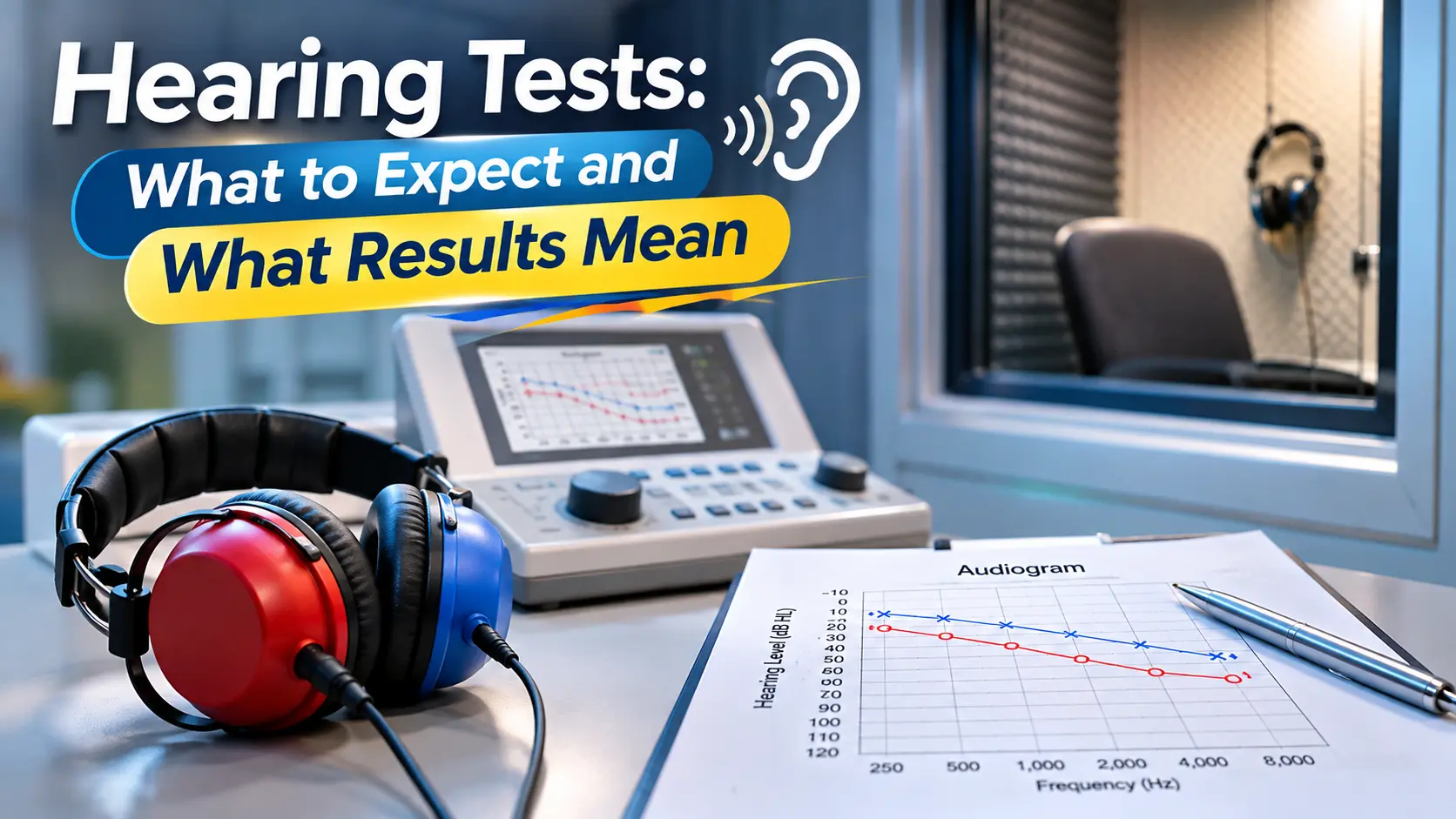
A hearing test is not just a pass-or-fail check. It helps measure which sounds a person can hear, how soft they can be, and whether a hearing difficulty may come from the outer or middle ear or from the inner ear and auditory nerve. Testing can be useful for new symptoms, gradual changes, tinnitus, dizziness, or follow-up after treatment.
Common types of hearing assessment
Pure-tone audiometry measures responses to tones at different pitches and volumes, usually through headphones and sometimes through a small device placed behind the ear. The results are plotted on an audiogram. Speech testing may assess how clearly words are heard, especially in quiet or noisy conditions.
Tympanometry checks how the eardrum and middle-ear system respond to changes in air pressure; it is not the same as measuring hearing thresholds. Other tests may be used for babies, people who cannot reliably respond to tones, or when the clinician needs information about the auditory nerve or inner ear.
Preparing for an appointment
Bring details about when symptoms began, which ear is affected, exposure to loud noise, ear infections, previous surgery, medicines, and any family history of hearing difficulty. Tell the audiologist if tinnitus, dizziness, pressure, or trouble understanding speech is the main concern, since that context helps interpret results.
A test is usually painless. If earwax or an infection blocks the canal, the clinician may need to address it or arrange another assessment. Hearing tests are interpreted together with symptoms and examination findings; a single number rarely tells the whole story about communication needs.
What happens after the test?
Results can show the degree and pattern of hearing loss, but treatment depends on the cause. Options may include treating a reversible problem, monitoring changes, hearing aids, communication strategies, or referral for further medical testing. Ask the clinician to explain the audiogram in everyday language and which frequencies affect speech.
A sudden or rapidly developing hearing change is different from routine screening and needs urgent medical assessment. Do not wait for a routine hearing-test appointment if hearing drops suddenly, especially when accompanied by tinnitus, fullness, or dizziness.
Common questions
Does a hearing test hurt? Routine audiometry is painless. Some people find headphones uncomfortable, but the test should not require painful sounds.
Can I fail a hearing test because of earwax? Wax can interfere with testing in some cases. The clinician checks the ear canal and decides whether wax needs to be managed before results are interpreted.
Explore our otology consultation page for more information about this care option. A clinician can advise based on the individual history and examination findings.