
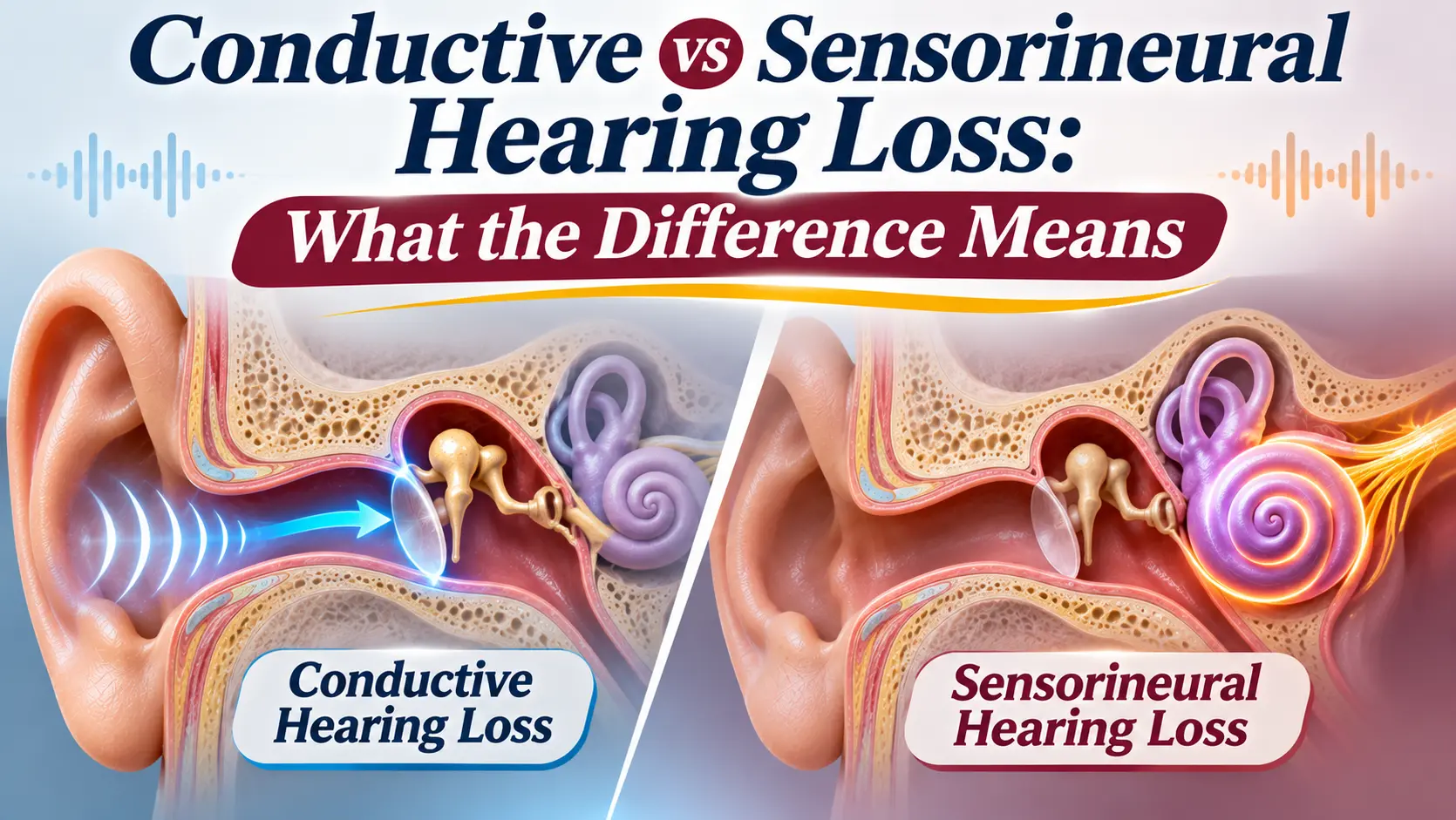
Hearing loss is not one single condition. Broadly, conductive hearing loss occurs when sound is not transmitted efficiently through the outer or middle ear, while sensorineural hearing loss involves the inner ear or hearing nerve pathways. Some people have a mixture of both. Understanding the type can help explain likely causes and treatment options, but the distinction must be made with an appropriate hearing assessment rather than symptoms alone.
What conductive hearing loss means
Sound may be blocked or reduced by earwax, fluid behind the eardrum, a perforated eardrum, changes in the tiny middle-ear bones or other conditions affecting sound transmission. People may describe muffled hearing or fullness, but these symptoms overlap with other conditions. Depending on the cause, treatment may be as simple as safe wax management or may involve medication, a procedure, surgery or hearing technology.
What sensorineural hearing loss means
Sensorineural loss usually reflects changes in the cochlea or auditory nerve pathways. Potential causes include ageing, noise exposure, certain medicines, infections, inherited factors and other medical conditions. Some forms develop gradually; others can appear suddenly. Sudden hearing loss is time-sensitive and warrants urgent assessment, even when the ear does not hurt and looks normal.
How hearing tests distinguish them
Pure-tone audiometry measures the quietest sounds a person can hear through headphones and a bone-conduction device. Differences between air- and bone-conduction thresholds can help identify a conductive component; speech testing and tympanometry may add useful information. Results are interpreted together with history and examination. Ask the clinician to explain the audiogram in plain language and what it means for daily communication.
What treatment may involve
Management depends on the specific cause, the degree of hearing loss and how it affects daily life. Conductive causes may sometimes be corrected or treated; sensorineural loss may be managed with hearing aids, assistive listening technology or cochlear implant assessment in selected cases. The goal is not merely a test score: communication needs, work, safety, social participation and personal preferences should guide the plan.
Frequently asked questions
Can conductive hearing loss be permanent? It can be temporary or permanent depending on the cause. Testing helps clarify the likely source and options.
Can sensorineural hearing loss be treated? Some causes have specific treatment, while others are managed with hearing technology and communication support. Sudden loss needs urgent assessment.
Can I tell which type I have from symptoms? No. Similar symptoms can occur in different conditions, so a hearing test is usually needed.
Explore our otology consultation page for more information about this care option. A clinician can advise based on the individual history and examination findings.
Related reading
- Hearing Tests: What to Expect and What Results Mean
- Hearing Aids: Evaluation, Fitting and Follow-Up
- Sudden Hearing Loss: Why Urgent Assessment Matters