
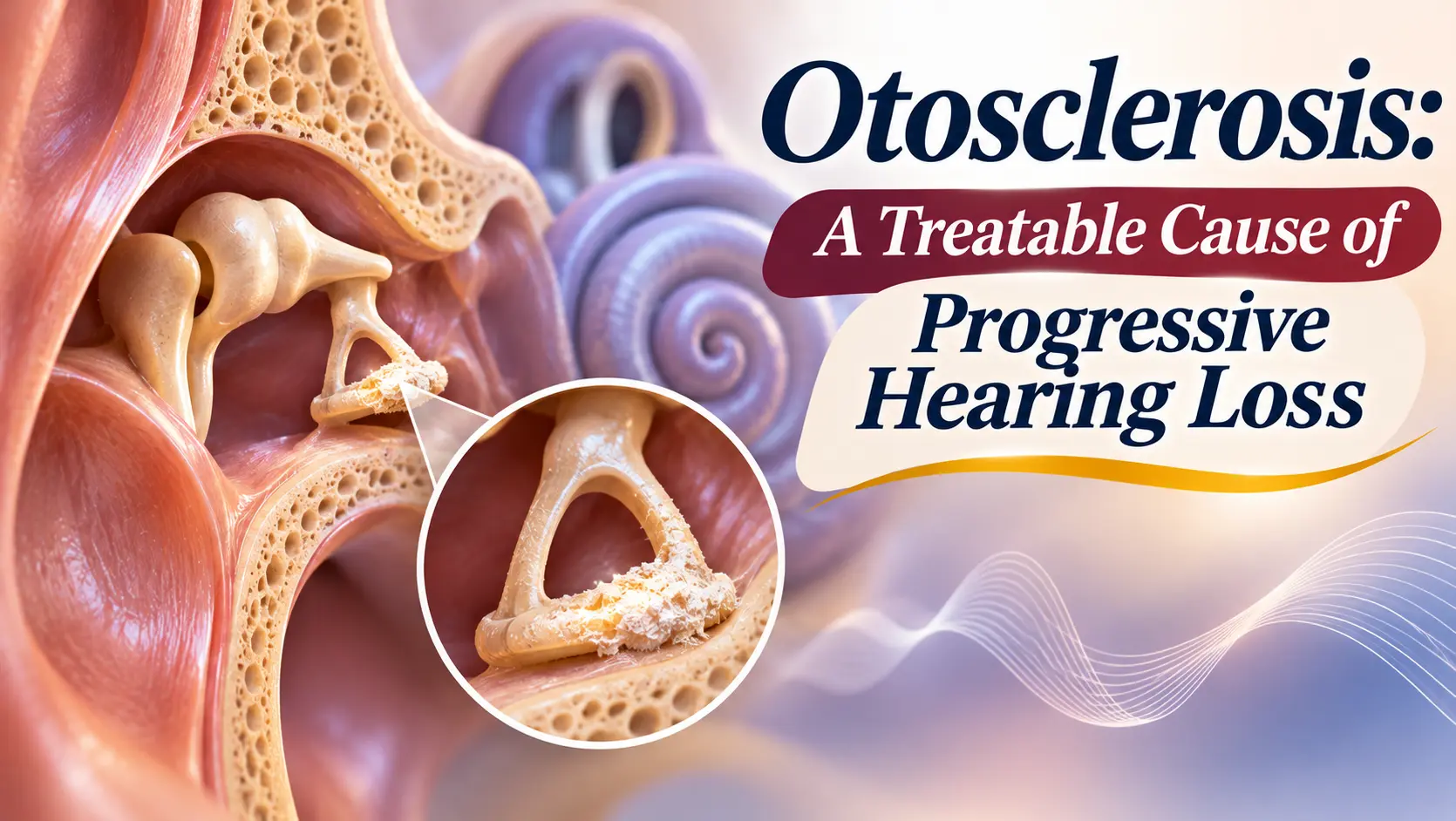
Otosclerosis is a condition in which abnormal bone remodelling can limit movement of the stapes, one of the tiny bones that transmits sound through the middle ear. The result is often gradually worsening hearing, commonly in both ears but not always equally. Tinnitus may occur, and the pattern is not identical for everyone. An assessment is important because several more common conditions can also cause progressive hearing difficulty.
Symptoms and typical pattern
People may notice that speech is harder to understand, especially in groups, or that others seem to hear more clearly than they do. Hearing may decline slowly over months or years. Some people experience tinnitus. Ear pain or discharge is not a defining feature and may suggest another problem. Symptoms alone cannot confirm otosclerosis, and hearing loss should not automatically be attributed to age or family history.
How diagnosis is made
An ENT clinician may examine the ear and arrange formal hearing tests. Audiometry measures hearing thresholds, while tympanometry and other tests can help evaluate middle-ear function. Imaging is sometimes considered when the presentation is atypical or another diagnosis needs to be excluded. The test pattern helps distinguish conductive hearing loss from inner-ear or nerve-related loss and guides the discussion about management.
Treatment options
Management depends on the degree and type of hearing loss, a person’s preferences and overall ear health. Options may include monitoring, hearing aids or surgery to improve sound transmission in selected patients. Surgery carries risks and is not suitable for everyone; a specialist should explain likely benefits, limitations and alternatives for the individual case. Hearing aids can be an effective non-surgical option and may be preferred by people who wish to avoid an operation.
Questions to ask at an appointment
Ask what the hearing tests show, whether one or both ears are affected, what benefit can reasonably be expected from each option, and what risks or follow-up are involved. Mention any sudden change, dizziness, one-sided symptoms or other new neurological symptoms, because these may alter the assessment. Consider bringing a family member if hearing conversations is difficult, and request written instructions if needed.
Frequently asked questions
Does otosclerosis cause ear pain? Pain is not typical. Ear pain should be assessed for another cause.
Can hearing aids help? They may improve hearing for many people with otosclerosis; suitability depends on the hearing-test results and personal needs.
Is surgery always necessary? No. Monitoring or hearing aids may be appropriate alternatives, and the decision should be individualised with an ENT specialist.
Explore our otology consultation page for more information about this care option. A clinician can advise based on the individual history and examination findings.
Related reading
- Hearing Tests: What to Expect and What Results Mean
- Hearing Aids: Evaluation, Fitting and Follow-Up
- Age-Related Hearing Loss: Signs and Next Steps