
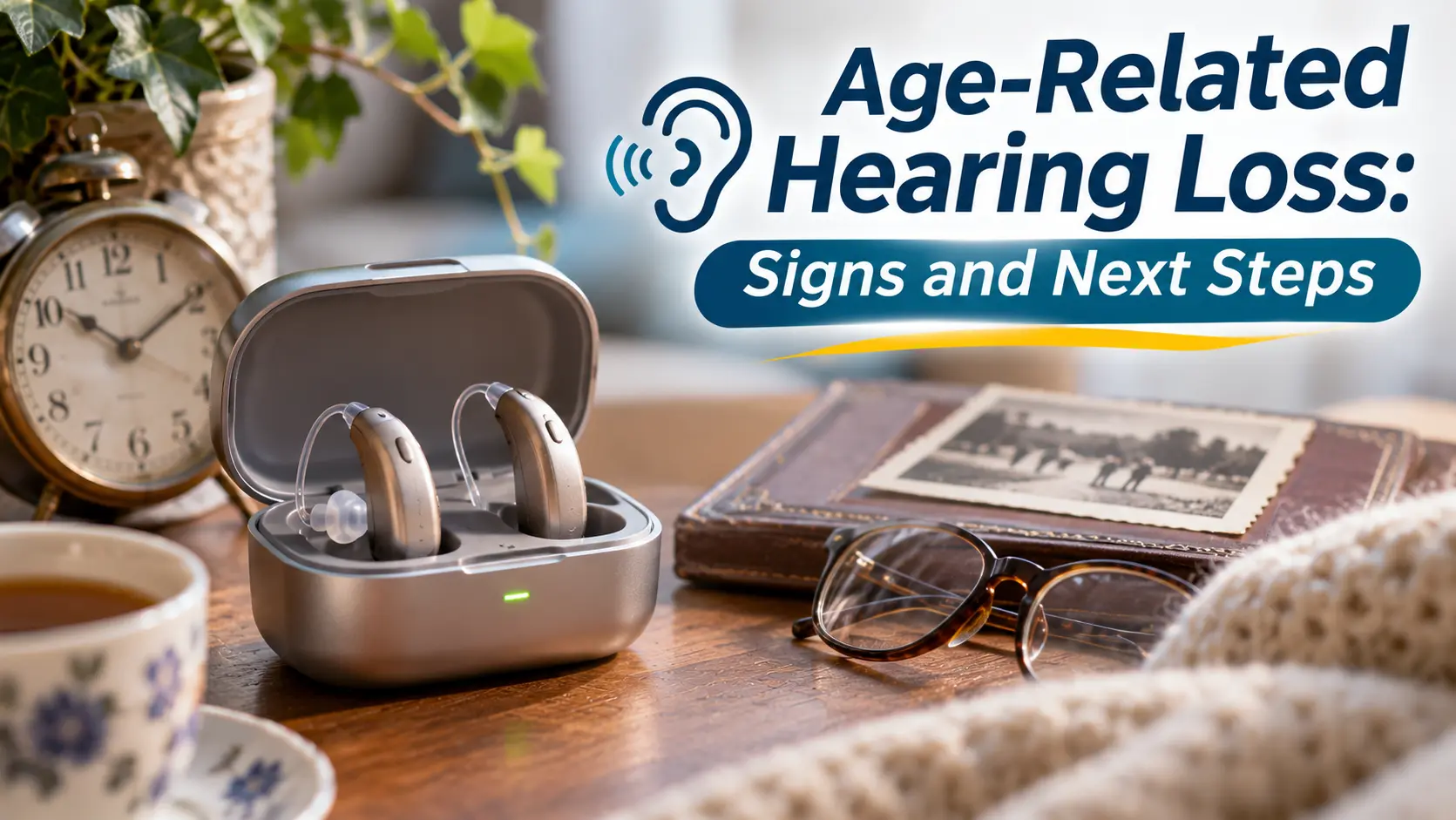
Age-related hearing loss usually develops gradually and often affects both ears. People may first notice difficulty following conversation in restaurants, asking others to repeat themselves, or hearing high-pitched sounds. Family members may notice the change before the person experiencing it does. These signs deserve attention because communication difficulties can affect safety, relationships, and confidence.
Why speech can become harder to follow
Hearing depends on more than loudness. Changes in the inner ear and auditory pathways can make some pitches harder to detect and speech less clear, especially when several people are talking or background noise is present. Other factors, including earwax, certain medicines, noise exposure, and medical conditions, can contribute, so age should not be assumed to be the only explanation.
A hearing assessment measures hearing across pitches and can help distinguish different patterns of loss. Examination also checks for problems in the outer or middle ear that might be treatable. If one ear is much worse, symptoms changed quickly, or hearing fluctuates, the clinician may recommend additional evaluation rather than treating it as routine age-related change.
Support and treatment options
Treatment depends on the findings. Hearing aids may improve access to speech for many people, while communication strategies can help immediately: face the speaker, reduce background noise, use good lighting for lip-reading cues, and ask others to speak clearly rather than simply shouting. Captioning and assistive listening devices may also help.
A hearing-aid fitting should include discussion of daily needs, comfort, follow-up, cleaning, and practice in different listening environments. Hearing technology is not a sign of failure; it is one tool for maintaining communication. If hearing remains poor despite appropriate aids, a specialist may discuss other options based on the audiogram and overall health.
When changes need urgent attention
Sudden hearing loss over hours or a few days requires urgent medical assessment, even if the ear feels blocked or has ringing. Prompt evaluation is also important for new hearing loss after head injury, severe ear pain, discharge, or neurological symptoms.
If hearing changes slowly, arrange a non-emergency assessment rather than waiting until conversations become impossible. The earlier a person understands the type and impact of hearing loss, the sooner practical support can be matched to their needs.
Common questions
Is hearing loss always part of getting older? No. Age can contribute, but wax, infection, noise exposure, medicine effects, and other conditions can also affect hearing.
Should I get tested if family says the television is too loud? Yes. Difficulty following conversation or repeatedly increasing volume can be useful reasons to arrange a hearing assessment.
Explore our otology consultation page for more information about this care option. A clinician can advise based on the individual history and examination findings.