
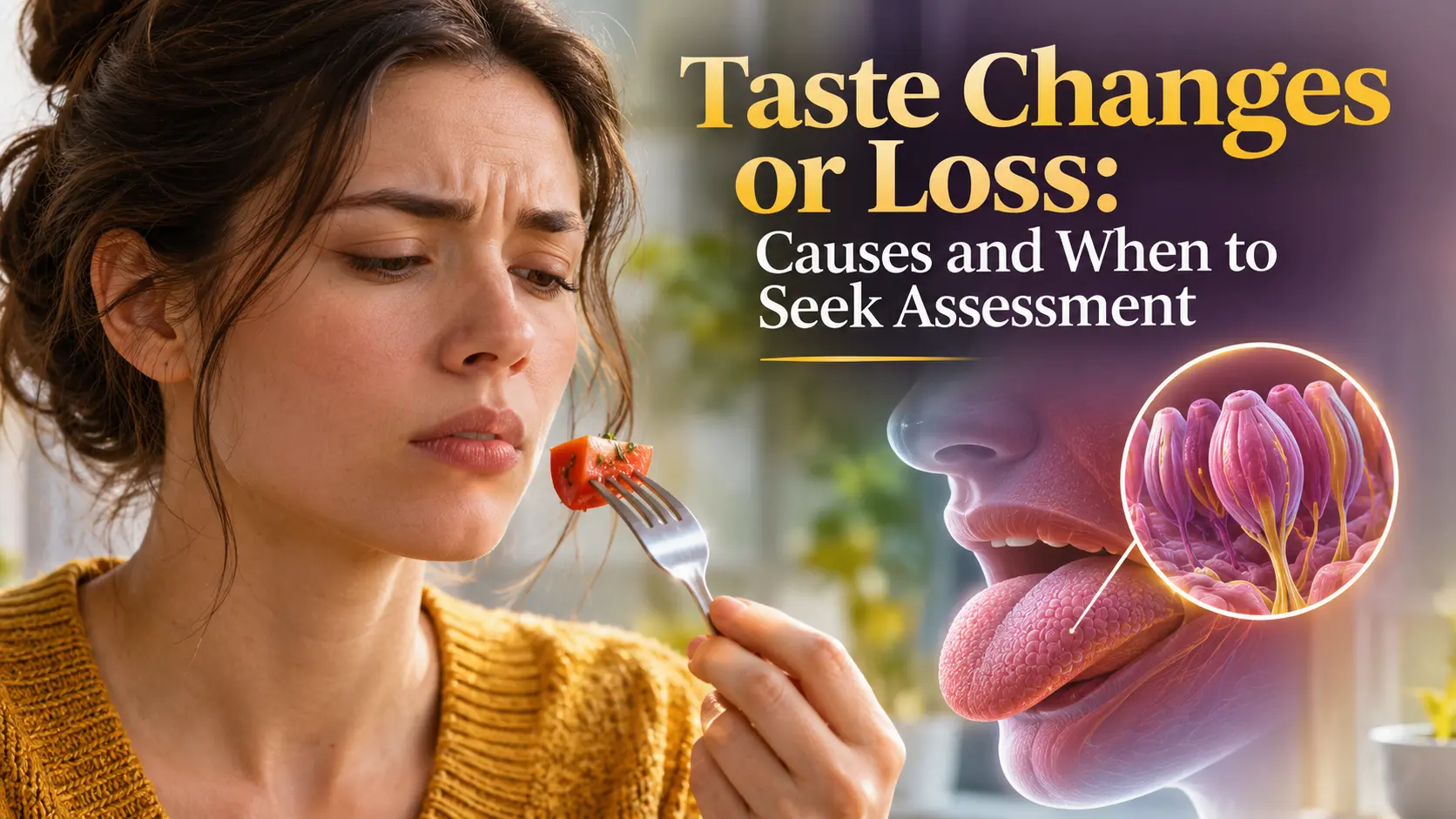
A change in taste can make food seem bland, bitter, metallic, or different from usual. Many people who report loss of taste actually have reduced smell, which contributes strongly to flavour. Infections, medicines, dry mouth, oral conditions, and other medical issues can affect taste, so the pattern and accompanying symptoms help guide assessment.
Taste versus flavour
Taste detects basic qualities such as sweet, salty, sour, bitter, and umami. Smell contributes much of the flavour experienced while eating. Nasal congestion or smell loss can therefore make favourite foods seem bland even when the basic taste system still works.
Possible causes and assessment
A clinician may review recent infections, medicines, smoking, oral symptoms, dental care, dry mouth, nutrition, and other medical conditions. Examination of the mouth and nose, smell assessment, or targeted tests may be appropriate. Do not stop prescribed medicines without advice, even if they appear to coincide with the symptom.
Practical steps and warning signs
Maintain hydration and oral hygiene, avoid smoking, and use food safety measures if smell is reduced. Seek assessment if the change persists, affects nutrition, follows a head injury, or comes with other symptoms. A persistent oral lesion, difficulty swallowing, neurological signs, or unexplained weight loss needs timely review.
Frequently asked questions
Is taste loss usually permanent? Not always. The outlook depends on the cause, and some post-infectious changes improve gradually.
Can medicines affect taste? Yes, some medicines can alter taste or dry the mouth; discuss alternatives with the prescriber rather than stopping treatment.
When is urgent assessment needed? Sudden taste change with stroke-like symptoms, significant head injury, or difficulty swallowing requires urgent care.
Explore our smell disorders assessment and nasal endoscopy pages for more information about related care options. A clinician can advise whether either is appropriate based on the individual history and examination findings.
Related reading
- Loss of Smell: Common Causes, Assessment and Safety Tips
- Loss of Smell After a Viral Infection: Recovery and Safety Tips