
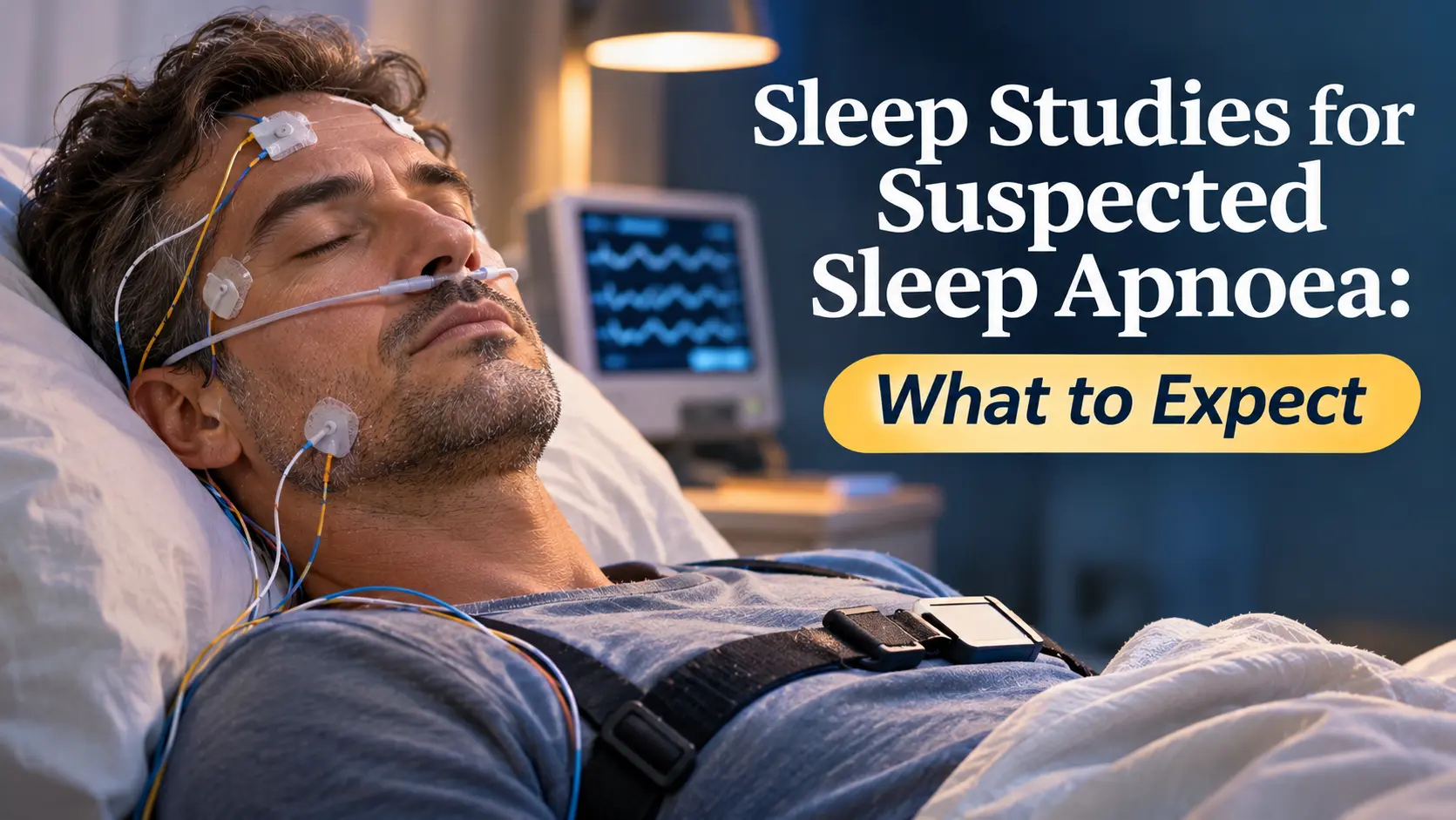
A sleep study helps assess whether breathing repeatedly narrows or stops during sleep. Obstructive sleep apnoea may cause loud snoring, pauses in breathing witnessed by another person, gasping, unrefreshing sleep, morning headaches, and daytime sleepiness. Symptoms alone cannot reliably determine whether apnoea is present or how severe it may be.
What the assessment may involve
The clinician reviews snoring, witnessed pauses, daytime alertness, medical history, medicines, alcohol use, and factors such as tonsil size or nasal obstruction. Depending on the situation, testing may take place at home or in a sleep clinic. Home studies commonly measure breathing signals, oxygen level and pulse; a laboratory study may collect additional signals, including sleep stages.
A test result is interpreted with symptoms and the type of device used. Not every study measures all the same variables, and an inconclusive home test may need further assessment if suspicion remains. Ask how to wear the sensors, what to do if one comes loose, and how results will be explained.
Understanding results and next steps
The report may describe how often breathing events occur, oxygen changes, and how these events relate to symptoms. The clinician can explain whether findings support sleep apnoea, whether severity affects treatment options, and if another condition may account for daytime sleepiness. Do not interpret a number without knowing how the test was performed.
Treatment may include positive airway pressure, an oral appliance, positional approaches, weight management when appropriate, or selected surgery depending on the cause and severity. The best option balances effectiveness, comfort, other health conditions, and the person’s ability to use it consistently.
Why it matters to seek testing
Untreated obstructive sleep apnoea can affect daytime alertness and is associated with other health risks. People who are struggling to stay awake while driving or operating machinery should not ignore the risk; seek clinical advice about safety and follow local driving regulations.
Arrange an assessment if someone has witnessed repeated pauses or gasping, or if persistent sleepiness continues despite adequate time in bed. Testing helps replace guesswork with an individual plan.
Common questions
Can I diagnose sleep apnoea from snoring alone? No. Snoring is common and does not prove apnoea; diagnosis usually requires a clinical assessment and an appropriate sleep test.
Will everyone need to sleep in a hospital? No. Many people can use a home test, while others need an overnight clinic study depending on their history and the information required.
Explore our airway assessment page for more information about this care option. A clinician can advise based on the individual history and examination findings.
Related reading
- Snoring Without Sleep Apnoea: What It Can Mean
- Snoring and Obstructive Sleep Apnoea: Signs You Should Not Ignore