
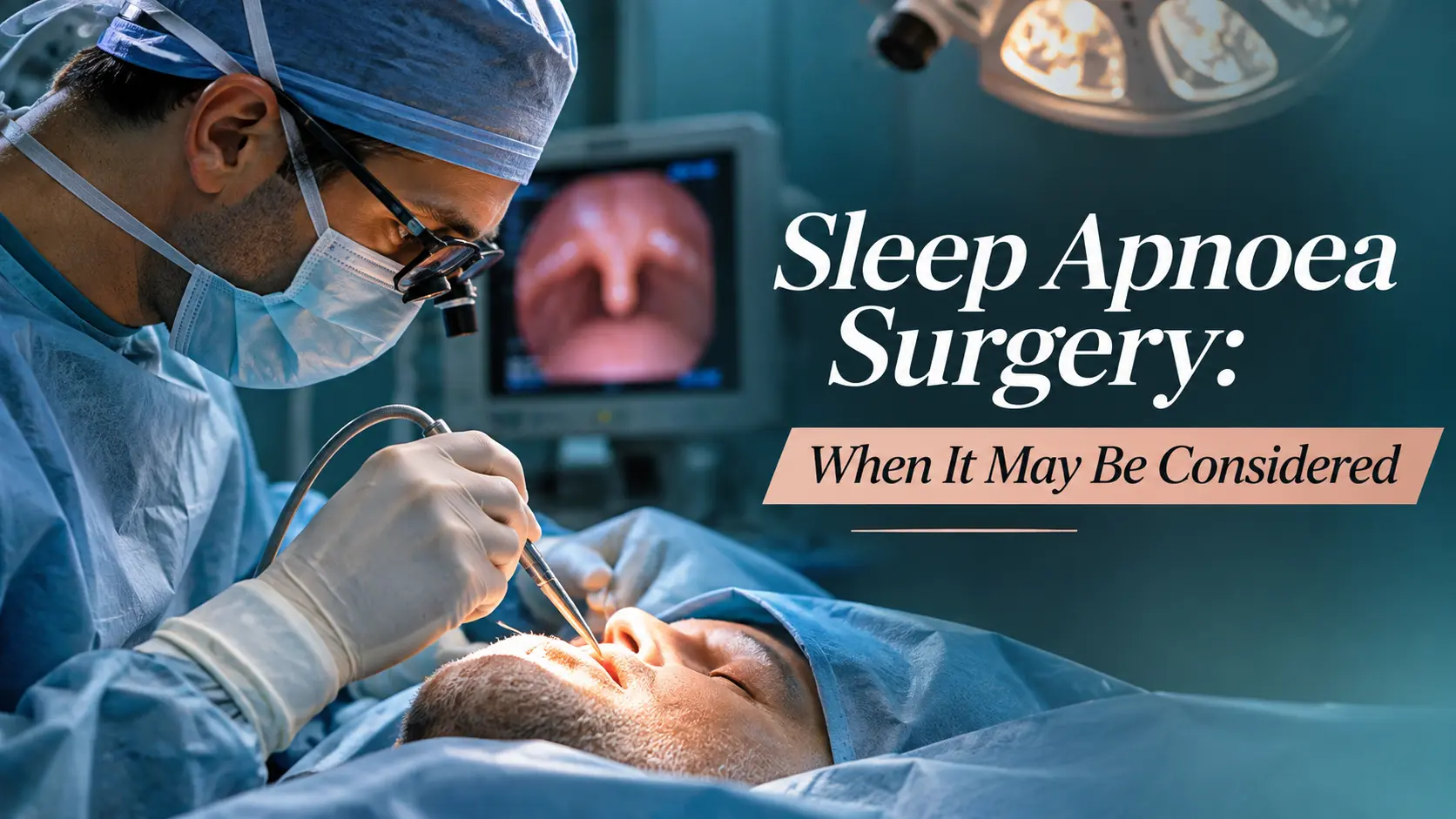
Obstructive sleep apnoea occurs when the upper airway repeatedly narrows or closes during sleep. Positive airway pressure, lifestyle changes, oral appliances, and selected surgeries may be considered depending on severity, anatomy, symptoms, and patient preference. Surgery is not a universal cure, and decisions should be made after appropriate sleep assessment.
What the evaluation considers
A clinician reviews sleep study results, daytime sleepiness, other health conditions, anatomy of the nose and throat, prior treatments, and patient goals. Nasal obstruction may affect comfort with CPAP but does not necessarily explain all airway collapse during sleep. Examination and sometimes additional testing help determine which treatment could realistically help.
Which procedures may be discussed
Procedures can target different levels of the airway and may include tonsil surgery in selected patients, nasal surgery to improve nasal airflow, or other upper-airway procedures. The likely benefit depends on where obstruction occurs and the individual’s anatomy. Nasal surgery may improve breathing comfort without independently resolving sleep apnoea.
Follow-up after treatment
A sleep specialist may recommend repeat testing to assess the effect of treatment. Patients should not stop CPAP or another prescribed therapy simply because surgery has been performed unless their treating team confirms it is safe. Weight, age, and other health factors can change the condition over time.
Frequently asked questions
Can nasal surgery cure sleep apnoea? It may improve nasal airflow and treatment tolerance, but it does not reliably cure airway collapse in every patient.
Do I need a sleep study before surgery? An objective sleep assessment is commonly important to confirm diagnosis and severity and guide treatment.
Can I stop CPAP after an operation? Only after the treating team reassesses the condition and advises that a change is appropriate.
Related reading
- Sleep Studies for Suspected Sleep Apnoea: What to Expect
- CPAP for Sleep Apnoea: Getting Comfortable with Treatment