
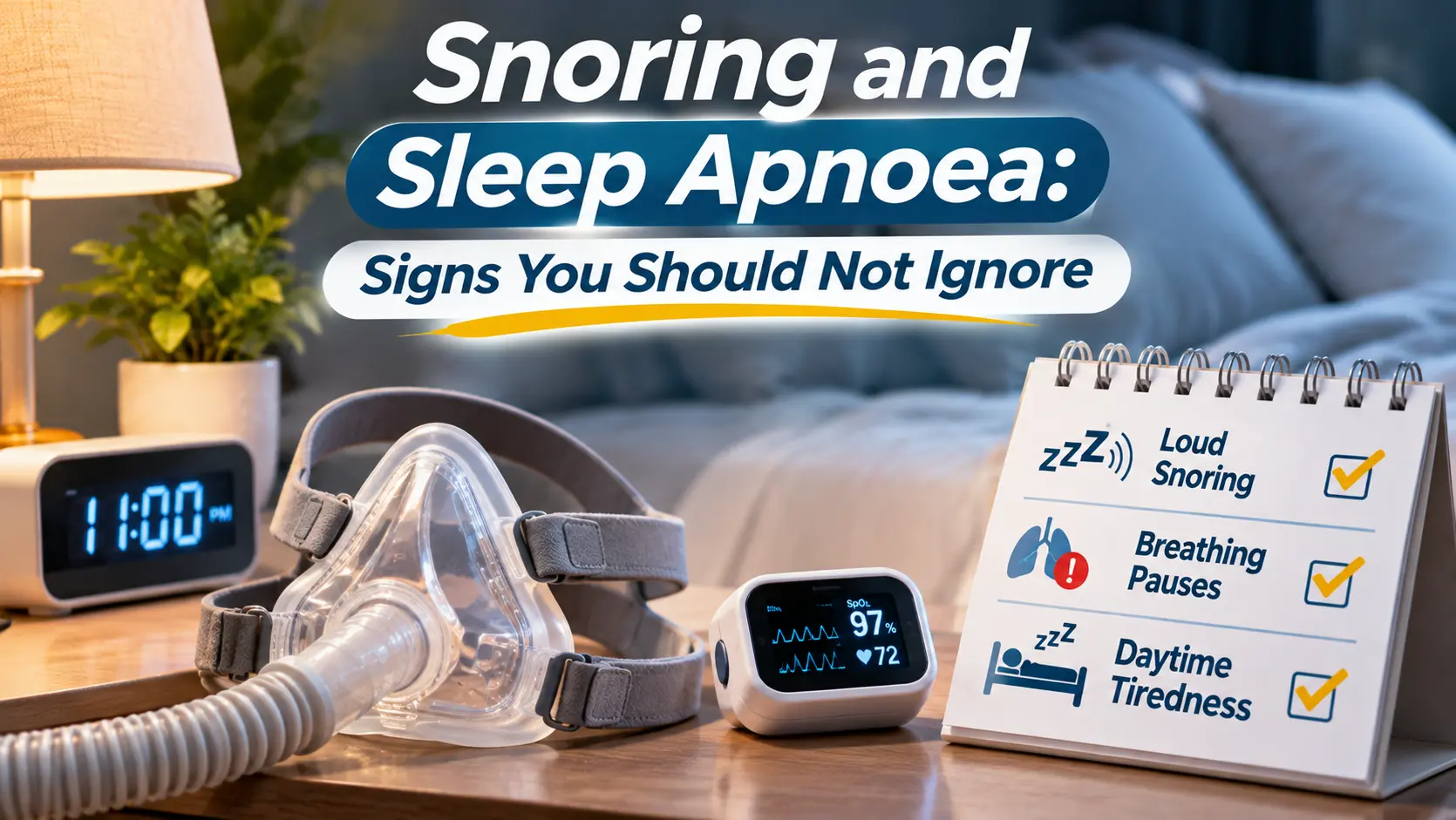
Snoring happens when air movement causes tissues in the upper airway to vibrate during sleep. It is common and does not automatically mean that a person has a medical disorder. However, loud regular snoring accompanied by pauses in breathing, gasping or marked daytime sleepiness may indicate obstructive sleep apnoea (OSA), a condition that deserves assessment.
What is obstructive sleep apnoea?
In OSA, the upper airway repeatedly narrows or closes during sleep, temporarily reducing or stopping airflow. The brain may briefly arouse the person to restore breathing, fragmenting sleep even if they do not remember waking. The severity and pattern vary between people.
Signs to look for
- Loud, persistent snoring.
- Witnessed pauses in breathing, followed by snorting, gasping or choking sounds.
- Frequent waking or restless sleep.
- Unrefreshing sleep, morning headaches or dry mouth.
- Daytime sleepiness, poor concentration or mood changes.
A bed partner may notice breathing pauses before the person does. Not everyone with sleep apnoea snores loudly, and not everyone who snores has sleep apnoea.
Why should suspected sleep apnoea be assessed?
Untreated OSA can affect daytime function and is associated with health risks, including high blood pressure and cardiovascular problems. Excessive sleepiness also increases the risk of accidents. If you are struggling to stay awake while driving, do not drive; seek medical advice promptly.
How is it diagnosed?
A clinician reviews symptoms, medical history and risk factors. Examination may assess the nose, throat, jaw and other contributors, but looking at the airway while awake cannot by itself rule OSA in or out. Diagnosis usually requires a sleep study, which may be arranged at home or in a sleep clinic depending on the person and the test used.
What treatments may help?
The appropriate treatment depends on the diagnosis and severity. Some people benefit from changes such as avoiding alcohol near bedtime, addressing excess weight if relevant, sleeping on the side and maintaining regular sleep routines. These measures do not replace a sleep study or prescribed treatment when OSA is present.
Continuous positive airway pressure (CPAP) uses gentle air pressure through a mask to help keep the airway open during sleep. Some people may be candidates for an oral appliance or other specialist options. ENT assessment may help identify nasal or throat factors that contribute to obstruction, but treatment often involves a sleep clinician and more than one professional.
When should you arrange an assessment?
Talk to a healthcare professional if someone has noticed breathing pauses, you wake choking or gasping, or you regularly feel very sleepy during the day. Mention any heart or lung conditions, medicines that cause drowsiness and whether symptoms are affecting driving or work. Do not stop prescribed medication without advice.
Common questions
Can an ENT specialist assess snoring? An ENT specialist can examine the upper airway and look for contributing factors, but suspected OSA generally requires appropriate sleep testing.
Will losing weight cure sleep apnoea? Weight management may improve OSA for some people, but it is not a guaranteed cure and prescribed therapy should not be stopped without reassessment.
Can I ignore snoring if I feel fine? Occasional snoring without other symptoms may not indicate OSA, but witnessed breathing pauses or daytime sleepiness should be checked.
Sources and further reading
- NHS: Sleep apnoea
- ENT Health: Snoring, Sleeping Disorders, and Sleep Apnea
- ENT snoring and sleep-related breathing assessment
Educational information only; diagnosis and treatment planning require individual assessment.