
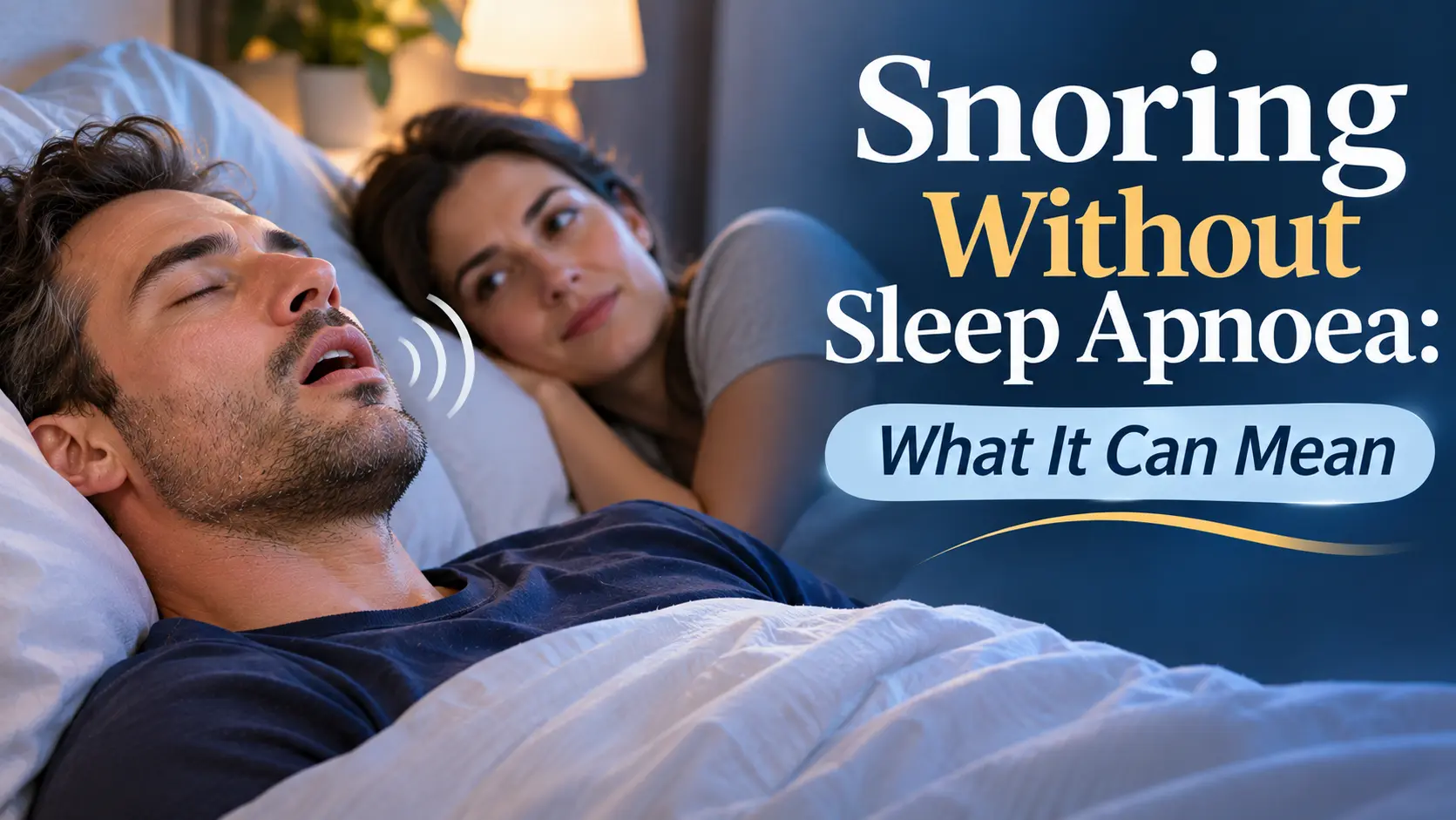
Snoring happens when airflow causes tissues in the upper airway to vibrate during sleep. It may be occasional or persistent, and can be affected by sleep position, nasal congestion, alcohol, smoking, anatomy, and body weight. Snoring does not automatically mean a person has obstructive sleep apnoea, but it can be a clue when combined with other symptoms.
How to recognise a potentially important pattern
Ask whether snoring is accompanied by witnessed pauses in breathing, gasping, choking, repeated awakenings, unrefreshing sleep, morning headaches, or daytime sleepiness. These features raise concern for sleep apnoea and warrant assessment. A partner’s observations can be valuable because the person sleeping may not know what happens overnight.
Nasal blockage can contribute to noisy breathing, but treating the nose alone will not resolve every cause of snoring. The site of narrowing may include the palate, tongue, tonsils, or other upper-airway structures. A focused history and examination help determine whether a sleep study or further evaluation is appropriate.
Practical measures and treatment choices
Depending on the person, side-sleeping, avoiding alcohol close to bedtime, stopping smoking, and addressing nasal inflammation may reduce snoring. Weight management can be relevant for some people, but snoring occurs in people of different body sizes. Be cautious with unproven devices or products promising to cure snoring without assessing the cause.
If sleep apnoea is diagnosed, treatment may include CPAP, a custom oral appliance, selected surgery, or a combination of approaches. Treatment decisions should reflect sleep-study results and anatomy rather than snoring volume alone.
When to seek assessment
Arrange medical review for loud regular snoring, witnessed breathing pauses, gasping, persistent daytime tiredness, or high blood pressure with sleep symptoms. Untreated sleep apnoea can affect alertness and broader health.
Do not drive when dangerously sleepy. If a person has severe difficulty breathing during sleep, blue or grey lips, or is difficult to wake, seek emergency help rather than treating it as ordinary snoring.
Common questions
Can nasal strips cure snoring? They may help some people whose symptoms are related to nasal airflow, but they do not diagnose or treat all causes and do not rule out sleep apnoea.
Can a person have sleep apnoea without very loud snoring? Yes. Snoring volume alone cannot confirm or exclude sleep apnoea; symptoms and assessment matter.