
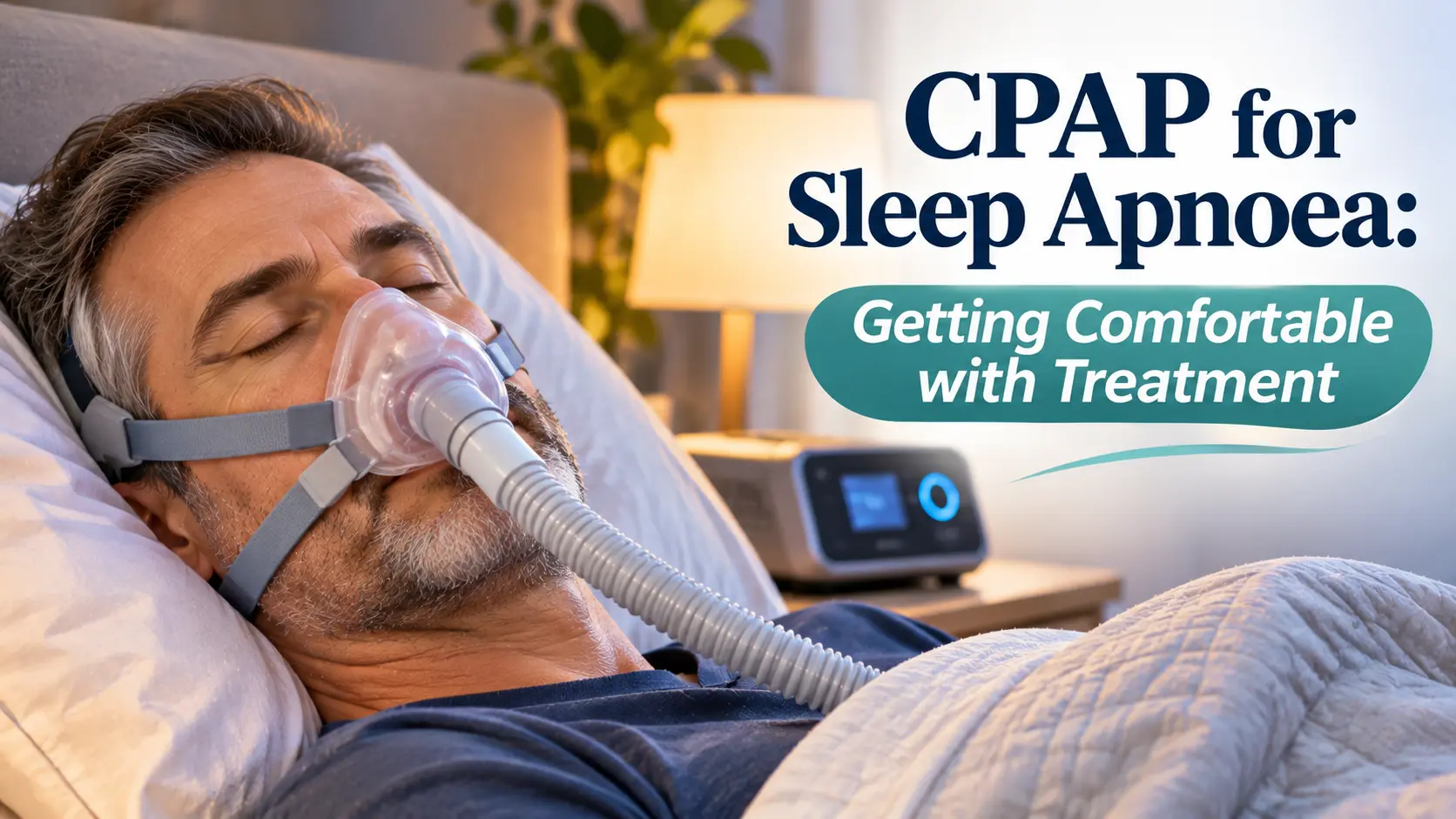
Continuous positive airway pressure (CPAP) sends a gentle flow of air through a mask to help keep the upper airway open during sleep. It is commonly used for obstructive sleep apnoea. Some people notice improved alertness when treatment is effective, but comfort, mask fit, pressure settings, and regular use can influence the experience.
Give yourself time to adapt
Wearing a mask may feel unfamiliar at first. Practising while awake for short periods, adjusting headgear according to instructions, and establishing a calm bedtime routine may help. A mask should be secure but not painfully tight. Different designs suit different faces, sleeping positions, and breathing patterns.
Dryness, nasal congestion, air leaks, pressure discomfort, or claustrophobia are common reasons people struggle. Humidification or a different mask may help some users. Do not change prescribed pressure settings yourself; contact the sleep team or equipment provider so adjustments are based on the treatment data and clinical context.
Make treatment part of follow-up
CPAP devices often record information about use, leaks, and breathing events. A follow-up visit can review whether the device is being used for enough of the night, whether the pressure appears appropriate, and what problems remain. Bring the mask and equipment if the clinic asks you to do so.
Clean the mask, tubing and humidifier according to the manufacturer’s directions, replace components as advised, and use water specified for the humidifier. Do not add essential oils or unapproved substances to the machine. If nasal obstruction is making CPAP difficult, ask about treating the cause rather than abandoning therapy without a plan.
When to contact the treatment team
Seek advice if you cannot tolerate the mask, have persistent skin injury, ongoing air leaks, significant nasal symptoms, or continued severe sleepiness despite using the device. Untreated sleep apnoea can remain a safety concern, particularly with driving or hazardous work.
CPAP is not the only option for every person. If it remains unsuitable despite troubleshooting, discuss alternatives such as a fitted oral appliance or other treatments appropriate to the diagnosis and anatomy.
Common questions
Should I stop CPAP if it feels uncomfortable? Do not abandon treatment without contacting your sleep team. Many comfort issues can be addressed by mask fitting, humidification, or reviewing the settings.
Do I need to use CPAP every night? Consistent use as prescribed is generally important because the airway can narrow whenever you sleep. Ask your clinician how to interpret adherence and device data.