
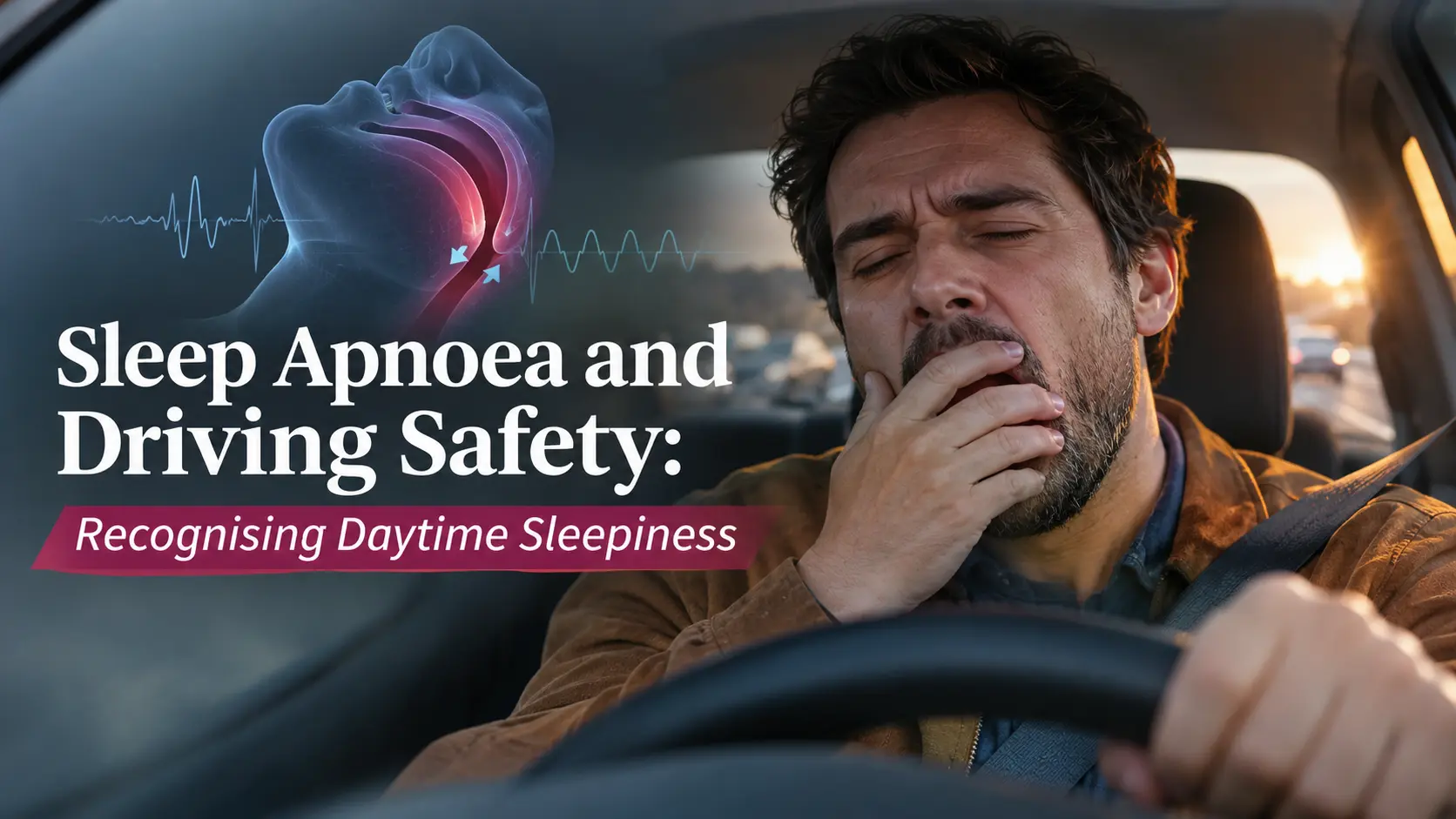
Obstructive sleep apnoea can fragment sleep and cause excessive daytime sleepiness, slower reactions, and concentration problems. Not everyone with sleep apnoea feels sleepy, but difficulty staying alert behind the wheel can create serious risk. Treatment and driving rules vary by jurisdiction, so patients should follow local regulations and their clinician’s advice.
Recognising impaired alertness
Warning signs include nodding off, struggling to keep the eyes open, missing parts of a journey, lane drifting, or relying on stimulants to stay awake. Snoring, witnessed pauses in breathing, morning headaches, and unrefreshing sleep can also suggest sleep apnoea but do not establish the diagnosis alone.
What improves safety
Do not drive when sleepy. Arrange alternative transport and speak to a clinician if alertness is impaired. Assessment may include a sleep study and review of medical conditions, work schedules, alcohol, and sedating medicines. CPAP or another prescribed treatment may improve symptoms when used consistently and correctly.
Legal and occupational considerations
Commercial drivers or people in safety-critical roles may have specific reporting and fitness-to-drive requirements. Check local rules rather than assuming the same standard applies everywhere. If sleepiness persists despite treatment, the care team should review adherence, device settings, sleep duration, and other possible causes.
Frequently asked questions
Can coffee make drowsy driving safe? No. Caffeine may temporarily increase alertness but does not reliably eliminate the risk.
Should I drive if I have untreated sleep apnoea? If you are sleepy or impaired, do not drive; discuss the diagnosis and applicable local rules with your clinician.
What if I still feel sleepy using CPAP? Seek review to check use, fit, sleep duration, and other causes instead of increasing treatment settings yourself.
Explore our airway assessment page for more information about this care option. A clinician can advise based on the individual history and examination findings.
Related reading
- Snoring and Sleep Apnoea: Signs You Should Not Ignore
- CPAP for Sleep Apnoea: Getting Comfortable with Treatment