
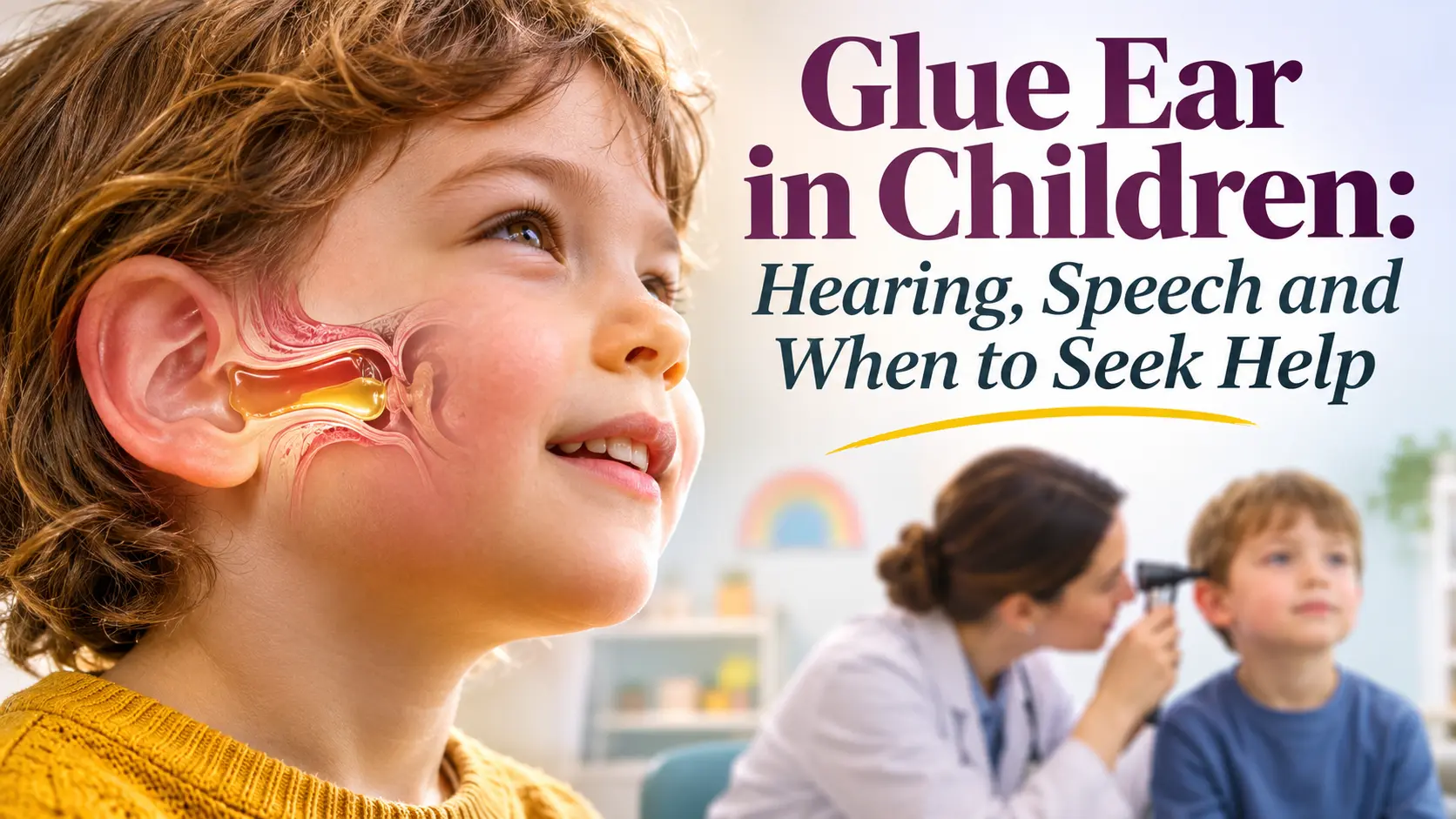
Glue ear, also called otitis media with effusion, is fluid in the middle ear without the signs of an acute ear infection. It is common in children and may cause temporary hearing difficulty, fluctuating responses to speech or difficulty following conversations in noisy settings. Some children have few obvious symptoms. The importance depends on how long fluid persists, the degree of hearing impact and the child’s speech, learning and developmental needs.
Signs parents may notice
A child may ask for repetition, turn up the television, appear inattentive, speak more loudly or struggle to follow instructions in a busy room. Younger children may not be able to describe muffled hearing. These behaviours are not proof of glue ear; hearing assessment and examination are needed. Parents should mention concerns about speech, language, school progress or balance.
How it is assessed
A clinician examines the eardrum and may arrange a hearing test and tympanometry to assess middle-ear function. The plan may involve observation and reassessment because fluid can resolve spontaneously. Children with persistent hearing impact, developmental concerns or special educational needs may need earlier support. The clinician should explain the expected review interval and what signs should prompt an earlier return.
Management and support
Treatment depends on duration, hearing level and the child’s individual circumstances. Antibiotics are not routinely used for uncomplicated fluid without acute infection. Some children benefit from classroom adjustments, communication strategies or other support while monitored. Selected children may be considered for hearing devices or surgery such as ventilation tubes, depending on the overall assessment and current guidance.
When to seek review
Arrange assessment if you suspect hearing difficulty, speech or language delay, persistent ear symptoms or trouble at school. Seek prompt care for ear pain with fever, discharge, significant illness or swelling behind the ear. Do not use medication or ear drops for glue ear without guidance, and keep planned follow-up appointments if monitoring is recommended.
Frequently asked questions
Is glue ear the same as an ear infection? No. Glue ear is fluid without acute infection signs, though it can occur after an infection.
Does every child need surgery? No. Many cases improve; treatment depends on duration, hearing impact and developmental needs.
Can glue ear affect learning? Temporary hearing difficulty can make speech and classroom listening harder, so concerns should be assessed and supported.
Related reading
- Ear Tubes for Children: When They Are Considered and What to Expect
- Children’s Hearing: Screening, Milestones and When to Seek Help
- Recurrent Ear Infections in Children: Assessment and Next Steps
Sources and further reading
Related research involving Dr. Mohannad Almomani
A 2025 co-authored publication examined allergic rhinitis and otitis media with effusion in adults and children. The study informs the broader evidence base but does not replace an assessment of a child’s symptoms.