
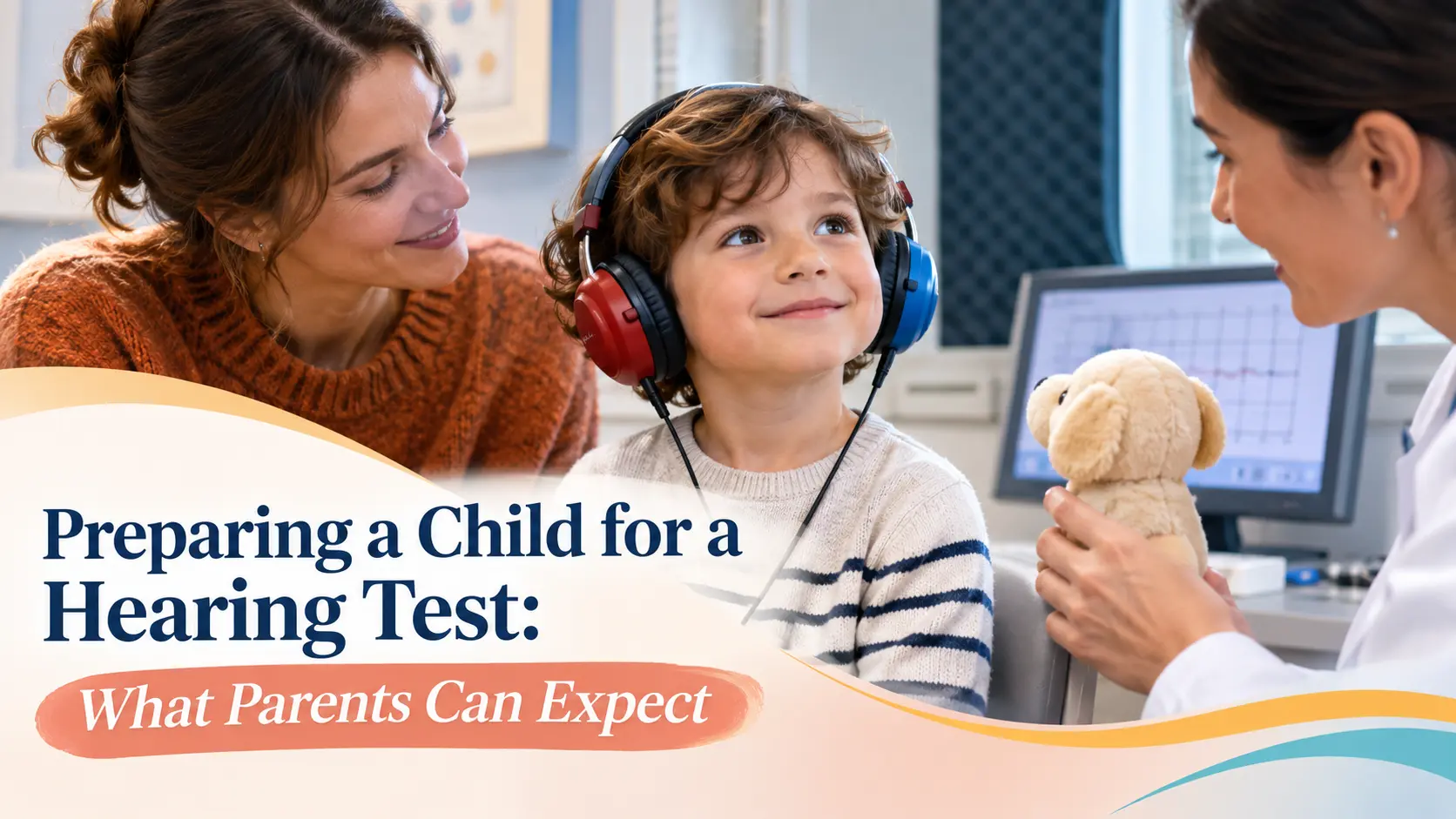
A hearing test can help clarify whether a child hears sounds at levels expected for their age and development. The exact method depends on age, language, attention, medical history and the reason for referral. Testing is generally designed to be age-appropriate; parents can help by explaining it simply and sharing observations about hearing, speech and responses to sound.
Types of tests children may have
An infant may be assessed with specialised screening or diagnostic methods that do not require the child to describe what they hear. Older children may respond to sounds through headphones, play a simple listening game or complete speech testing. Tympanometry can assess middle-ear function. A child may need more than one test to obtain reliable information, particularly if tired, unsettled or experiencing temporary middle-ear fluid.
How parents can prepare
Explain that the child will listen to sounds or play a game, and avoid promising that every result will be normal. Bring any hearing aids or devices, relevant reports and a list of medicines or ear infections. Tell the audiologist about language or developmental needs and what has been observed at home or school. Follow appointment instructions about naps, feeding or keeping the child comfortable.
Understanding the results
Results may identify typical hearing, conductive changes related to middle-ear function, sensorineural loss or a need for repeat testing. Screening is not the same as a full diagnostic assessment. If the result is unclear, repeat or specialised tests may be recommended. Ask what the findings mean for speech, language, learning and daily listening, and when follow-up should occur.
When to request an assessment
Seek advice if a child does not respond consistently to sound, seems to hear better on one side, has speech or language concerns, recurrent ear problems or difficulty following conversations. Do not wait solely for a milestone checklist if you are concerned. Early identification allows families and clinicians to plan support that fits the child’s needs.
Frequently asked questions
Will a hearing test hurt? Most routine tests are not painful, though some involve headphones or a small probe in the ear.
What if my child will not cooperate? The audiologist can adapt the approach or arrange repeat testing if results are not reliable.
Can a normal newborn screen rule out all later hearing loss? No. Hearing can change after screening, so new concerns should still be assessed.
Explore our otology consultation page for more information about this care option. A clinician can advise based on the individual history and examination findings.
Related reading
- Children’s Hearing: Screening, Milestones and When to Seek Help
- Glue Ear in Children: Hearing, Speech and When to Seek Help
- Hearing Tests: What to Expect and What Results Mean