
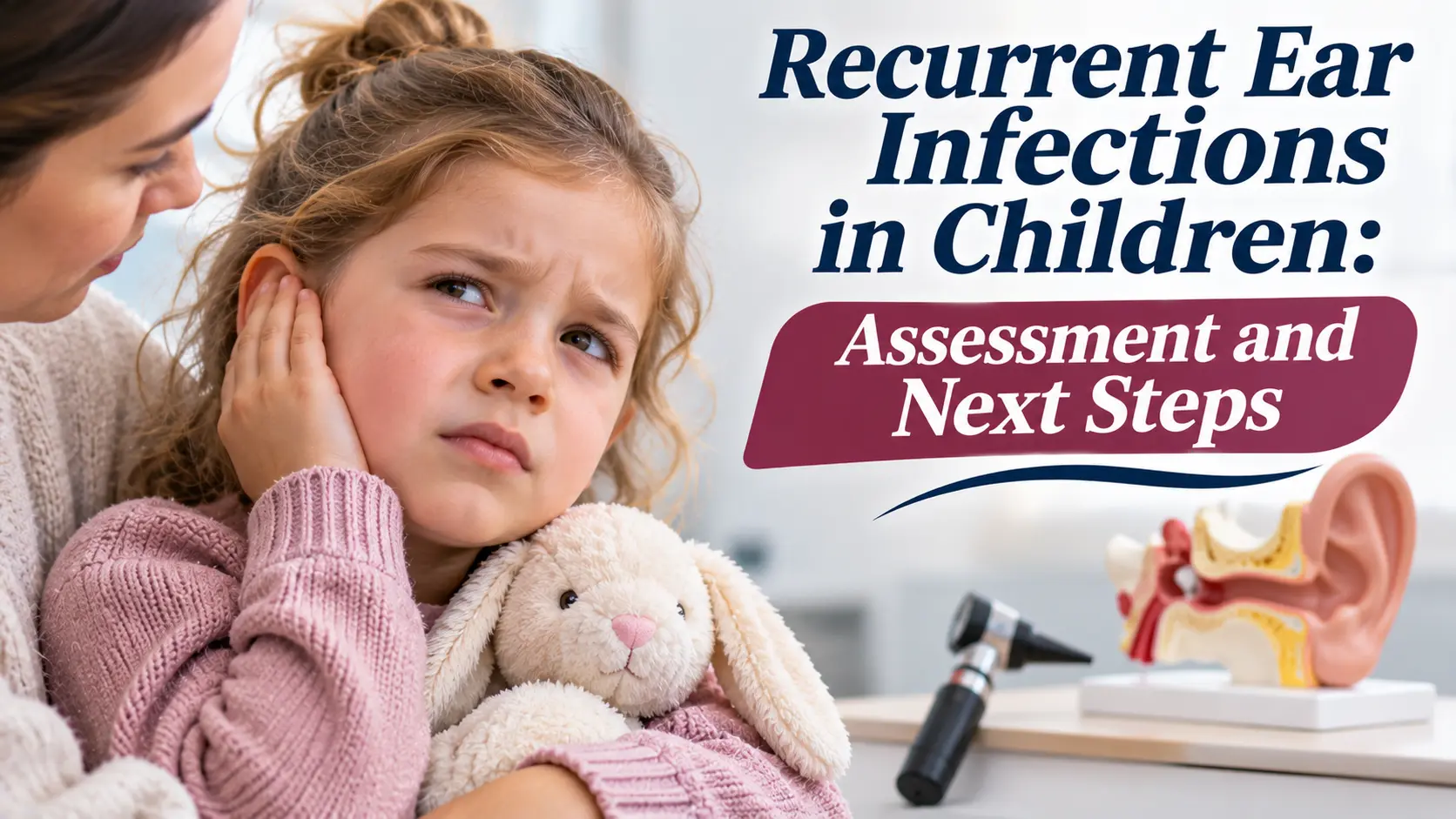
Ear infections are common in childhood, but repeated episodes deserve a careful review of the pattern rather than treating each episode in isolation. Clinicians consider the child’s age, the number and timing of infections, whether fluid remains behind the eardrum, the effect on hearing, and any concerns about speech, sleep, or development.
How middle-ear infections happen
A middle-ear infection often occurs after a cold when fluid collects behind the eardrum and becomes inflamed or infected. Children are more susceptible in part because their Eustachian tubes are smaller and function differently from adult tubes. Ear pain, fever, irritability, sleep disruption, or temporary hearing change may occur, but symptoms vary with age.
Not every earache is a middle-ear infection, and fluid behind the eardrum can remain after the acute illness has improved. An examination helps distinguish acute infection from persistent fluid. Antibiotics are not automatically required for every episode; the decision depends on age, severity, diagnostic certainty, risk factors, and local clinical guidance.
What to record and discuss
Keep a simple timeline of episodes, fever, pain, prescribed medicines, treatment response, and any hearing concerns. Ask whether the eardrum was seen clearly, whether fluid remains between infections, and whether a hearing test is appropriate. If speech or language development is a concern, mention it early rather than waiting for the next infection.
Preventive measures may include keeping immunisations up to date, avoiding tobacco smoke, and supporting hand hygiene. These steps do not prevent every infection. In selected children with a persistent fluid problem or specific recurrent-infection pattern, an ENT specialist may discuss monitoring, ear tubes, or other options.
When prompt care is needed
Seek prompt assessment for persistent or worsening pain, high fever, new discharge, or symptoms that are not improving as expected. Swelling or redness behind the ear, the ear sticking out, severe headache, unusual drowsiness, facial weakness, or a very unwell child require urgent evaluation.
Parents should follow the specific plan from their child’s clinician and return if hearing, balance, sleep, or communication concerns continue after the infection has settled.
Common questions
Can repeated ear infections affect hearing? Fluid and inflammation can reduce hearing temporarily; persistent fluid or ongoing concerns should be assessed with examination and, when appropriate, hearing testing.
Does every child with several infections need ear tubes? No. The decision depends on the pattern, fluid, hearing impact, development and examination findings.
Explore our middle-ear assessment page for more information about this care option. A clinician can advise based on the individual history and examination findings.
Related reading
- Ear Tubes for Children: When They Are Considered and What to Expect
- Hearing Tests: What to Expect and What Results Mean