Recurrent Ear Infections in Children: Assessment and Next Steps
Learn what counts as repeated ear infections, why hearing and middle-ear fluid matter, and how clinicians decide between observation and treatment.
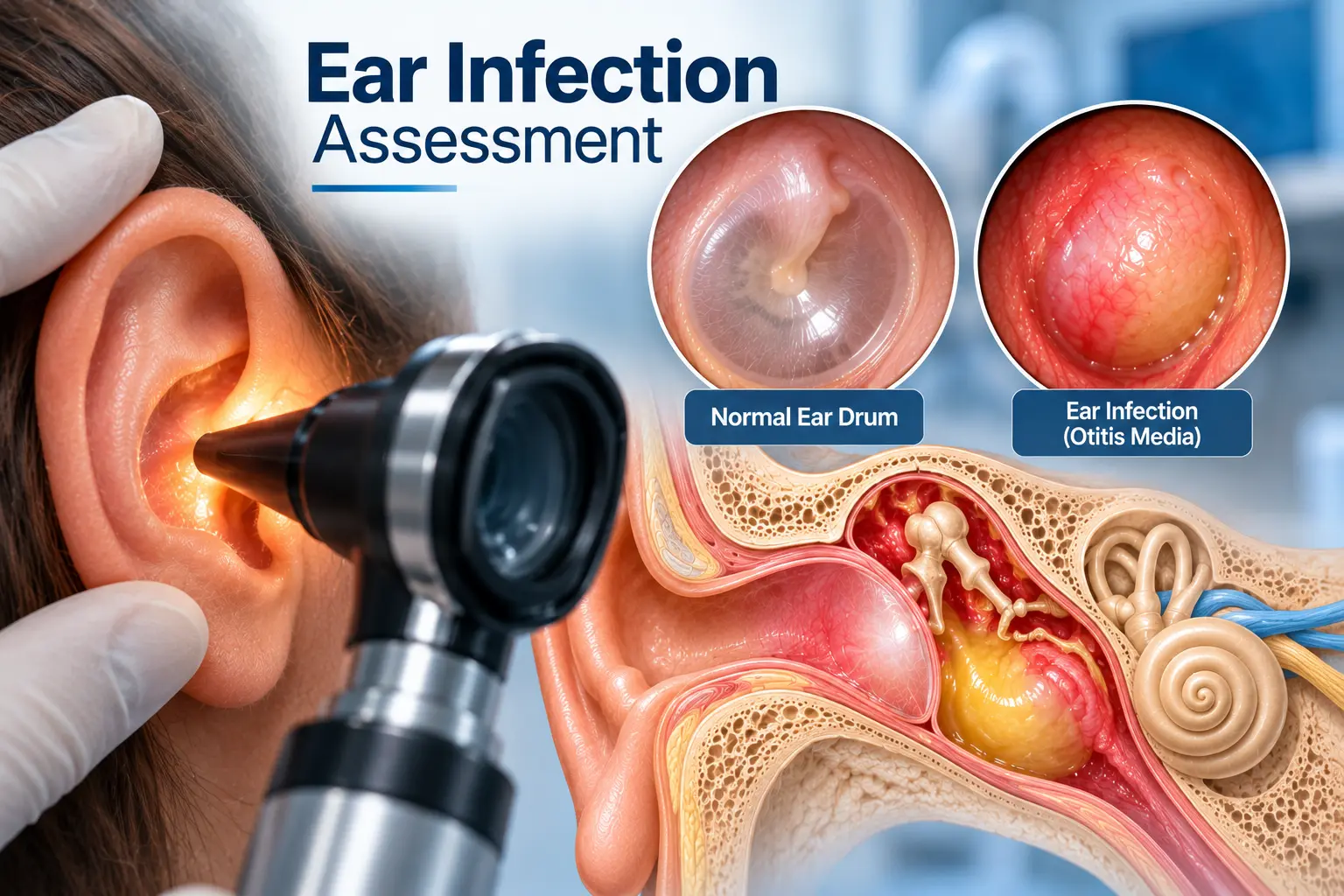
Read MoreThe clinician considers where the pain is felt, how quickly it began, fever or recent respiratory illness, discharge, hearing change and any history of ear disease. Examination of the ear canal and eardrum helps distinguish possible causes and determine whether testing or a specific treatment is needed.
Treatment varies by the type and severity of infection and by age and medical history. Avoid putting objects or unprescribed drops into the ear, especially if there may be a perforated eardrum.
Severe pain, swelling behind the ear, facial weakness, significant dizziness or serious illness needs prompt medical assessment. Sudden hearing loss should be treated as urgent.
This information is general and does not replace an individual medical assessment.
Patient Resources
Patient-friendly articles related to this service and common questions about assessment and care.
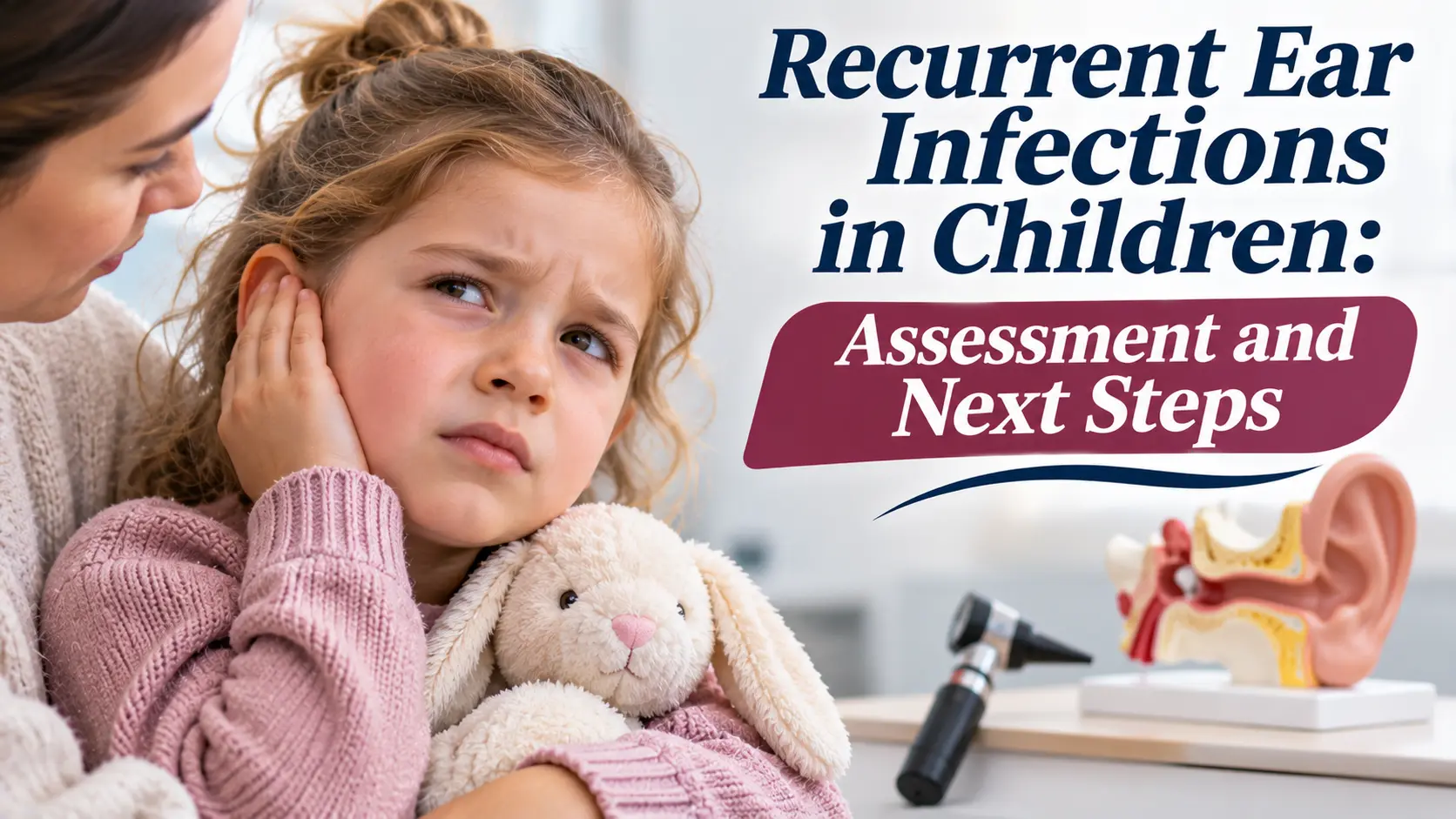
Learn what counts as repeated ear infections, why hearing and middle-ear fluid matter, and how clinicians decide between observation and treatment.
Read More
Learn how outer- and middle-ear infections differ, what symptoms to watch for, why treatment varies, and when ear pain needs medical attention.
Read More
Learn why some ear infections improve without antibiotics, how clinicians decide on treatment, and which symptoms require review.
Read More