
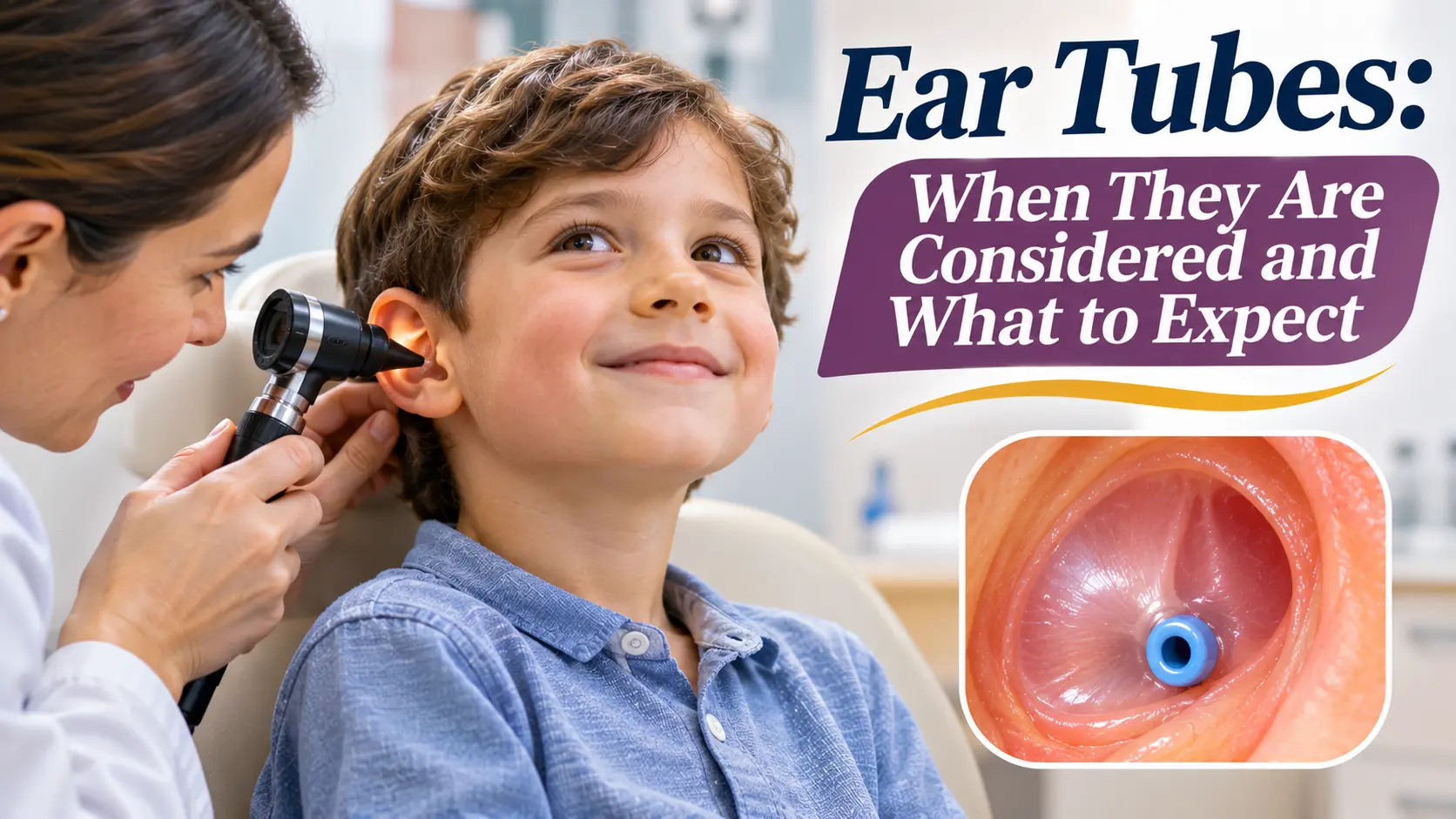
Ear tubes, sometimes called ventilation tubes or grommets, are tiny tubes placed through the eardrum to allow air into the middle ear and help fluid drain. They may be considered for selected children with persistent middle-ear fluid affecting hearing or certain patterns of recurrent ear infections. They are not needed for every ear infection.
How the decision is made
The clinician considers how long fluid has been present, hearing-test results, speech and learning concerns, the number and pattern of infections, and whether other factors affect development. Fluid after a cold can clear without surgery, so persistence and functional impact matter. Parents should ask what the current hearing findings show and what would happen if they chose observation.
The procedure is usually brief, but anaesthesia and surgical risks must be discussed in the context of the child’s age and health. Ask about expected benefits, possible drainage or blockage of the tube, scarring, persistent eardrum opening, and the follow-up schedule.
After placement and everyday care
Children may return to usual activity relatively quickly, but follow the surgical team’s specific instructions. Some drainage can occur and should be interpreted using the guidance provided. If drops are prescribed, use the exact medicine and technique recommended; do not place unapproved drops in the ear.
Hearing and tube status should be checked as advised. Tubes commonly fall out on their own after a period of time, but timing varies. Families should know whom to contact if the tube seems blocked, drainage recurs, or hearing does not improve.
When to seek medical advice
Contact the child’s clinician for ongoing ear drainage, fever, increasing pain, or concerns about hearing, speech, or balance. Sudden hearing loss, swelling behind the ear, severe illness, or facial weakness needs urgent assessment.
Parents should receive a clear plan for routine follow-up and for any future ear infections. Not every infection after tube placement requires the same treatment; management depends on the examination and the child’s condition.
Common questions
Will ear tubes prevent every ear infection? No. They may help selected children, but infections or ear symptoms can still occur.
Does every child with fluid need tubes? No. Duration, hearing impact, developmental factors, and the overall pattern guide the decision.
Explore our paediatric ENT consultation and enlarged adenoid assessment pages for more information about related care options. A clinician can advise whether either is appropriate based on the individual history and examination findings.