
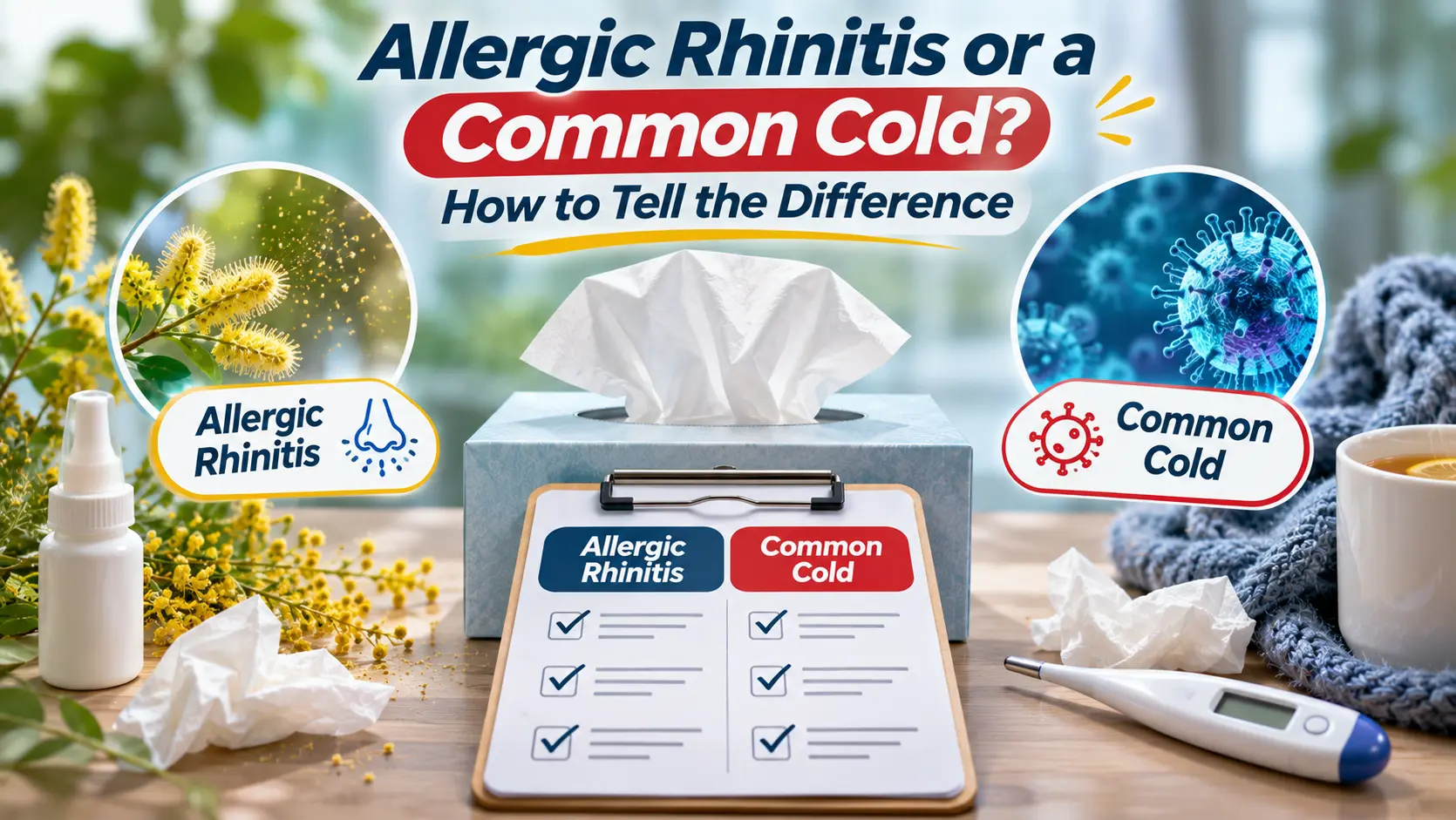
A runny or blocked nose, sneezing and post-nasal drip can occur with both allergic rhinitis and a common cold. The difference matters because allergy symptoms can continue as long as the trigger is present, while a typical cold usually improves over time. No single symptom proves the cause, but the pattern can help you decide what to discuss with a clinician or pharmacist.
Clues that suggest allergic rhinitis
Allergic rhinitis is an inflammatory response to a trigger such as pollen, house-dust mites, mould or animal dander. Common features include repeated sneezing, an itchy nose, itchy or watery eyes, and a clear runny or blocked nose. Symptoms may begin soon after exposure and recur in a particular season or environment. Some people have symptoms throughout the year.
Clues that suggest a cold
A cold is caused by a virus. It may begin with a sore throat or general unwell feeling, followed by congestion, nasal discharge and cough. Symptoms usually change over several days and gradually settle, although a cough or nasal symptoms can last longer. Fever can occur but is not present in every cold, and mucus colour alone cannot reliably tell whether an infection is bacterial.
Can allergies lead to sinus symptoms?
Allergic inflammation can cause nasal swelling and congestion. Some symptoms overlap with sinusitis, including pressure and mucus drainage. Persistent symptoms, reduced smell, recurring facial discomfort or symptoms lasting many weeks deserve assessment to check for other contributors such as chronic rhinosinusitis or nasal polyps.
What may help allergic rhinitis?
- When possible, reduce exposure to a trigger you have identified; avoiding every potential allergen is not always practical.
- Saline nasal sprays or rinses may help clear mucus and allergens. For rinsing, use sterile or distilled water, or water that has been boiled and cooled.
- A pharmacist or clinician can advise whether an antihistamine or an intranasal corticosteroid is suitable. Correct technique and consistent use, when recommended, can affect the benefit.
- Decongestant nasal sprays are intended for short-term use only. Follow the product label or professional advice; prolonged use can worsen congestion.
- If symptoms affect sleep, work, school or asthma control, seek medical advice rather than repeatedly changing medicines without a plan.
When should symptoms be checked?
Arrange an assessment if symptoms are persistent, severe, repeatedly return, interfere with sleep or daily activities, or do not improve with appropriate treatment. A clinician may review the timing of symptoms, possible triggers, asthma history and medicines. Specialist testing may be considered when the diagnosis is unclear or symptoms are difficult to control.
Seek urgent care if nasal symptoms are accompanied by swelling or redness around the eye, altered vision, severe or rapidly worsening headache, confusion, neck stiffness, significant breathing difficulty or feeling seriously unwell.
Common questions
Does yellow mucus mean I have a bacterial infection? No. Colour can change during a viral illness and should not be used alone to decide whether antibiotics are needed.
Can I have allergies and a cold at the same time? Yes. One does not rule out the other, which is why duration and associated symptoms matter.
Are allergy medicines all the same? No. Products have different effects, restrictions and possible side effects; suitability depends on age, pregnancy, other conditions and medicines.
Explore our nasal endoscopy page for more information about this care option. A clinician can advise based on the individual history and examination findings.
Sources and further reading
Educational information only; a clinician can help distinguish allergy, infection and other causes of nasal symptoms.
Related research involving Dr. Mohannad Almomani
A 2025 co-authored study examined the relationship between allergic rhinitis and middle-ear effusion. Its findings provide population-level context and do not establish the cause of symptoms in an individual.