
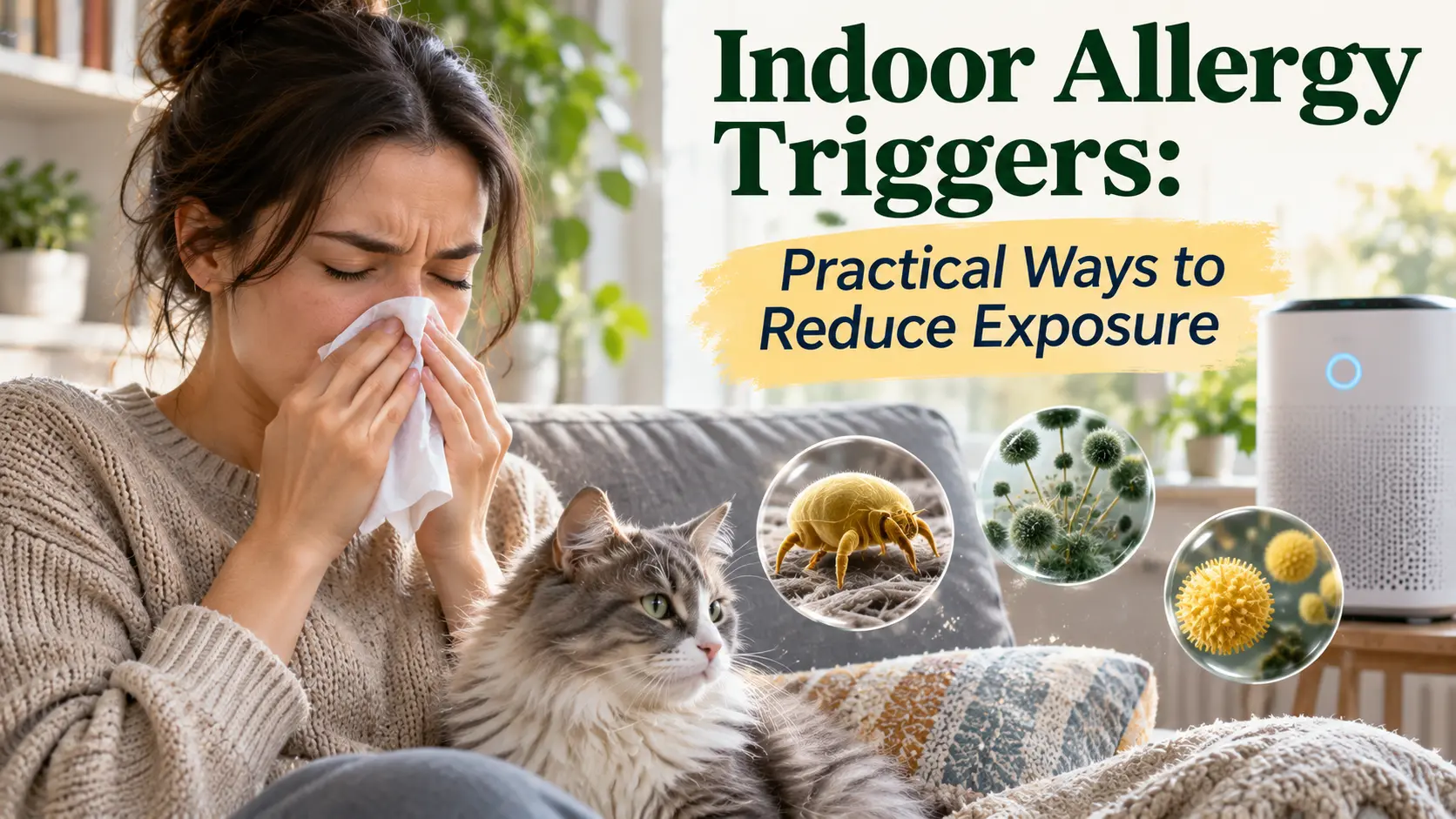
Allergy symptoms can occur indoors as well as outside. House dust mites, mould, pet allergens, and irritants such as smoke or strong fragrances may contribute to sneezing, itching, congestion, and watery eyes. The relevant trigger differs between people, so changes are most useful when they match the symptom pattern rather than being an expensive list of generic products.
Look for patterns before changing everything
Symptoms on waking may prompt a look at bedroom exposure; symptoms around a particular animal or in a damp room may suggest a different trigger. This is not a diagnosis: viral infections and non-allergic nasal sensitivity can create similar symptoms. Record where symptoms occur, the season, and whether they improve when away from home.
If symptoms are persistent or the suspected trigger is unclear, a clinician may review the history and consider allergy testing. A positive test needs to fit the history; a test result by itself does not always prove that an exposure causes symptoms.
Changes that may be practical
For dust-mite sensitivity, regular laundering of bedding and reducing dust reservoirs may help some people. For dampness or mould, address the moisture source and improve ventilation rather than simply covering the affected area. Keeping pets out of the bedroom may reduce exposure for some people, but the effect varies and animal allergens can remain in the environment.
Avoid smoke and strong scented products if they irritate your nose. Vacuuming with suitable filtration and damp dusting may reduce airborne and settled particles. A home is rarely completely allergen-free, and no single air purifier or cleaning routine replaces appropriate treatment for persistent rhinitis.
Combine environmental steps with symptom care
Trigger reduction is usually one part of management. Depending on symptoms, a pharmacist or clinician may discuss antihistamines, nasal steroid sprays, saline, or other treatment. Use nasal medicines as directed and ask for help if technique is uncertain.
Arrange review if symptoms disturb sleep, affect asthma, or remain uncontrolled. Seek emergency care for signs of anaphylaxis, such as sudden throat or tongue swelling, breathing difficulty, or collapse.
Common questions
Should everyone buy an air purifier? Not necessarily. The benefit depends on the trigger, room, device and maintenance. It is better to identify likely exposures and choose proportionate steps.
Can cleaning make symptoms worse temporarily? Dust may become airborne during cleaning. Ventilation, damp dusting, suitable filtration and avoiding known triggers may help; ask someone else to clean if exposure reliably worsens symptoms.
Explore our allergic rhinitis assessment and nasal endoscopy pages for more information about related care options. A clinician can advise whether either is appropriate based on the individual history and examination findings.