
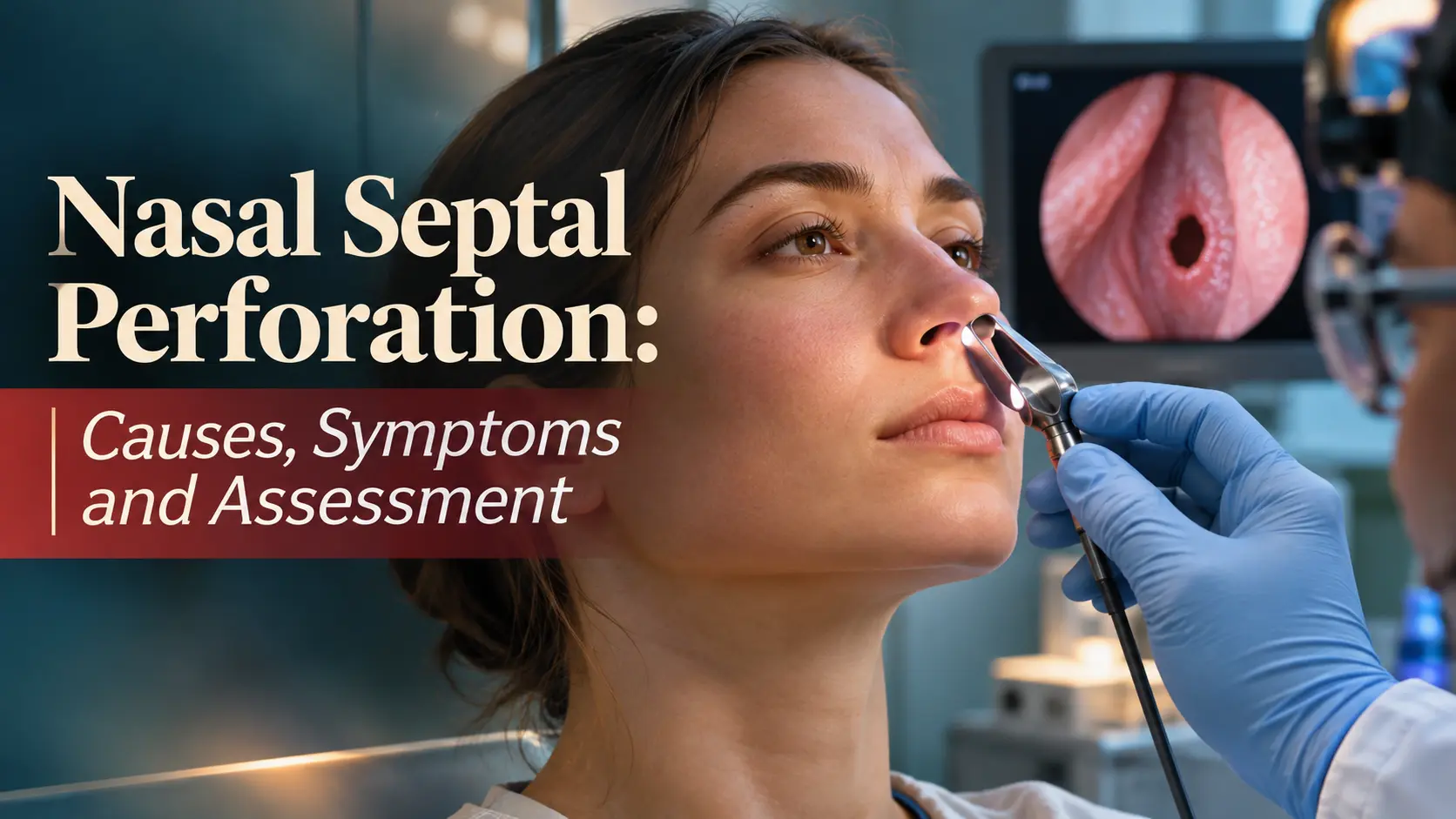
A nasal septal perforation is an opening in the wall of cartilage and bone that separates the two sides of the nose. It may cause crusting, dryness, nosebleeds, whistling during breathing or a feeling of blockage. Some perforations cause few symptoms. The reason for the opening matters: causes can include previous surgery, injury, repeated irritation, certain medicines or less commonly an inflammatory or other medical condition.
Possible causes and symptoms
A perforation may follow nasal surgery or trauma, but not every perforation has an obvious cause. Symptoms can include recurrent bleeding, crust formation, dryness, unpleasant smell or noisy airflow. Larger openings may alter airflow and cause discomfort. These symptoms can also occur with other nasal conditions, so diagnosis requires examination rather than guessing from symptoms alone.
How it is assessed
An ENT clinician may examine the nasal cavity, often using a small scope. They will ask about previous procedures, injury, nasal medicines, occupational exposures and systemic symptoms. Additional tests are considered if the history suggests inflammation or another underlying disease. Do not pick crusts or insert objects into the nose, as trauma can make bleeding and irritation worse.
Treatment options
Treatment aims to reduce dryness and irritation, address any underlying cause and improve symptoms. Saline moisturising products or humidification may be recommended. Selected patients may benefit from a septal button or surgical repair, but repair is not suitable for every perforation and can fail or recur. The choice depends on size, location, surrounding tissue and the person’s symptoms.
When to seek medical advice
Arrange review for frequent nosebleeds, persistent crusting, increasing blockage, pain or a perforation that is enlarging. Urgent care is needed for heavy bleeding that does not stop with appropriate first aid or for breathing difficulty. Mention unexplained fever, skin changes, joint symptoms or other systemic problems, because they may affect the investigation.
Frequently asked questions
Will every septal perforation need surgery? No. Some are managed with moisturising care and monitoring; surgery or a septal button is considered in selected cases.
Can nasal sprays cause a perforation? Certain medicines or incorrect use may irritate nasal tissues, but risk depends on the product and circumstances. Review technique with a clinician.
Will the hole close on its own? A persistent perforation often does not close spontaneously. The best management depends on cause, size and symptoms.
Explore our nasal breathing assessment and nasal endoscopy pages for more information about related care options. A clinician can advise whether either is appropriate based on the individual history and examination findings.
Related reading
- How to Stop a Nosebleed: First Aid and Warning Signs
- Deviated Septum: Symptoms, Diagnosis and Treatment Options
- Nasal Saline Rinses: Benefits, Technique and Water Safety