
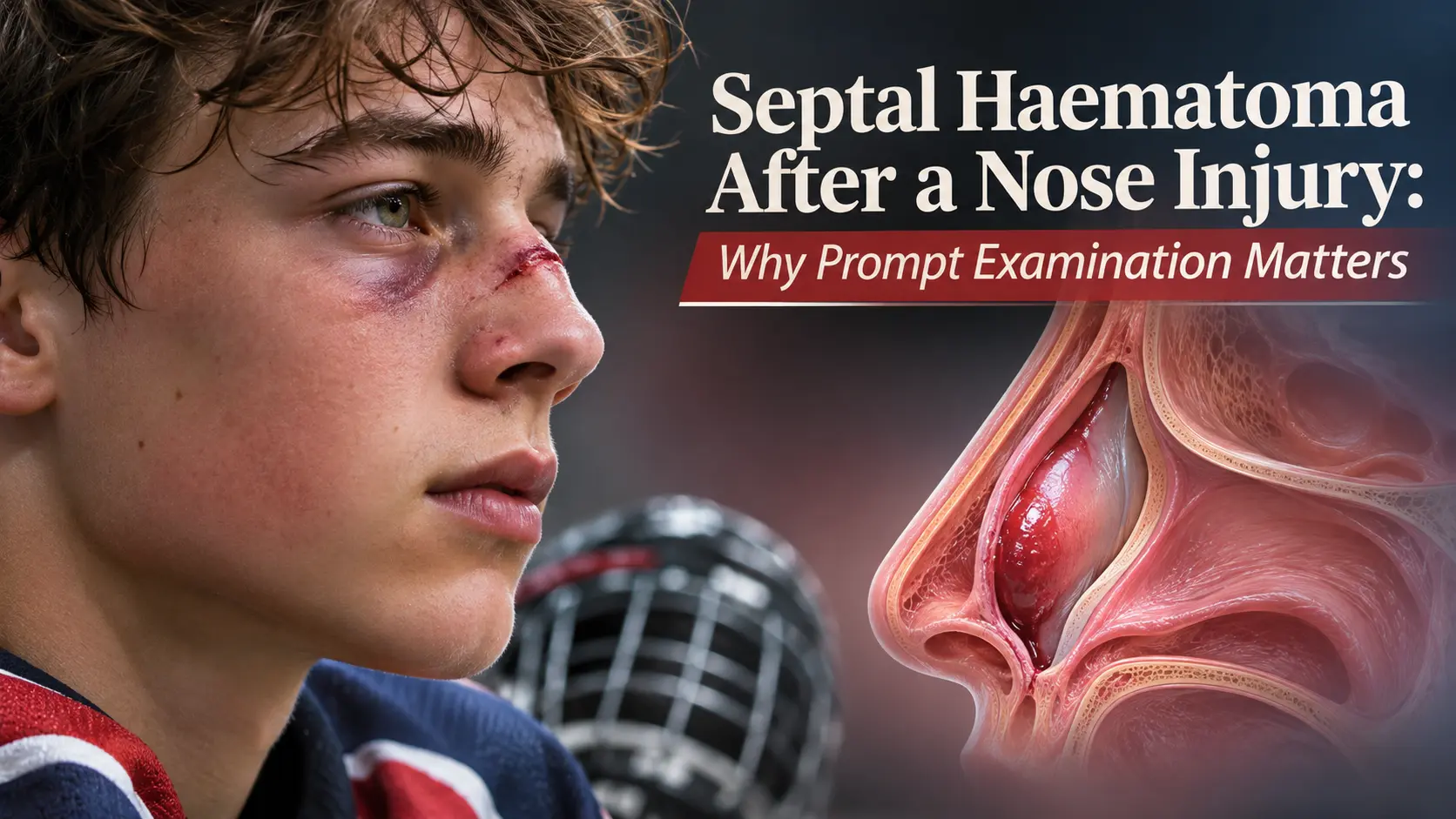
A septal haematoma is a collection of blood between the nasal septal cartilage and its covering after an injury. It may cause increasing blockage or swelling inside the nose and can threaten the cartilage if not treated promptly. It cannot be reliably ruled out at home. After a blow to the nose, increasing obstruction, pain or soft swelling inside the nostrils needs urgent medical assessment, especially in children.
Why it matters
The cartilage of the septum relies on its surrounding lining for nutrition. A collection of blood can separate that lining from the cartilage and damage it if untreated. This can lead to infection or lasting changes in nasal shape. A septal haematoma is different from ordinary swelling or bruising, and its presence is determined by examination.
Symptoms after an injury
Possible symptoms include nasal blockage on one or both sides, increasing pain, tenderness and a smooth swelling inside the nose. External bruising may be present or absent. A nose that looks straight from the outside can still have an internal injury. Do not insert tools or attempt to drain swelling yourself.
What to do
Seek urgent same-day medical assessment if a septal haematoma is suspected. A clinician will examine the inside of the nose and arrange drainage when indicated. If there is severe bleeding, difficulty breathing, significant facial injury, loss of consciousness or neurological symptoms, use emergency services. Keep track of how the injury occurred and any medicines that affect bleeding.
Follow-up after nasal trauma
Even without a haematoma, persistent blockage, deformity, pain or breathing difficulty after injury merits review. Some fractures are assessed after swelling begins to settle, but suspected septal haematoma should not wait. Follow the clinician’s advice about activity, pain relief and reassessment.
Frequently asked questions
Can I wait for swelling to go down? Not if a septal haematoma is possible. Internal swelling with increasing blockage after injury needs urgent examination.
Can I identify it from a photo? No. A reliable assessment usually requires an examination inside the nose.
Is this possible in children? Yes. Children with nasal injury and persistent blockage should be assessed promptly.
Explore our nasal endoscopy page for more information about this care option. A clinician can advise based on the individual history and examination findings.