
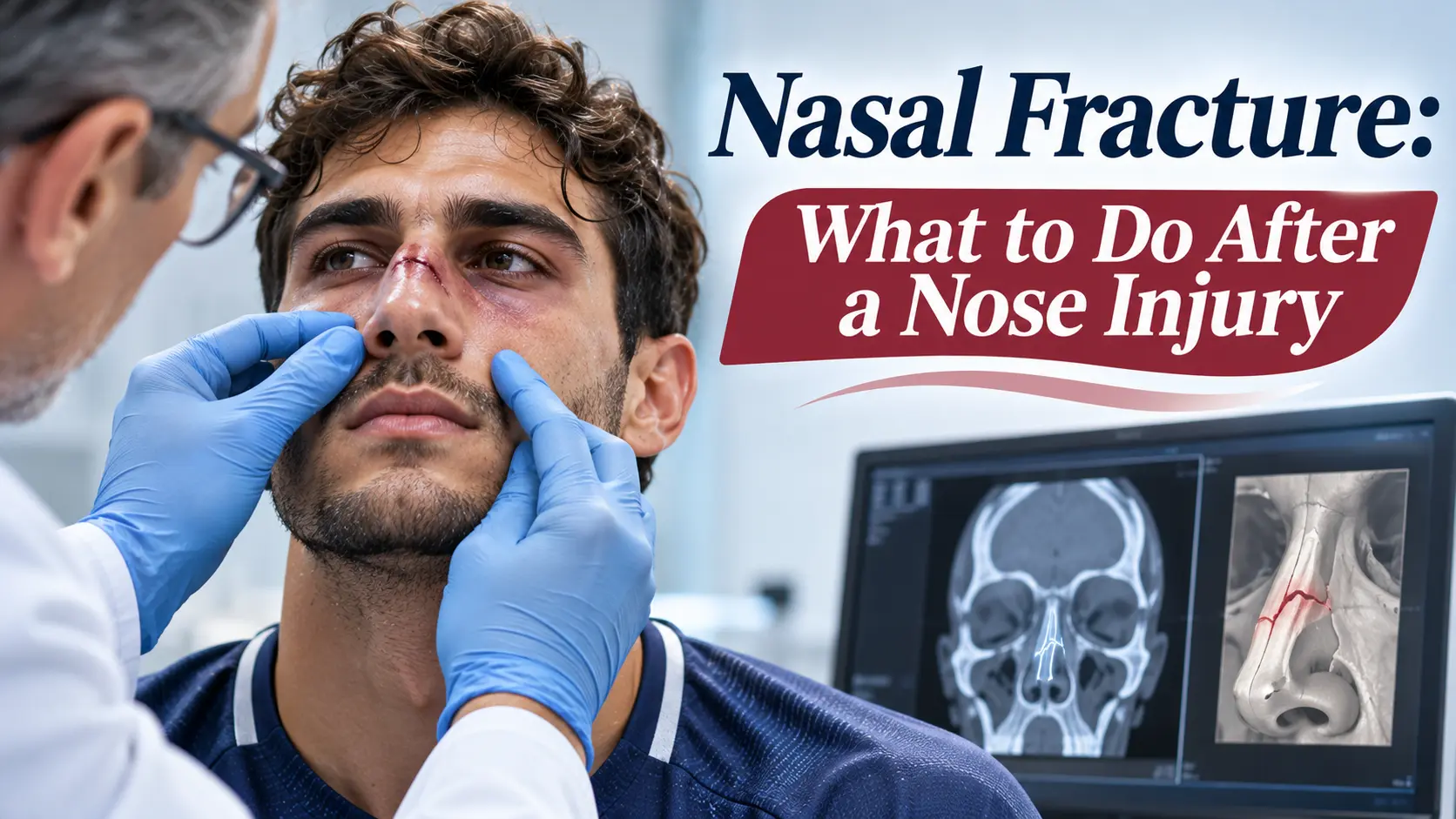
A blow to the nose can cause bruising and swelling without a fracture, or it may break the nasal bones and affect breathing or alignment. Swelling can make the shape difficult to assess in the first hours. The priority is to check for serious injury, control bleeding safely, and identify problems that need prompt treatment.
Immediate care and what not to do
For a nosebleed, sit upright, lean forward, and pinch the soft part of the nose continuously for 10 to 15 minutes while breathing through the mouth. A wrapped cold pack may help swelling. Do not tilt the head backward, repeatedly release pressure to check, or attempt to straighten a bent nose yourself.
Avoid nose-blowing, heavy exertion, and contact sports while injury is healing. Pain relief should be chosen according to the person’s age, medical history, and medicines. If there is a significant wound, head injury, or concern about facial fracture, seek medical evaluation rather than treating it as a simple bruise.
Why an examination matters
A clinician assesses shape, airflow, bleeding, eye symptoms, facial sensation, and the inside of the nose. A septal haematoma is a collection of blood inside the septum; it can look like a soft swelling that blocks one or both sides and requires urgent treatment to prevent damage to cartilage. Do not wait for visible bruising to settle if the inside of the nose is blocked.
If the nose has changed shape or breathing remains obstructed after swelling starts to reduce, timely specialist review matters because some treatments work best before the bones set. Not every fracture needs manipulation or surgery; the decision depends on alignment, function, timing, and the injury.
Emergency warning signs
Seek emergency care for bleeding that will not stop, a large open wound, clear watery fluid from the nose after head injury, severe headache with vision changes, double vision, neck symptoms, confusion, or other signs of significant head trauma.
Prompt assessment is needed for a crooked nose after injury, persistent difficulty breathing, a soft purple swelling inside the nose, fever, or pain that is not improving.
Common questions
Should I wait until swelling goes down before seeking care? Some reassessment may occur after swelling settles, but urgent warning signs and suspected septal haematoma should not wait.
Can I set the nose back myself? No. Do not attempt to straighten it yourself; manipulation can worsen injury and should be assessed by a clinician.
Explore our facial trauma care and nasal fracture assessment pages for more information about related care options. A clinician can advise whether either is appropriate based on the individual history and examination findings.