Nasal Fracture: What to Do After a Nose Injury
Learn first-aid steps after a nose injury, signs that the nose needs assessment, and why a purple swelling inside the nose is urgent.
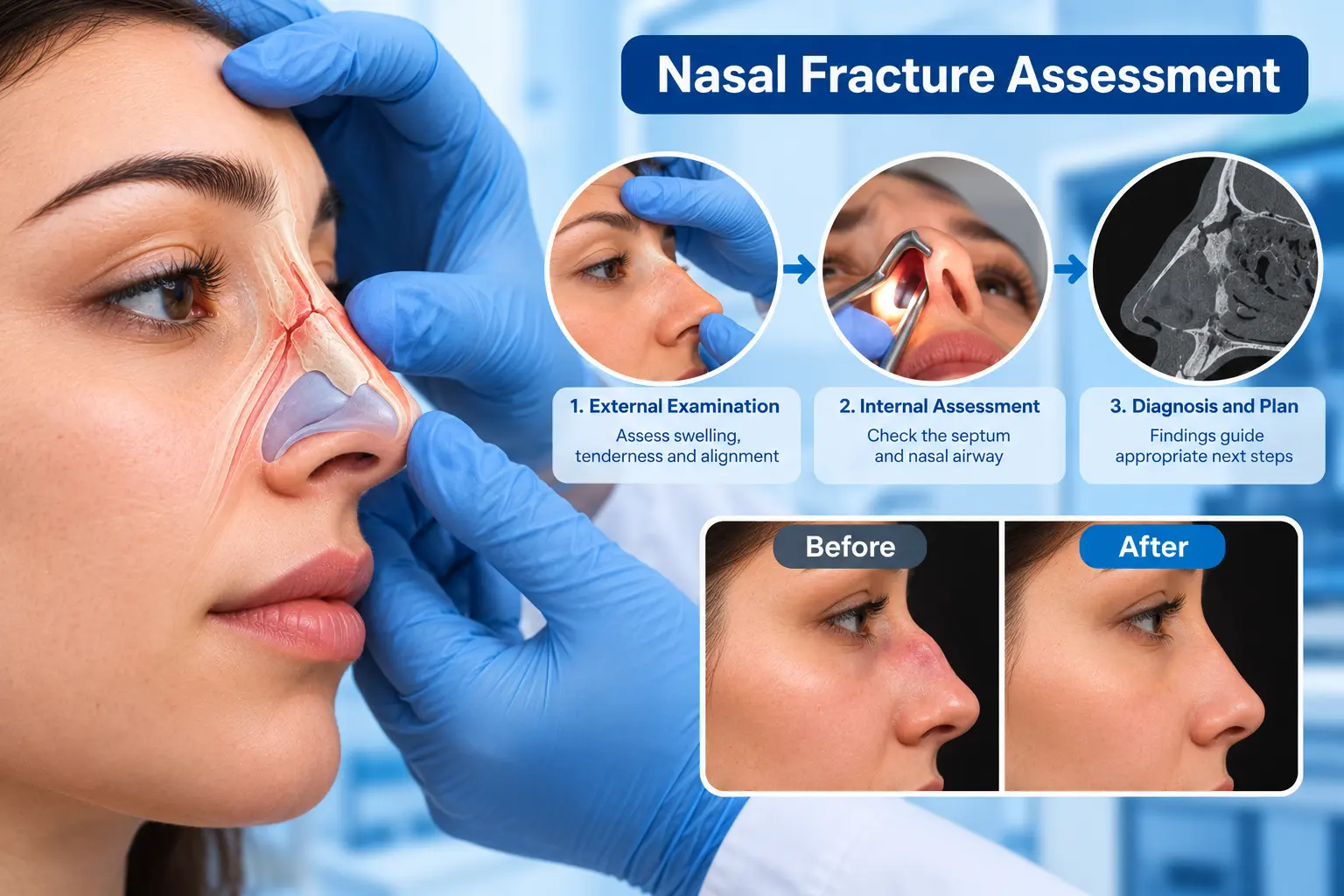
Read MoreThe clinician checks the nasal framework, alignment, airflow, bleeding and the inside of the nose for problems such as a septal haematoma. Other facial or head injuries are considered based on the mechanism and symptoms; imaging is not required for every isolated nasal fracture.
Treatment depends on the injury and swelling, and whether the bones or septum have shifted. Some injuries need observation, while others may benefit from timely specialist management. Avoid trying to straighten the nose yourself.
Heavy bleeding, a blocked nose with a soft swelling inside, visual changes, clear fluid after head trauma or signs of a significant head injury need urgent assessment.
After an impact, swelling and bruising can make it difficult to judge the final shape of the nose. The clinician asks when and how the injury happened, whether the nose looks different, whether airflow has changed and whether there was bleeding or another facial injury. An examination looks at external alignment and the inside of the nose, including the septum.
A septal haematoma is an important problem to exclude. It is a collection of blood beneath the lining of the nasal septum and can cause a soft, painful swelling and blockage. Suspected septal haematoma needs urgent same-day assessment because delay can damage the septal cartilage.
No. Many isolated nasal fractures are assessed clinically, and a plain X-ray does not always change the treatment plan. Imaging may be considered when the history or examination suggests a more complex facial injury or another structure is involved. The clinician will explain why a test is or is not useful in your particular case.
Treatment depends on the position of the nasal bones and septum, the degree of obstruction, the amount of swelling and the time since injury. Some fractures can be observed while they heal. If the nose has shifted, a clinician may discuss whether a procedure to realign it is appropriate and whether the timing is still suitable. The available window varies with the injury and individual healing.
If the nose remains blocked after the initial injury has settled, further assessment may be needed to check the septum, nasal valve or turbinates. Appearance and breathing are related but are not always affected in the same way.
Yes. Swelling can distort the appearance early after injury, so the timing of reassessment matters.
No. The plan depends on displacement, breathing, associated injury and timing. Some injuries are managed without a procedure.
Arrange reassessment once the acute injury has been evaluated. Persistent obstruction may have more than one cause.
For injuries involving the cheek, eye, jaw or other facial structures, see facial trauma care. Persistent nasal obstruction may require a separate nasal breathing assessment after the acute injury has been addressed.
The clinic is in Limassol, but appointment enquiries can be made from anywhere in Cyprus. If an injury may be an emergency, attend emergency care rather than waiting to travel for a routine appointment.
This information is general and does not replace an individual medical assessment.
Patient Resources
Patient-friendly articles related to this service and common questions about assessment and care.
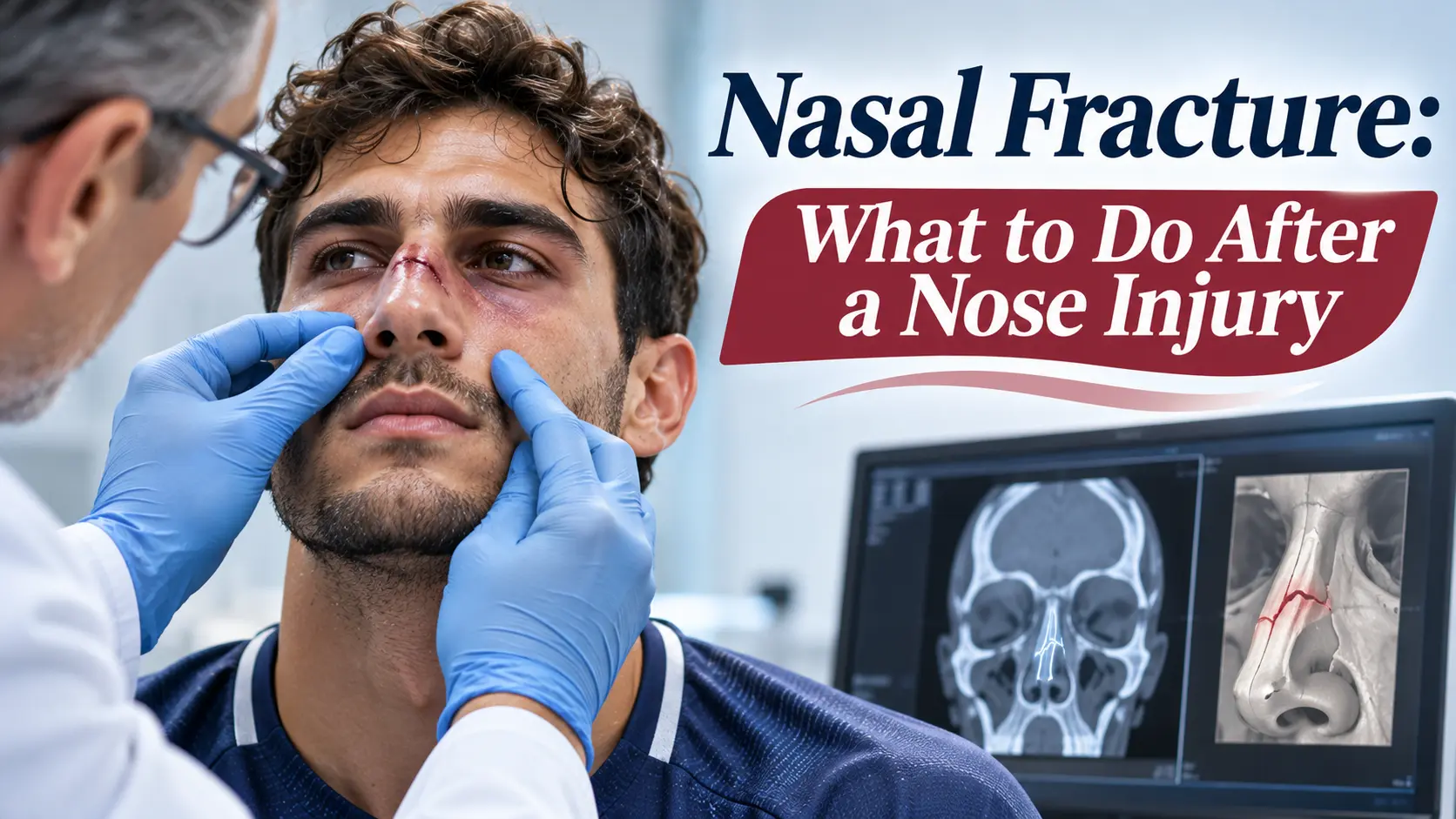
Learn first-aid steps after a nose injury, signs that the nose needs assessment, and why a purple swelling inside the nose is urgent.
Read More