Nasal Fracture: What to Do After a Nose Injury
Learn first-aid steps after a nose injury, signs that the nose needs assessment, and why a purple swelling inside the nose is urgent.
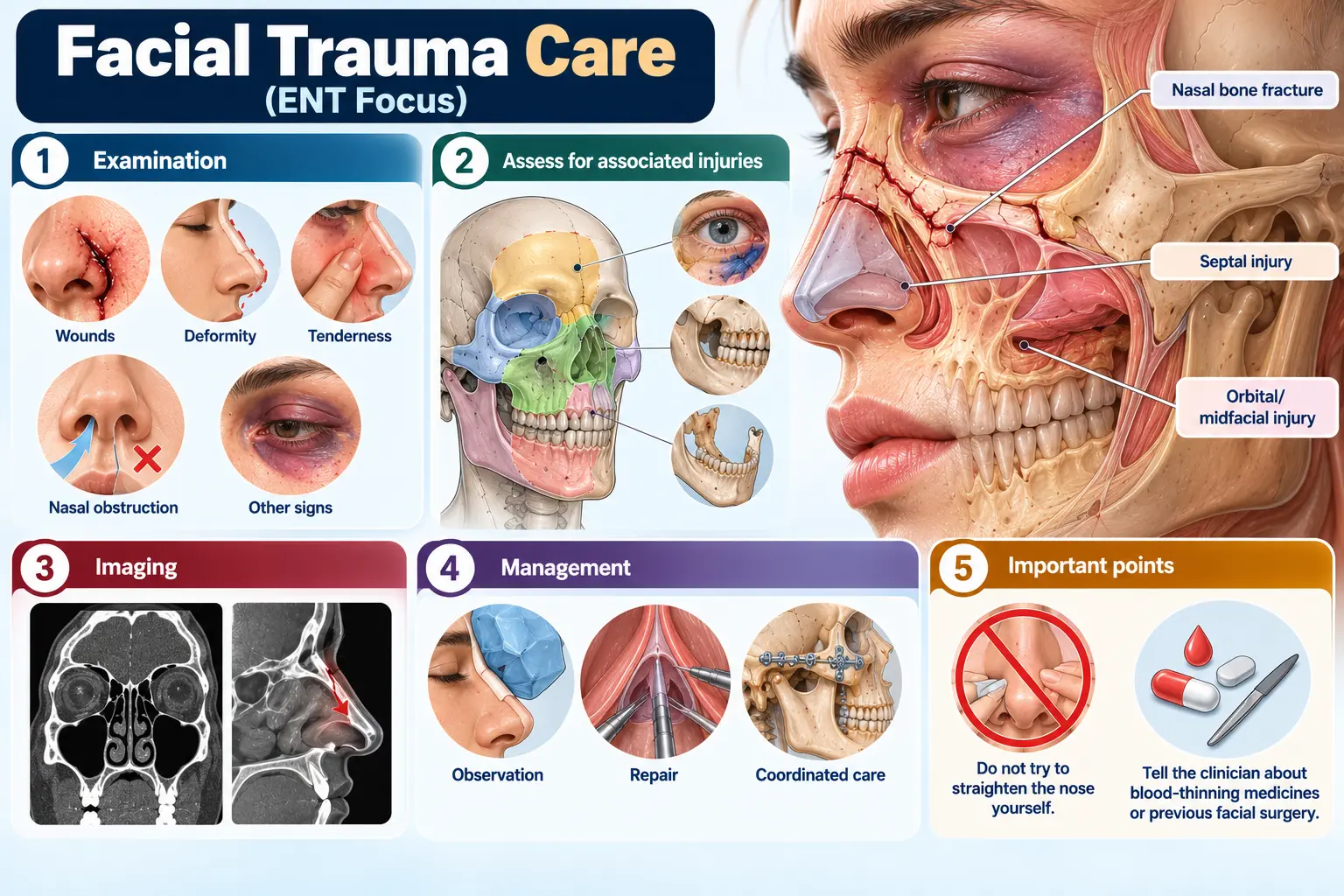
Read MoreThe examination looks for wounds, deformity, tenderness, nasal obstruction and signs that may suggest injury beyond the nose. Imaging or referral to another specialist may be needed depending on the location and severity of the injury.
Treatment depends on the injury and timing. Some injuries need observation and symptom care; others need repair or coordinated management. Do not try to straighten the nose yourself, and tell the clinician about blood-thinning medicines or previous facial surgery.
Severe bleeding, loss of consciousness, visual disturbance, confusion, clear fluid after significant head trauma or breathing difficulty requires emergency assessment.
Facial injuries can involve more than the visible bruise or cut. An assessment considers how the injury happened, the force and direction of impact, bleeding, wounds, facial shape, nasal airflow, vision, jaw movement, teeth and possible head or neck injury. The examination is guided by symptoms and the structures that may have been affected.
Depending on the injury, care may involve wound assessment, examination of the nose and facial bones, imaging or coordination with emergency, eye, dental, maxillofacial or other specialist teams. Imaging is selected when it is likely to change management; it is not automatically needed for every minor injury.
These symptoms require urgent or emergency assessment. Do not use a routine online appointment request as a substitute for emergency care. If you are concerned about a serious head, eye or facial injury, attend an emergency department or contact emergency services.
The plan depends on which structures are injured, whether function is affected, the amount of swelling and the timing of the injury. Some injuries need cleaning, wound closure and observation. Others need specialist repair or a procedure after the initial swelling has been assessed. Nasal injuries may need a separate review for fracture or septal injury.
Do not attempt to push a displaced bone or reshape the nose yourself. Avoid applying pressure to an injured area and follow the advice given after examination. If symptoms change—especially vision, breathing, bleeding, alertness or pain—seek reassessment rather than waiting for a planned follow-up.
An injury centred on the nose may also need a focused nasal fracture assessment. Persistent bleeding or obstruction can require a different examination, depending on the findings.
The clinic is based in Limassol, Cyprus. For non-emergency follow-up enquiries, patients from across the island can contact the clinic to ask whether a specialist appointment in Limassol is appropriate.
This information is general and does not replace an individual medical assessment.
Patient Resources
Patient-friendly articles related to this service and common questions about assessment and care.
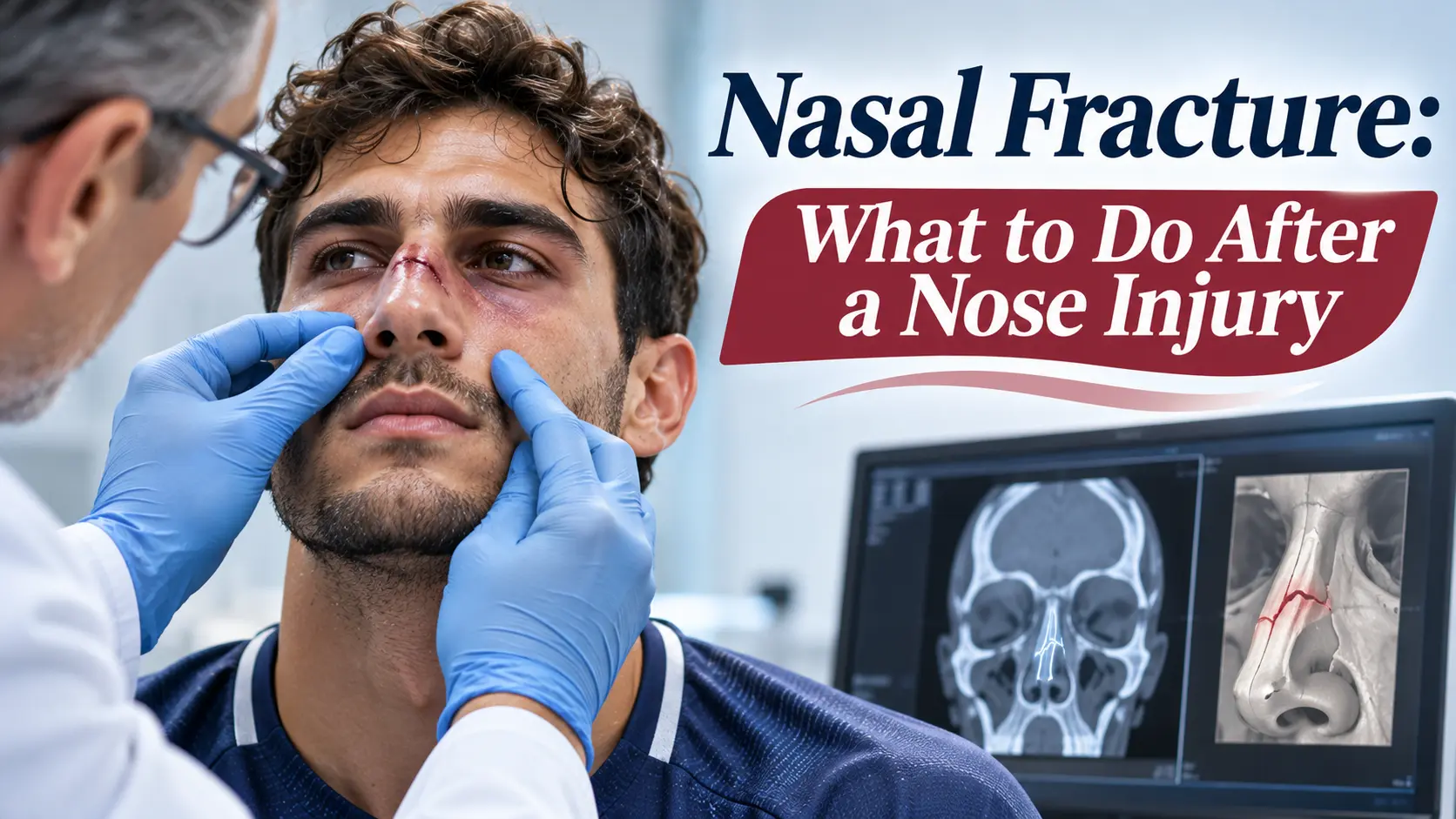
Learn first-aid steps after a nose injury, signs that the nose needs assessment, and why a purple swelling inside the nose is urgent.
Read More